Library
Browse and search books
8 novels found
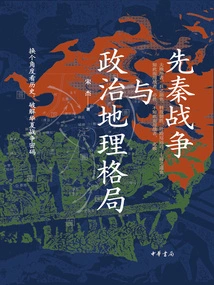
先秦战争与政治地理格局
Song Jie
The book "Wars and Political Geography of Pre-Qin" examines the distribution of economic regions, population, ethnic groups, and political forces in various historical stages of the Pre-Qin period, as well as the topography, hydrology, customs and cultural conditions of each region, and mutual transportation routes. It also focuses on exploring the restrictive effects of these factors on the formation and evolution of combat strategies, that is, the close relationship between regional differences, spatial changes, and military activities. The whole book is divided into "Three Dynasties Chapter", "Spring and Autumn Chapter" and "Warring States Chapter". This book is the doctoral thesis of Professor Song Jie, an expert in military geography. This publication has been carefully revised, and 18 schematic diagrams of war situations have been added, printed in two colors. This book has detailed information and a novel perspective. Look at Chinese history from a different perspective, see clearly the secrets behind the war, and decipher the code of Chinese war.
The book "Wars and Political Geography of Pre-Qin" examines the distribution of economic regions, population, ethnic groups, and political forces in various historical stages of the Pre-Qin period, as well as the topography, hydrology, customs and cultural conditions of each region, and mutual transportation routes. It also focuses on exploring the restrictive effects of these factors on the formation and evolution of combat strategies, that is, the close relationship between regional differences, spatial changes, and military activities. The whole book is divided into "Three Dynasties Chapter", "Spring and Autumn Chapter" and "Warring States Chapter". This book is the doctoral thesis of Professor Song Jie, an expert in military geography. This publication has been carefully revised, and 18 schematic diagrams of war situations have been added, printed in two colors. This book has detailed information and a novel perspective. Look at Chinese history from a different perspective, see clearly the secrets behind the war, and decipher the code of Chinese war.
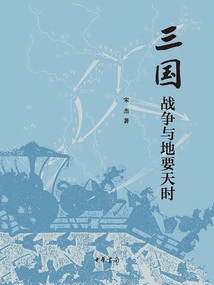
三国战争与地要天时
Song Jie
"The War of the Three Kingdoms and the Matter of Earth and Heaven" is the third volume in Professor Song Jie's series on the Three Kingdoms War. The book contains nine special studies on the war of the Three Kingdoms, in-depth exploration of the origin, process, characteristics and historical impact of the war between Dong Zhuo and the Guandong princes; Cao Cao's gradual control, conquest and management of Guanzhong, the "Land of Abundance", and the important role it played after the founding of Cao Wei; the background, scale and history of the Battle of Xiaoyaojin in Wu and Wei. The Wei army's tactics of "killing generals and grabbing flags" reflected Sun Quan's character traits through his distress; Liu Bei's process and strategy of conquering Yizhou, and the reasons why he failed twice when he returned to Jingzhou to fight; the important strategic role of Xiaoling and Gong'an, the important towns of the Three Kingdoms at the end of the Han Dynasty, and Yinping, a dangerous pass in the Three Kingdoms War; the "strategic advisors" set up by the warring parties in the Three Kingdoms at the end of the Han Dynasty, and what impact the "timing" had on the Three Kingdoms War.
"The War of the Three Kingdoms and the Matter of Earth and Heaven" is the third volume in Professor Song Jie's series on the Three Kingdoms War. The book contains nine special studies on the war of the Three Kingdoms, in-depth exploration of the origin, process, characteristics and historical impact of the war between Dong Zhuo and the Guandong princes; Cao Cao's gradual control, conquest and management of Guanzhong, the "Land of Abundance", and the important role it played after the founding of Cao Wei; the background, scale and history of the Battle of Xiaoyaojin in Wu and Wei. The Wei army's tactics of "killing generals and grabbing flags" reflected Sun Quan's character traits through his distress; Liu Bei's process and strategy of conquering Yizhou, and the reasons why he failed twice when he returned to Jingzhou to fight; the important strategic role of Xiaoling and Gong'an, the important towns of the Three Kingdoms at the end of the Han Dynasty, and Yinping, a dangerous pass in the Three Kingdoms War; the "strategic advisors" set up by the warring parties in the Three Kingdoms at the end of the Han Dynasty, and what impact the "timing" had on the Three Kingdoms War.
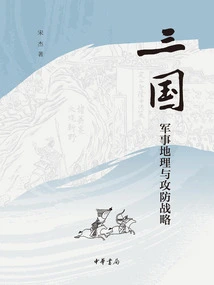
三国军事地理与攻防战略
Song Jie
"Military Geography and Offensive and Defensive Strategies of the Three Kingdoms" is a new book published by Mr. Song Jie, the author of "A Study on the Struggle for Strategic Areas and Offensive and Defensive Strategies of the Three Kingdoms". This book collects 6 special topics written in recent years, respectively discussing Cao Cao's strategic defense deployment after the Battle of Chibi, the evolution of the highest military and political institutions during the reigns of Liu Bei and Zhuge Liang of the Shu Han Dynasty, Wudu in the Shu-Wei War, Sun Ce's capture of Jiangdong and his combat strategy, Sun Quan's rule The changes in the capital city, troop deployment and main attack direction during the period, Lukou and Puqi in the Three Kingdoms War at the end of Han Dynasty, and the restrictive influence of the economic region, terrain, hydrology and transportation conditions as well as the distribution of political forces on the offensive and defensive routes and troop deployment strategies of the three countries were made in-depth.
"Military Geography and Offensive and Defensive Strategies of the Three Kingdoms" is a new book published by Mr. Song Jie, the author of "A Study on the Struggle for Strategic Areas and Offensive and Defensive Strategies of the Three Kingdoms". This book collects 6 special topics written in recent years, respectively discussing Cao Cao's strategic defense deployment after the Battle of Chibi, the evolution of the highest military and political institutions during the reigns of Liu Bei and Zhuge Liang of the Shu Han Dynasty, Wudu in the Shu-Wei War, Sun Ce's capture of Jiangdong and his combat strategy, Sun Quan's rule The changes in the capital city, troop deployment and main attack direction during the period, Lukou and Puqi in the Three Kingdoms War at the end of Han Dynasty, and the restrictive influence of the economic region, terrain, hydrology and transportation conditions as well as the distribution of political forces on the offensive and defensive routes and troop deployment strategies of the three countries were made in-depth.
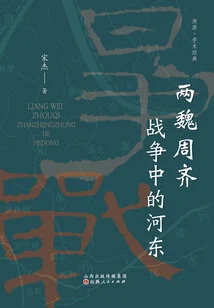
两魏周齐战争中的河东
Song Jie
This book is one of the representative works of the historical military geographer Song Jie. It is an extension of "The Geographic Hub of Ancient Chinese Wars" and presents in depth the "Hedong geographical hub" in the struggle for hegemony between the two Wei, Zhou and Qi. The author first sorted out the evolution of the Hedong administrative region during the Qin, Han, Wei and Jin Dynasties, clarified the scope of the geographical concept of "Hedong", and discussed the regional characteristics of Hedong (today's Yuncheng area) in terms of economy, topography, hydrology, transportation and other aspects. On this basis, the author systematically examines the evolution, ups and downs of counties and city garrison in the Hedong administrative region; analyzes the political situation when the Eastern and Western Wei Dynasties split from the perspective of strategic geographical research, and focuses on the military competition in Hedong to sort out the war course of the East-West confrontation in the late Northern Dynasties. During this period, the king and his ministers battled wits and courage with each other, making endless plans and feats. There are excellent analyzes of the counterattacks of the Eastern Wei and Northern Qi against the Fenbei area in Hedong after the Battle of Shayuan, the characteristics and adjustments of the Western Wei and Northern Zhou's Eastern Expedition strategies, the process of Emperor Wu of Zhou's Pingqi campaign and the reasons for its victory, etc. The two Wei, Zhou and Qi regimes faced each other across the Yellow River. Hedong was the central stage for both sides to display their strategies. For the Yuwen family and the Gao family, the ownership of Hedong and the degree of military utilization directly affected the fate of the two regimes. This book is an excellent work to understand the history of the late Northern Dynasties from the "Hedong perspective".
This book is one of the representative works of the historical military geographer Song Jie. It is an extension of "The Geographic Hub of Ancient Chinese Wars" and presents in depth the "Hedong geographical hub" in the struggle for hegemony between the two Wei, Zhou and Qi. The author first sorted out the evolution of the Hedong administrative region during the Qin, Han, Wei and Jin Dynasties, clarified the scope of the geographical concept of "Hedong", and discussed the regional characteristics of Hedong (today's Yuncheng area) in terms of economy, topography, hydrology, transportation and other aspects. On this basis, the author systematically examines the evolution, ups and downs of counties and city garrison in the Hedong administrative region; analyzes the political situation when the Eastern and Western Wei Dynasties split from the perspective of strategic geographical research, and focuses on the military competition in Hedong to sort out the war course of the East-West confrontation in the late Northern Dynasties. During this period, the king and his ministers battled wits and courage with each other, making endless plans and feats. There are excellent analyzes of the counterattacks of the Eastern Wei and Northern Qi against the Fenbei area in Hedong after the Battle of Shayuan, the characteristics and adjustments of the Western Wei and Northern Zhou's Eastern Expedition strategies, the process of Emperor Wu of Zhou's Pingqi campaign and the reasons for its victory, etc. The two Wei, Zhou and Qi regimes faced each other across the Yellow River. Hedong was the central stage for both sides to display their strategies. For the Yuwen family and the Gao family, the ownership of Hedong and the degree of military utilization directly affected the fate of the two regimes. This book is an excellent work to understand the history of the late Northern Dynasties from the "Hedong perspective".
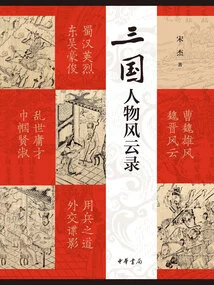
三国人物风云录
Song Jie
"Three Kingdoms Characters" is divided into eight topics: "Cao Wei Xiongfeng", "Wei Jin Dynasty", "Shu Han Heroes", "Eastern Wu Heroes", "The Way of Military Use", "Diplomatic Spies", "Mediocre Talents in Troubled Times" and "Women and Virtues". It contains 101 articles, recording and commenting on the little-known anecdotes of the Three Kingdoms in the late Han Dynasty, and "The Romance of the Three Kingdoms" It contains real historical relics that are different from traditional narratives, and reveals the character traits and life experiences of Cao Cao, Cao Pi, Sima Yi and his son, Liu Bei, Zhuge Liang, Sun Quan and many other characters from a special perspective, as well as some important aspects of the war, culture, and system at that time, allowing readers to have a deeper and more comprehensive understanding of the historical deeds of the Three Kingdoms.
"Three Kingdoms Characters" is divided into eight topics: "Cao Wei Xiongfeng", "Wei Jin Dynasty", "Shu Han Heroes", "Eastern Wu Heroes", "The Way of Military Use", "Diplomatic Spies", "Mediocre Talents in Troubled Times" and "Women and Virtues". It contains 101 articles, recording and commenting on the little-known anecdotes of the Three Kingdoms in the late Han Dynasty, and "The Romance of the Three Kingdoms" It contains real historical relics that are different from traditional narratives, and reveals the character traits and life experiences of Cao Cao, Cao Pi, Sima Yi and his son, Liu Bei, Zhuge Liang, Sun Quan and many other characters from a special perspective, as well as some important aspects of the war, culture, and system at that time, allowing readers to have a deeper and more comprehensive understanding of the historical deeds of the Three Kingdoms.
Three Kingdoms Decryption
History三国解密
Song Jie
Was Ma Su unjustly killed? Would the ending be different if there was another person guarding the street? So Zhuge Liang is more tolerant than Sima Yi? Baidicheng Tuogu, who wrote the script? Zhang Liao "eight hundred to one hundred thousand", is Sun Quan really that good? When He Jin was killed, what step was missed? He has been missing for three months. Where has Cao Cao gone? After fifty years in power, how ruthless was Sun Quan's imperial skills? Professor Song Jie uses historical materials, military geography, and logical reasoning to cross-check and clearly reveal the true secrets of the Three Kingdoms for you.
Was Ma Su unjustly killed? Would the ending be different if there was another person guarding the street? So Zhuge Liang is more tolerant than Sima Yi? Baidicheng Tuogu, who wrote the script? Zhang Liao "eight hundred to one hundred thousand", is Sun Quan really that good? When He Jin was killed, what step was missed? He has been missing for three months. Where has Cao Cao gone? After fifty years in power, how ruthless was Sun Quan's imperial skills? Professor Song Jie uses historical materials, military geography, and logical reasoning to cross-check and clearly reveal the true secrets of the Three Kingdoms for you.
三国兵争要地与攻守战略研究(国家社科基金后期资助项目)
Song Jie
Historically, there were frequent wars during the Three Kingdoms period. However, due to the complicated historical clues, lack of historical records, and limited archaeological discoveries, there are currently not many research results on the Three Kingdoms' military battles for strategic locations and offensive and defensive strategies. The author of this book conducts detailed research and discussion on the important military towns and military strategies of Wei, Shu, and Wu during the Three Kingdoms period, and conducts a relatively comprehensive and systematic study on the routes, defenses, and deployments of the wars during the Three Kingdoms period. It is a unique research monograph on historical military geography. The book draws 52 war geography maps, which has strong academic reference value.
Historically, there were frequent wars during the Three Kingdoms period. However, due to the complicated historical clues, lack of historical records, and limited archaeological discoveries, there are currently not many research results on the Three Kingdoms' military battles for strategic locations and offensive and defensive strategies. The author of this book conducts detailed research and discussion on the important military towns and military strategies of Wei, Shu, and Wu during the Three Kingdoms period, and conducts a relatively comprehensive and systematic study on the routes, defenses, and deployments of the wars during the Three Kingdoms period. It is a unique research monograph on historical military geography. The book draws 52 war geography maps, which has strong academic reference value.
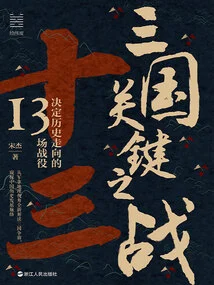
三国关键之战:决定历史走向的13场战役(经纬度丛书)
Song Jie
This book is the latest work of Song Jie, a famous historical and military geographer. During the Three Kingdoms period in Chinese history, the North and the South were in opposition, and Wei, Shu, and Wu attacked and resisted each other for decades. The wars during the Three Kingdoms period had some specific distinctive characteristics, such as the geographical situation changed into a confrontation between the north and the south, the war lasted for a long time, and the final outcome of the Civil War was determined by water battles. This book discusses 13 decisive battles that took place during the Three Kingdoms period. They are Dong Zhuo's battle with the princes of Guandong, Sun Ce's battle to capture Jiangdong, Yuan Cao's battle at Guandu, the Battle of Chibi, Cao Cao's battle to capture Guanzhong, Liu Bei's battle to capture Yizhou, Sun Liu's battle to capture the three southern counties, Liu Bei's capture of Hanzhong, Sun Quan's battle to capture Jingzhou, etc. The book tells the background and process of these important battles, as well as the reasons for victory and defeat, characteristics and important impacts, clarifies their ins and outs, and summarizes the experiences and lessons learned.
This book is the latest work of Song Jie, a famous historical and military geographer. During the Three Kingdoms period in Chinese history, the North and the South were in opposition, and Wei, Shu, and Wu attacked and resisted each other for decades. The wars during the Three Kingdoms period had some specific distinctive characteristics, such as the geographical situation changed into a confrontation between the north and the south, the war lasted for a long time, and the final outcome of the Civil War was determined by water battles. This book discusses 13 decisive battles that took place during the Three Kingdoms period. They are Dong Zhuo's battle with the princes of Guandong, Sun Ce's battle to capture Jiangdong, Yuan Cao's battle at Guandu, the Battle of Chibi, Cao Cao's battle to capture Guanzhong, Liu Bei's battle to capture Yizhou, Sun Liu's battle to capture the three southern counties, Liu Bei's capture of Hanzhong, Sun Quan's battle to capture Jingzhou, etc. The book tells the background and process of these important battles, as well as the reasons for victory and defeat, characteristics and important impacts, clarifies their ins and outs, and summarizes the experiences and lessons learned.