Library
Browse and search books
8 novels found
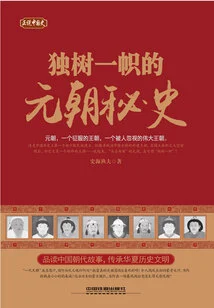
正说中国史:独树一帜的元朝秘史
Shihai Fisherman
This book tells the story of the Yuan Dynasty, an important period in the 5,000-year history of Chinese civilization. It uses humorous and vivid writing to delicately depict the characters and customs of the Yuan Dynasty and various worldly affairs, and restores to readers an intuitive and life-friendly history of the Yuan Dynasty.
This book tells the story of the Yuan Dynasty, an important period in the 5,000-year history of Chinese civilization. It uses humorous and vivid writing to delicately depict the characters and customs of the Yuan Dynasty and various worldly affairs, and restores to readers an intuitive and life-friendly history of the Yuan Dynasty.
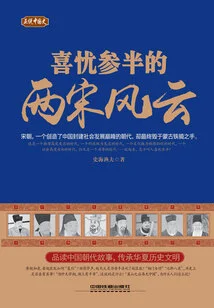
正说中国史:喜忧参半的两宋风云
Shihai Fisherman
This book tells the story of the Song Dynasty, an important period in the 5,000-year history of Chinese civilization. It uses humorous and vivid writing to delicately depict the characters and customs of the Song Dynasty and various worldly affairs, and restores to readers an intuitive and life-friendly history of the Song Dynasty.
This book tells the story of the Song Dynasty, an important period in the 5,000-year history of Chinese civilization. It uses humorous and vivid writing to delicately depict the characters and customs of the Song Dynasty and various worldly affairs, and restores to readers an intuitive and life-friendly history of the Song Dynasty.
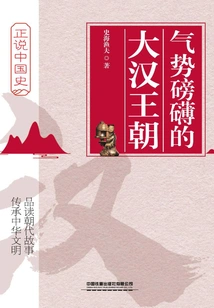
The Majestic Han Dynasty
History气势磅礴的大汉王朝
Shihai Fisherman
This book tells the story of an important period in ancient Chinese history - the historical evolution of the Han Dynasty. The Han Dynasty was a unified dynasty after the Qin Dynasty and was divided into the Western Han Dynasty and the Eastern Han Dynasty. In 206 BC, Liu Bang destroyed the Qin Dynasty. In 202 BC, Liu Bang proclaimed himself emperor. The country was named Han, and its capital was Chang'an. It was called the Western Han Dynasty or the Former Han Dynasty in history. In 8 AD, Wang Mang proclaimed himself emperor on behalf of the Han Dynasty and gave the country a new name. In 25 AD, Liu Xiu reestablished the Han Dynasty and established the capital in Luoyang, which was known as the Eastern Han Dynasty or the Later Han Dynasty in history. In 220 AD, the Han Dynasty fell. There were twenty-four emperors in the Han Dynasty, who ruled for 406 years. The Han Dynasty was a famous highlight moment in Chinese history, with a strong national power, a prosperous society, a developed economy, and many famous historical figures. The history (story) of the Han Dynasty is extremely exciting.
This book tells the story of an important period in ancient Chinese history - the historical evolution of the Han Dynasty. The Han Dynasty was a unified dynasty after the Qin Dynasty and was divided into the Western Han Dynasty and the Eastern Han Dynasty. In 206 BC, Liu Bang destroyed the Qin Dynasty. In 202 BC, Liu Bang proclaimed himself emperor. The country was named Han, and its capital was Chang'an. It was called the Western Han Dynasty or the Former Han Dynasty in history. In 8 AD, Wang Mang proclaimed himself emperor on behalf of the Han Dynasty and gave the country a new name. In 25 AD, Liu Xiu reestablished the Han Dynasty and established the capital in Luoyang, which was known as the Eastern Han Dynasty or the Later Han Dynasty in history. In 220 AD, the Han Dynasty fell. There were twenty-four emperors in the Han Dynasty, who ruled for 406 years. The Han Dynasty was a famous highlight moment in Chinese history, with a strong national power, a prosperous society, a developed economy, and many famous historical figures. The history (story) of the Han Dynasty is extremely exciting.
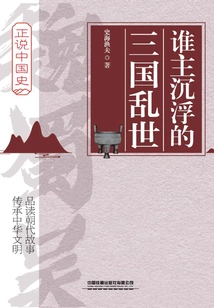
谁主沉浮的三国乱世
Shihai Fisherman
This book tells the story of an important period in ancient Chinese history - the historical evolution of the Three Kingdoms period. The Three Kingdoms (220-280) was a historical period that started from the Eastern Han Dynasty and started from the Western Jin Dynasty. It was divided into three regimes: Cao Wei, Shu Han, and Soochow. In 220, Cao Pi usurped the Han Dynasty and proclaimed himself emperor. The country was named "Wei" and the history was called Cao Wei. The history of the Three Kingdoms officially began. The following year, Liu Bei continued the Han Dynasty in Chengdu, which was known as Shu Han in history. In 229, Sun Quan proclaimed himself emperor, the country was named "Wu", and the history was called Soochow. At this point, the Three Kingdoms were officially established. In 263, Sima Zhao of Cao Wei launched a war between Wei and Shu, and the Shu Han Dynasty was destroyed. Sima Zhao died of illness two years later. His son Sima Yan deposed Emperor Yuan of Wei and established his own country. The founding name of the country was "Jin", which was known as the Western Jin Dynasty in history. In 280 AD, the Western Jin Dynasty destroyed Dongwu and unified China. This ended the Three Kingdoms period and entered the Jin Dynasty.
This book tells the story of an important period in ancient Chinese history - the historical evolution of the Three Kingdoms period. The Three Kingdoms (220-280) was a historical period that started from the Eastern Han Dynasty and started from the Western Jin Dynasty. It was divided into three regimes: Cao Wei, Shu Han, and Soochow. In 220, Cao Pi usurped the Han Dynasty and proclaimed himself emperor. The country was named "Wei" and the history was called Cao Wei. The history of the Three Kingdoms officially began. The following year, Liu Bei continued the Han Dynasty in Chengdu, which was known as Shu Han in history. In 229, Sun Quan proclaimed himself emperor, the country was named "Wu", and the history was called Soochow. At this point, the Three Kingdoms were officially established. In 263, Sima Zhao of Cao Wei launched a war between Wei and Shu, and the Shu Han Dynasty was destroyed. Sima Zhao died of illness two years later. His son Sima Yan deposed Emperor Yuan of Wei and established his own country. The founding name of the country was "Jin", which was known as the Western Jin Dynasty in history. In 280 AD, the Western Jin Dynasty destroyed Dongwu and unified China. This ended the Three Kingdoms period and entered the Jin Dynasty.
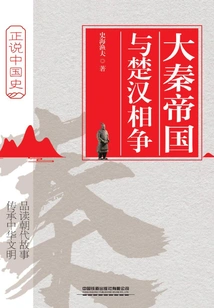
大秦帝国与楚汉相争
Shihai Fisherman
This book uses popular and humorous writing techniques to introduce the historical evolution of the Qin Dynasty in ancient Chinese history. The Qin Dynasty was the first unified dynasty in Chinese history that developed from the Qin State in the late Warring States Period. It lasted for three generations, with two emperors and one king, and the state lasted for fourteen years. The Qin Dynasty established an imperial system and a central official system represented by the Three Gongs and Nine Ministers, abolished the feudal system and replaced it with the county system, completely breaking the Shiqing Shilu system since the Western Zhou Dynasty. It strongly safeguarded the unity of the country and strengthened the central government's control over local areas. It also promoted the unified cultural customs of traveling in the same track, writing in the same text, and practicing in the same order, which strengthened the cohesion of the unified nation and laid the foundation for the rule of the unified Chinese dynasty. Therefore, it is called "Qin's politics and law have been followed for a hundred generations." The Qin Dynasty ended the five hundred years of division and separatism among feudal lords since the Spring and Autumn Period and the Warring States Period, and became the first centralized state in Chinese history that featured multi-ethnic integration.
This book uses popular and humorous writing techniques to introduce the historical evolution of the Qin Dynasty in ancient Chinese history. The Qin Dynasty was the first unified dynasty in Chinese history that developed from the Qin State in the late Warring States Period. It lasted for three generations, with two emperors and one king, and the state lasted for fourteen years. The Qin Dynasty established an imperial system and a central official system represented by the Three Gongs and Nine Ministers, abolished the feudal system and replaced it with the county system, completely breaking the Shiqing Shilu system since the Western Zhou Dynasty. It strongly safeguarded the unity of the country and strengthened the central government's control over local areas. It also promoted the unified cultural customs of traveling in the same track, writing in the same text, and practicing in the same order, which strengthened the cohesion of the unified nation and laid the foundation for the rule of the unified Chinese dynasty. Therefore, it is called "Qin's politics and law have been followed for a hundred generations." The Qin Dynasty ended the five hundred years of division and separatism among feudal lords since the Spring and Autumn Period and the Warring States Period, and became the first centralized state in Chinese history that featured multi-ethnic integration.
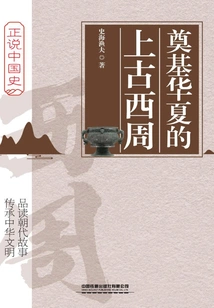
奠基华夏的上古西周
Shihai Fisherman
The author of this book uses a popular and humorous writing style to introduce the historical stories of the ancient Chinese history and the Xia, Shang and Western Zhou Dynasty, starting from Nuwa's turning of earth to teach people, patching up the sky to teach people, as well as the construction of houses by the Chao family and the tribal disputes of Emperor Chi You, Dayu's control of floods, Bigan's removal of the heart, the punishment of cannon burning, and King Wu's defeat of Zhou, until King You of Zhou was killed and the Western Zhou Dynasty ended. This period of history dates back a long time, and there are few written and physical materials from that time. It mainly relies on legends to spread to this day. Therefore, this period of history has many ambiguities for later people. However, this period of history laid the foundation for our Chinese nation today and is an indispensable part.
The author of this book uses a popular and humorous writing style to introduce the historical stories of the ancient Chinese history and the Xia, Shang and Western Zhou Dynasty, starting from Nuwa's turning of earth to teach people, patching up the sky to teach people, as well as the construction of houses by the Chao family and the tribal disputes of Emperor Chi You, Dayu's control of floods, Bigan's removal of the heart, the punishment of cannon burning, and King Wu's defeat of Zhou, until King You of Zhou was killed and the Western Zhou Dynasty ended. This period of history dates back a long time, and there are few written and physical materials from that time. It mainly relies on legends to spread to this day. Therefore, this period of history has many ambiguities for later people. However, this period of history laid the foundation for our Chinese nation today and is an indispensable part.
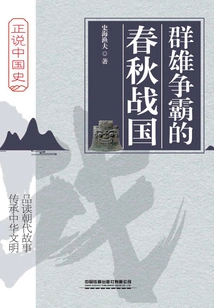
群雄争霸的春秋战国
Shihai Fisherman
This book uses popular and humorous writing techniques to introduce the historical evolution of the Spring and Autumn and Warring States periods in ancient Chinese history. The Spring and Autumn Period and the Warring States Period (770 BC - 221 BC) were a period of great division in Chinese history. After the beginning of the Eastern Zhou Dynasty, the Zhou Dynasty gradually declined, retaining only the name of co-lord of the world but no actual control ability. Due to different socio-economic conditions among the countries in the Central Plains, competition for hegemony among major powers has emerged. The mergers and hegemony of various countries have contributed to the unification of various regions. Therefore, the great social turmoil during the Eastern Zhou Dynasty prepared the conditions for national unification. During this period, capable people emerged in large numbers, and culture, literature, thought, art, etc. Also made great progress.
This book uses popular and humorous writing techniques to introduce the historical evolution of the Spring and Autumn and Warring States periods in ancient Chinese history. The Spring and Autumn Period and the Warring States Period (770 BC - 221 BC) were a period of great division in Chinese history. After the beginning of the Eastern Zhou Dynasty, the Zhou Dynasty gradually declined, retaining only the name of co-lord of the world but no actual control ability. Due to different socio-economic conditions among the countries in the Central Plains, competition for hegemony among major powers has emerged. The mergers and hegemony of various countries have contributed to the unification of various regions. Therefore, the great social turmoil during the Eastern Zhou Dynasty prepared the conditions for national unification. During this period, capable people emerged in large numbers, and culture, literature, thought, art, etc. Also made great progress.
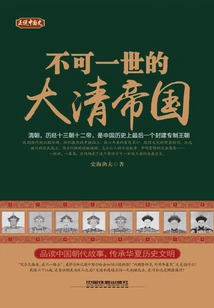
正说中国史:不可一世的大清帝国
Shihai Fisherman
The book "The History of China: The Unparalleled Qing Empire" takes the chronological order of historical events as the main clue, uses vivid words to explain to readers the philosophical wisdom of survival, and the complex and changeable interpersonal relationships in the Qing court. It uses light and humorous short stories to present a three-dimensional panoramic view of the history of the Qing Dynasty, which is worthy of readers' careful appreciation. The Qing Dynasty was the last feudal dynasty in Chinese history. From 1583, when Nurhaci, the founder of the Qing Dynasty, raised an army to the abdication of Emperor Puyi in late 1912, the Qing Dynasty went through its history of more than 300 years. This dynasty has experienced its glory. From Emperor Kangxi to Emperor Qianlong, everyone has been praised by people all over the world. The scene of the "Kangxi and Qianlong Dynasties" seems to make people think that the Qing Dynasty seems to be the "empire on which the sun never sets" in the East. But by the late Qing Dynasty, the once glorious Qing Dynasty seemed to be crumbling. On the one hand, it suppressed domestic revolutionaries, and on the other hand, it was suppressed by Western powers. In the face of internal and external troubles, the Qing government, which had long been exhausted physically and mentally, finally died.
The book "The History of China: The Unparalleled Qing Empire" takes the chronological order of historical events as the main clue, uses vivid words to explain to readers the philosophical wisdom of survival, and the complex and changeable interpersonal relationships in the Qing court. It uses light and humorous short stories to present a three-dimensional panoramic view of the history of the Qing Dynasty, which is worthy of readers' careful appreciation. The Qing Dynasty was the last feudal dynasty in Chinese history. From 1583, when Nurhaci, the founder of the Qing Dynasty, raised an army to the abdication of Emperor Puyi in late 1912, the Qing Dynasty went through its history of more than 300 years. This dynasty has experienced its glory. From Emperor Kangxi to Emperor Qianlong, everyone has been praised by people all over the world. The scene of the "Kangxi and Qianlong Dynasties" seems to make people think that the Qing Dynasty seems to be the "empire on which the sun never sets" in the East. But by the late Qing Dynasty, the once glorious Qing Dynasty seemed to be crumbling. On the one hand, it suppressed domestic revolutionaries, and on the other hand, it was suppressed by Western powers. In the face of internal and external troubles, the Qing government, which had long been exhausted physically and mentally, finally died.