Library
Browse and search books
6 novels found
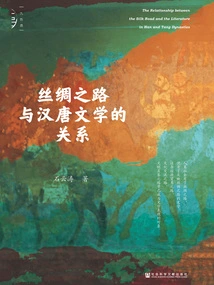
丝绸之路与汉唐文学的关系
Shi Yuntao
The Silk Road is a road of great significance that promotes the progress of human civilization. It is first of all the result of "human" activities, and human activities are bound to be reflected in literature. Literature is the image reflection and emotional projection of human social life. The development and changes of literature are a barometer of social and historical development and changes. Literature is the aesthetic expression of human social history. When human society had the Silk Road, it also had literature reflecting the Silk Road. This road of economic trade, cultural exchange, and mutual learning among civilizations has long been the object of literary expression. Poetry, prose, novels, and other literary styles in the Han and Tang Dynasties all have rich Silk Road connotations, reflecting the Silk Road's transportation conditions, natural features, historical changes, and Sino-foreign exchanges. The economic and trade activities of the Silk Road and the achievements of foreign civilizations have become literary images, inspiring people's interest and inspiration in creation, and injecting fresh blood and powerful power into literature.
The Silk Road is a road of great significance that promotes the progress of human civilization. It is first of all the result of "human" activities, and human activities are bound to be reflected in literature. Literature is the image reflection and emotional projection of human social life. The development and changes of literature are a barometer of social and historical development and changes. Literature is the aesthetic expression of human social history. When human society had the Silk Road, it also had literature reflecting the Silk Road. This road of economic trade, cultural exchange, and mutual learning among civilizations has long been the object of literary expression. Poetry, prose, novels, and other literary styles in the Han and Tang Dynasties all have rich Silk Road connotations, reflecting the Silk Road's transportation conditions, natural features, historical changes, and Sino-foreign exchanges. The economic and trade activities of the Silk Road and the achievements of foreign civilizations have become literary images, inspiring people's interest and inspiration in creation, and injecting fresh blood and powerful power into literature.
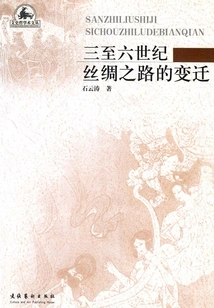
三至六世纪丝绸之路的变迁
Shi Yuntao
This book is one of the literature, history, philosophy and academic collections on the changes in the Silk Road from the third to the sixth century. It specifically includes: the development and changes of the Silk Road west of Congling, the transportation between China and Sasanian Persia, the cities along the Western Region Road, the management and utilization of the oasis road by various Chinese regimes, the prosperity of the Kingdom of Aksum, the division of north and south China, and the change of political power.
This book is one of the literature, history, philosophy and academic collections on the changes in the Silk Road from the third to the sixth century. It specifically includes: the development and changes of the Silk Road west of Congling, the transportation between China and Sasanian Persia, the cities along the Western Region Road, the management and utilization of the oasis road by various Chinese regimes, the prosperity of the Kingdom of Aksum, the division of north and south China, and the change of political power.
汉代外来文明研究
Shi Yuntao
Based on the comprehensive collection, arrangement and study of historical documents and archaeological materials of the Han Dynasty, this book conducts an in-depth discussion of the foreign civilization imported by the Han Dynasty and its impact from the fields of animals, plants, utensils, furs, textiles, spices, medicines, jewelry, religion, art, literature and other fields. This book also discusses how the Han Dynasty's wars against neighboring and western regions, trade, envoy exchanges, Buddhist spread, and people-to-people exchanges with neighboring nations and countries outside the region promoted the development of cultural exchanges between China and foreign countries and the import of foreign civilizations, demonstrating the important role of cultural exchanges in promoting the progress of human civilization.
Based on the comprehensive collection, arrangement and study of historical documents and archaeological materials of the Han Dynasty, this book conducts an in-depth discussion of the foreign civilization imported by the Han Dynasty and its impact from the fields of animals, plants, utensils, furs, textiles, spices, medicines, jewelry, religion, art, literature and other fields. This book also discusses how the Han Dynasty's wars against neighboring and western regions, trade, envoy exchanges, Buddhist spread, and people-to-people exchanges with neighboring nations and countries outside the region promoted the development of cultural exchanges between China and foreign countries and the import of foreign civilizations, demonstrating the important role of cultural exchanges in promoting the progress of human civilization.
唐诗镜像中的丝绸之路
Shi Yuntao
There is a large amount of research material on the Silk Road in Tang poetry. The Silk Road Oasis Road, Prairie Road, Maritime Silk Road, and Southern Silk Road all have vivid and vivid expressions in Tang poetry. The focus of this book's research is to use Tang poetry as historical data to explore the rise and fall of the Silk Road in the Tang Dynasty as reflected in Tang poetry. It also reveals the role that the development of the Silk Road and Sino-foreign exchanges played in promoting the prosperity of Tang poetry. This book shows Chang'an, the starting point of the Silk Road in the Tang poetry scroll, the Silk Road's Longyou Road, Hexi Road, South and North Western Roads, Grassland Road, Tuyuhun Road, Tang-Tibet Ancient Road, Southern Silk Road's Annan Road, Wuchi Road, Lingguan Road and Yunnan-Burma Road, and the magnificent picture of the Maritime Silk Road. Tang poetry has witnessed the rise and fall of various routes on the Silk Road. From the descriptions of Tang poetry, we can feel the rich and complex emotional mentality of the Tang people.
There is a large amount of research material on the Silk Road in Tang poetry. The Silk Road Oasis Road, Prairie Road, Maritime Silk Road, and Southern Silk Road all have vivid and vivid expressions in Tang poetry. The focus of this book's research is to use Tang poetry as historical data to explore the rise and fall of the Silk Road in the Tang Dynasty as reflected in Tang poetry. It also reveals the role that the development of the Silk Road and Sino-foreign exchanges played in promoting the prosperity of Tang poetry. This book shows Chang'an, the starting point of the Silk Road in the Tang poetry scroll, the Silk Road's Longyou Road, Hexi Road, South and North Western Roads, Grassland Road, Tuyuhun Road, Tang-Tibet Ancient Road, Southern Silk Road's Annan Road, Wuchi Road, Lingguan Road and Yunnan-Burma Road, and the magnificent picture of the Maritime Silk Road. Tang poetry has witnessed the rise and fall of various routes on the Silk Road. From the descriptions of Tang poetry, we can feel the rich and complex emotional mentality of the Tang people.
魏晋南北朝丝绸之路与对外关系史研究
Shi Yuntao
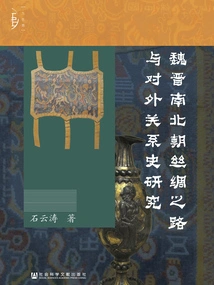
This book is a phased result of a major project of the National Social Science Fund (Project Approval Number: 19ZDA261), and the final result of a major landmark project of Beijing Foreign Studies University's "Double First-Class" construction in 2020. The Wei, Jin, Southern and Northern Dynasties were an important period of development of the Silk Road. In terms of transportation, in addition to the use of the traditional Silk Road since the Han Dynasty, new transportation lines have been opened and utilized; in terms of exchanges, transportation and trade relations have been established with more countries and regions; in terms of exchanges, the content of economic, trade and cultural exchanges has been greatly expanded and enriched. This book is divided into ten chapters to introduce the Silk Road during the Wei, Jin, Southern and Northern Dynasties. The first chapter summarizes the historical research on the relationship between the Wei, Jin, Southern and Northern Dynasties in the past 40 years; the second and third chapters respectively introduce the Sino-Western transportation in the Northern Wei and the Southern Dynasty Xiaoliang period; the fourth chapter discusses the utilization of the Prairie Silk Road from the 3rd to the 6th century; the fifth and sixth chapters explore the Maritime Silk Road based on Song Yun and Huisheng's journey to the west and Zhu Ying and Kangtai's mission to Funan; Chapters 7, 8, 9 and 10 respectively discuss the import of foreign artifacts, plants, animals and spices and medieval society.
This book is a phased result of a major project of the National Social Science Fund (Project Approval Number: 19ZDA261), and the final result of a major landmark project of Beijing Foreign Studies University's "Double First-Class" construction in 2020. The Wei, Jin, Southern and Northern Dynasties were an important period of development of the Silk Road. In terms of transportation, in addition to the use of the traditional Silk Road since the Han Dynasty, new transportation lines have been opened and utilized; in terms of exchanges, transportation and trade relations have been established with more countries and regions; in terms of exchanges, the content of economic, trade and cultural exchanges has been greatly expanded and enriched. This book is divided into ten chapters to introduce the Silk Road during the Wei, Jin, Southern and Northern Dynasties. The first chapter summarizes the historical research on the relationship between the Wei, Jin, Southern and Northern Dynasties in the past 40 years; the second and third chapters respectively introduce the Sino-Western transportation in the Northern Wei and the Southern Dynasty Xiaoliang period; the fourth chapter discusses the utilization of the Prairie Silk Road from the 3rd to the 6th century; the fifth and sixth chapters explore the Maritime Silk Road based on Song Yun and Huisheng's journey to the west and Zhu Ying and Kangtai's mission to Funan; Chapters 7, 8, 9 and 10 respectively discuss the import of foreign artifacts, plants, animals and spices and medieval society.
Anshi Rebellion
History安史之乱
Shi Yuntao
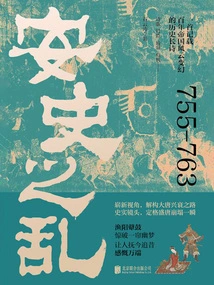
In order to solve the mystery of the changes in the Tang Dynasty, we must first decipher the code of the Anshi Rebellion. In 755, a war that lasted for seven or eight years began. From the cracks in the empire to its collapse, who tolerates adultery and reaps the consequences? Who pushed the Tang Dynasty into the abyss? Who resisted internal and external troubles and endured hardships? Bloodshed and pain, adventure and contest, desire and fate, after the smoke dissipated, the aftermath of the war still rippled through Tang Dynasty society for a long time. This book interprets the causes and consequences of the Anshi Rebellion from a new perspective, and interprets the rise and decline of the Tang Dynasty.
In order to solve the mystery of the changes in the Tang Dynasty, we must first decipher the code of the Anshi Rebellion. In 755, a war that lasted for seven or eight years began. From the cracks in the empire to its collapse, who tolerates adultery and reaps the consequences? Who pushed the Tang Dynasty into the abyss? Who resisted internal and external troubles and endured hardships? Bloodshed and pain, adventure and contest, desire and fate, after the smoke dissipated, the aftermath of the war still rippled through Tang Dynasty society for a long time. This book interprets the causes and consequences of the Anshi Rebellion from a new perspective, and interprets the rise and decline of the Tang Dynasty.