Library
Browse and search books
9 novels found
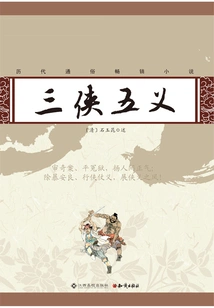
Three Heroes and Five Righteousnesses
General Fiction三侠五义
Shi Yukun
The novel tells the story of Bao Zheng in the Song Dynasty, who, with the help of knights and righteous men, tried strange cases, vindicated injustice, and eradicated violence. The novel has a total of 120 chapters, divided into two parts. The first part begins with the civet cat exchanging for the prince, and tells the story of the knights assisting Bao Zheng in his struggle against the treacherous minister Pang Ji and his son; the second part mainly writes the story of the knights assisting Yan Cha Sanjian to eliminate the faction of the King of Xiangyang. The book takes Bao Gong's birth, official career, prime ministership, and case solving as a lead, and connects the three knights Zhan Zhao, Ouyang Chun, the Ding brothers, Lu Fang, Han Zhang, Xu Qing, Jiang Ping, the Five Rats of Bai Yutang, as well as Zhihua, Ai Hu and other knights, creating an image of a selfless and upright official who is not afraid of power. Among them, plots such as unfair imprisonment, guillotine favoring Yu, and the removal of the vassal king have exposed the darkness of feudal rule to a certain extent and also demonstrated the fighting spirit of the people. The book is interspersed with a large number of chivalrous activities, including righteous acts of drawing swords to help when encountering injustice, and also showing their nature of loyal service to the ruling class.
The novel tells the story of Bao Zheng in the Song Dynasty, who, with the help of knights and righteous men, tried strange cases, vindicated injustice, and eradicated violence. The novel has a total of 120 chapters, divided into two parts. The first part begins with the civet cat exchanging for the prince, and tells the story of the knights assisting Bao Zheng in his struggle against the treacherous minister Pang Ji and his son; the second part mainly writes the story of the knights assisting Yan Cha Sanjian to eliminate the faction of the King of Xiangyang. The book takes Bao Gong's birth, official career, prime ministership, and case solving as a lead, and connects the three knights Zhan Zhao, Ouyang Chun, the Ding brothers, Lu Fang, Han Zhang, Xu Qing, Jiang Ping, the Five Rats of Bai Yutang, as well as Zhihua, Ai Hu and other knights, creating an image of a selfless and upright official who is not afraid of power. Among them, plots such as unfair imprisonment, guillotine favoring Yu, and the removal of the vassal king have exposed the darkness of feudal rule to a certain extent and also demonstrated the fighting spirit of the people. The book is interspersed with a large number of chivalrous activities, including righteous acts of drawing swords to help when encountering injustice, and also showing their nature of loyal service to the ruling class.
Continuation of Xiaowuyi
General Fiction续小五义
Shi Yukun
"Continuation of Xiaowuyi" is one of the sequels to the classic "Three Heroes and Five Righteousnesses", also known as "The Story of Zhonglie Xu Xiaowuyi" and "The Story of Sanxu Zhonglie's Chivalry". The earliest version can be seen in the Wenguanglou publication in Beijing in the Xinmao year of Guangxu 17th (1891). One hundred and twenty-four chapters. It is a representative work of traditional Chinese chivalrous public case novels. The plot of "Continuing Little Five Righteousness" is continued from "Little Five Righteousness". It follows the heroes who broke through the copper net array and the King of Xiangyang fled. The heroes are still killing thieves in the rivers and lakes, beating Taisui Square, destroying Taohua Village, stealing the Fish Intestine Sword, and capturing the White Chrysanthemum... Finally, the King of Xiangyang was captured. The emperor discussed their merits and all the chivalrous people were rewarded, so the book ends. The plot of the story is twists and turns, full of changes, and can arouse readers' suspense. The language is colloquial and popular, with a lot of dialects and dialects, and the narrative is just right. Lu Xun once commented on "Three Heroes and Five Righteousness" and its sequel, "It is vivid and has the habit of commenting."
"Continuation of Xiaowuyi" is one of the sequels to the classic "Three Heroes and Five Righteousnesses", also known as "The Story of Zhonglie Xu Xiaowuyi" and "The Story of Sanxu Zhonglie's Chivalry". The earliest version can be seen in the Wenguanglou publication in Beijing in the Xinmao year of Guangxu 17th (1891). One hundred and twenty-four chapters. It is a representative work of traditional Chinese chivalrous public case novels. The plot of "Continuing Little Five Righteousness" is continued from "Little Five Righteousness". It follows the heroes who broke through the copper net array and the King of Xiangyang fled. The heroes are still killing thieves in the rivers and lakes, beating Taisui Square, destroying Taohua Village, stealing the Fish Intestine Sword, and capturing the White Chrysanthemum... Finally, the King of Xiangyang was captured. The emperor discussed their merits and all the chivalrous people were rewarded, so the book ends. The plot of the story is twists and turns, full of changes, and can arouse readers' suspense. The language is colloquial and popular, with a lot of dialects and dialects, and the narrative is just right. Lu Xun once commented on "Three Heroes and Five Righteousness" and its sequel, "It is vivid and has the habit of commenting."
Xiao Wuyi
General Fiction小五义
Shi Yukun
"Little Five Righteousness" is the sequel to "Three Heroes and Five Righteousness". Like "Three Heroes and Five Righteousness", it is a famous chivalrous novel in ancient my country. It is widely circulated and very popular among readers. The plot of the book follows "Three Heroes and Five Righteousness": Yingyuan Yanchasan was ordered to patrol Xiangyang, and on the way he heard that Zhao Jue, the king of Xiangyang, was plotting a rebellion in an attempt to seize the throne. Three heroes and five righteous people gathered around Yan Chasan, scrambling to find out the inside story of the copper net formation deployed by King Xiangyang, in order to find a way to break the formation and eliminate harm to the court.
"Little Five Righteousness" is the sequel to "Three Heroes and Five Righteousness". Like "Three Heroes and Five Righteousness", it is a famous chivalrous novel in ancient my country. It is widely circulated and very popular among readers. The plot of the book follows "Three Heroes and Five Righteousness": Yingyuan Yanchasan was ordered to patrol Xiangyang, and on the way he heard that Zhao Jue, the king of Xiangyang, was plotting a rebellion in an attempt to seize the throne. Three heroes and five righteous people gathered around Yan Chasan, scrambling to find out the inside story of the copper net formation deployed by King Xiangyang, in order to find a way to break the formation and eliminate harm to the court.
Xiao Wuyi
General Fiction小五义
Shi Yukun
The full name of "Xiaowuyi" is "Zhonglie Xiaowuyi Biography", also known as "The Continuation of Zhonglie Xiaowuyi Biography", with a total of 124 chapters. The book takes the main line of the book: King Zhao Jue of Xiangyang, who had a grudge against his past, recruited troops and conspired to rebel. The emperor ordered the imperial envoy Yan Yin to investigate and deal with the case. It mainly tells the stories of heroes from all walks of life who served the people and promoted justice. The plot is ups and downs, fascinating, and contains all kinds of chivalrous and heroic emotions. In addition, the characters are vividly created and come to life on the page. While people hate the powerful and evil gentry, they also stand in awe of the heroic deeds. This book has been widely circulated among the people and has always been talked about.
The full name of "Xiaowuyi" is "Zhonglie Xiaowuyi Biography", also known as "The Continuation of Zhonglie Xiaowuyi Biography", with a total of 124 chapters. The book takes the main line of the book: King Zhao Jue of Xiangyang, who had a grudge against his past, recruited troops and conspired to rebel. The emperor ordered the imperial envoy Yan Yin to investigate and deal with the case. It mainly tells the stories of heroes from all walks of life who served the people and promoted justice. The plot is ups and downs, fascinating, and contains all kinds of chivalrous and heroic emotions. In addition, the characters are vividly created and come to life on the page. While people hate the powerful and evil gentry, they also stand in awe of the heroic deeds. This book has been widely circulated among the people and has always been talked about.
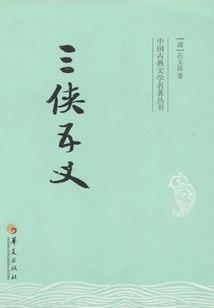
Three Heroes and Five Righteousnesses
General Fiction三侠五义
Shi Yukun
The protagonists of "Chinese Classical Literature Series: Three Heroes and Five Righteousnesses", those chivalrous and righteous heroes who are both wise and courageous, and extremely righteous, are endowed with shocking power, making readers unable to stop. Mr. Lu Xun also gave heartfelt praise for this: "A hero alone in the grassland, always full of energy and spirit, sometimes set off by the state of the world, mixed with humor, and always makes the reckless man particularly interesting." This is the main reason why "Chinese Classical Literature Series: Three Heroes and Five Righteousness" has been popular among people from all walks of life, especially ordinary people for more than 100 years. And its hearty and delicate writing style has always been highly praised by people, making "Chinese Classical Literature Series: Three Heroes and Five Righteousness" a representative work of chivalrous novels on public cases in the Qing Dynasty.
The protagonists of "Chinese Classical Literature Series: Three Heroes and Five Righteousnesses", those chivalrous and righteous heroes who are both wise and courageous, and extremely righteous, are endowed with shocking power, making readers unable to stop. Mr. Lu Xun also gave heartfelt praise for this: "A hero alone in the grassland, always full of energy and spirit, sometimes set off by the state of the world, mixed with humor, and always makes the reckless man particularly interesting." This is the main reason why "Chinese Classical Literature Series: Three Heroes and Five Righteousness" has been popular among people from all walks of life, especially ordinary people for more than 100 years. And its hearty and delicate writing style has always been highly praised by people, making "Chinese Classical Literature Series: Three Heroes and Five Righteousness" a representative work of chivalrous novels on public cases in the Qing Dynasty.
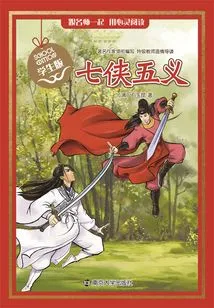
Seven Heroes and Five Righteousness
General Fiction七侠五义
Shi Yukun
This book describes the deeds of the virtuous minister Bao Zheng, explains how the "Five Rats" joined Bao Zheng, and how Bao Zheng and the knights promoted young upright officials, impeached and punished powerful traitors and corrupt officials. It also tells the story of Wang Yi cutting off the gang members of the King of Xiangyang and exploring the conspiracy of the King of Xiangyang.
This book describes the deeds of the virtuous minister Bao Zheng, explains how the "Five Rats" joined Bao Zheng, and how Bao Zheng and the knights promoted young upright officials, impeached and punished powerful traitors and corrupt officials. It also tells the story of Wang Yi cutting off the gang members of the King of Xiangyang and exploring the conspiracy of the King of Xiangyang.
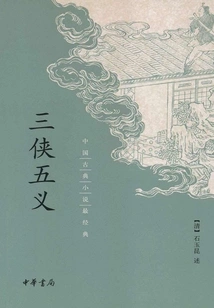
三侠五义(中国古典小说最经典)
Shi Yukun
"Three Heroes and Five Righteousness" was first published in the fifth year of Guangxu (1879), signed by Shi Yukun. At the beginning of the volume, there are two prefaces: Asking the Bamboo Master (Shi Yukun) and Retreating to Thinking about the Master and the Lost Taoist. The rap "Longtu Gongan" became popular during the Jiaqing period, and there are still copies of it today with many lyrics. Later, on this basis, the lyrics were deleted and added into a novel, titled "Long Tu Er Lu". During the Guangxu period, the master of Wenzhu (Shi Yukun) revised and polished it and renamed it "The Legend of Zhonglie Chivalry", also known as "Three Heroes and Five Righteousness", both of which have 120 chapters. The "Three Heroes" refer to Ouyang Chun, the Northern Hero, Zhan Zhao, the Southern Hero, and Ding Zhaolan and Ding Zhaohui, the two heroes of the Ding Family (the two are one hero); the "Five Righteousness" refers to the brothers Lu Fang, the rat that drills the sky, Han Zhang, the rat that penetrates the earth, Xu Qing, the rat that drills the mountain, Jiang Ping, the river rat, and Bai Yutang, the golden-haired rat. The novel tells the story of Bao Zheng in the Northern Song Dynasty, with the help of many chivalrous people, he tried strange cases, rectified unjust cases, and the chivalrous people eradicated violence and performed chivalrous acts of justice. The book contains stories about injustice, "The Guillotine of Pang Yu", "Five Rats in Tokyo", etc. The plots are complicated and clear, and the language is popular. Yu Yue commented on this book: "Coloring in leisure time is a hundred times more energetic. Only with such writing can one write a Chinese novel; such a Chinese novel can be regarded as another kind of writing in the world."
"Three Heroes and Five Righteousness" was first published in the fifth year of Guangxu (1879), signed by Shi Yukun. At the beginning of the volume, there are two prefaces: Asking the Bamboo Master (Shi Yukun) and Retreating to Thinking about the Master and the Lost Taoist. The rap "Longtu Gongan" became popular during the Jiaqing period, and there are still copies of it today with many lyrics. Later, on this basis, the lyrics were deleted and added into a novel, titled "Long Tu Er Lu". During the Guangxu period, the master of Wenzhu (Shi Yukun) revised and polished it and renamed it "The Legend of Zhonglie Chivalry", also known as "Three Heroes and Five Righteousness", both of which have 120 chapters. The "Three Heroes" refer to Ouyang Chun, the Northern Hero, Zhan Zhao, the Southern Hero, and Ding Zhaolan and Ding Zhaohui, the two heroes of the Ding Family (the two are one hero); the "Five Righteousness" refers to the brothers Lu Fang, the rat that drills the sky, Han Zhang, the rat that penetrates the earth, Xu Qing, the rat that drills the mountain, Jiang Ping, the river rat, and Bai Yutang, the golden-haired rat. The novel tells the story of Bao Zheng in the Northern Song Dynasty, with the help of many chivalrous people, he tried strange cases, rectified unjust cases, and the chivalrous people eradicated violence and performed chivalrous acts of justice. The book contains stories about injustice, "The Guillotine of Pang Yu", "Five Rats in Tokyo", etc. The plots are complicated and clear, and the language is popular. Yu Yue commented on this book: "Coloring in leisure time is a hundred times more energetic. Only with such writing can one write a Chinese novel; such a Chinese novel can be regarded as another kind of writing in the world."
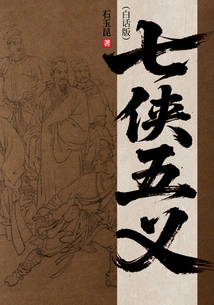
Seven Heroes and Five Righteousness (vernacular Version)
General Fiction七侠五义(白话版)
Shi Yukun
This book is written in vernacular, and the language is concise and easy to understand. The first part of the novel revolves around the growth and case-solving experience of the famous minister Bao Zheng, including classic cases such as the "Wuban Case" and "The Civet Cat for the Crown Prince", portraying his image of being upright and impartial in law enforcement. The middle section focuses on the "cat-and-mouse battle" between the "Royal Cat" Zhan Zhao and the "Golden Mouse" Bai Yutang, detailing the story of the "Five Rats" joining Bao Zheng, and interspersed with unit stories of knights assisting upright officials in impeaching powerful traitors and punishing corruption. The latter section centers on Yan Chasan, the governor of Xiangyang, and describes the rivers and lakes struggle in which the Seven Heroes join forces with the Five Righteous to fight against the rebellion of the King of Xiangyang, cut off his party members, and dismantle the conspiracy.
This book is written in vernacular, and the language is concise and easy to understand. The first part of the novel revolves around the growth and case-solving experience of the famous minister Bao Zheng, including classic cases such as the "Wuban Case" and "The Civet Cat for the Crown Prince", portraying his image of being upright and impartial in law enforcement. The middle section focuses on the "cat-and-mouse battle" between the "Royal Cat" Zhan Zhao and the "Golden Mouse" Bai Yutang, detailing the story of the "Five Rats" joining Bao Zheng, and interspersed with unit stories of knights assisting upright officials in impeaching powerful traitors and punishing corruption. The latter section centers on Yan Chasan, the governor of Xiangyang, and describes the rivers and lakes struggle in which the Seven Heroes join forces with the Five Righteous to fight against the rebellion of the King of Xiangyang, cut off his party members, and dismantle the conspiracy.
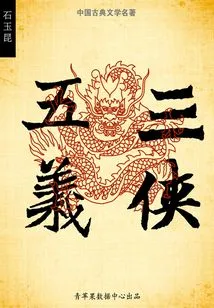
三侠五义(中国古典文学名著)
Shi Yukun
"Three Heroes and Five Righteousness", written by Shi Yukun in the Qing Dynasty, is a classic work of classical chivalrous case novels; it is China's first martial arts novel with real significance, and can be called the originator of Chinese martial arts novels; it is a representative work of chivalrous novels. Due to its numerous versions and widespread circulation, the popular story has had a profound impact on modern Chinese storytelling, martial arts novels and even literature and art.
"Three Heroes and Five Righteousness", written by Shi Yukun in the Qing Dynasty, is a classic work of classical chivalrous case novels; it is China's first martial arts novel with real significance, and can be called the originator of Chinese martial arts novels; it is a representative work of chivalrous novels. Due to its numerous versions and widespread circulation, the popular story has had a profound impact on modern Chinese storytelling, martial arts novels and even literature and art.