Library
Browse and search books
3 novels found
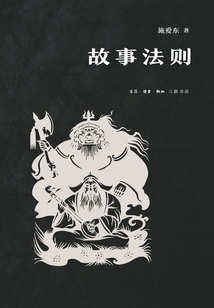
Story Rules
Literature故事法则
Shi Aidong
A folktale is a structurally stable functional combination, a self-organizing system, a tree of life. Once a story begins its life process, it will grow, graft, bloom, and bear fruit on its own. It will also mutate with changes in time and space, and die as the entropy of life increases. In the story, what kind of character does the hero have, what equipment is needed when leaving home, when will the magical assistant appear, why the traitor is always the uncle of the hero, and why misunderstandings are always unavoidable. All plots have a relatively stable structure or routine, and all routines are the optimal results of mutual constraints between specific functions. The structure of the story is both stable and growing. In the seemingly disordered growth, there are always some optimal configurations and optimal endings. Specific problems always correspond to specific solutions. Every popular folktale is the best way to play a game in a specific language.
A folktale is a structurally stable functional combination, a self-organizing system, a tree of life. Once a story begins its life process, it will grow, graft, bloom, and bear fruit on its own. It will also mutate with changes in time and space, and die as the entropy of life increases. In the story, what kind of character does the hero have, what equipment is needed when leaving home, when will the magical assistant appear, why the traitor is always the uncle of the hero, and why misunderstandings are always unavoidable. All plots have a relatively stable structure or routine, and all routines are the optimal results of mutual constraints between specific functions. The structure of the story is both stable and growing. In the seemingly disordered growth, there are always some optimal configurations and optimal endings. Specific problems always correspond to specific solutions. Every popular folktale is the best way to play a game in a specific language.
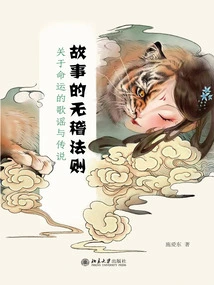
故事的无稽法则:关于命运的歌谣与传说
Shi Aidong
This book is a work that focuses on oral expressions such as traditional Chinese folk songs, stories, and customs, and shows the regularity and complexity of the occurrence, spread, and variation of Chinese folk stories. The whole book is divided into five parts: "Legends of Ballads and Singers", "Legends of Love and Marriage", "Legends of God Praise and Creation", "Legends of Numerology and Geography", "Legends of Natural Disasters and Man-made Disasters". Through folklore field investigation, the author's reasoning about folk tales and legends is unfolded layer by layer. Those ancient stories and legends that are diverse and full of interest also reveal the vitality of their growth and spread through the author's investigation, research and reasoning analysis.
This book is a work that focuses on oral expressions such as traditional Chinese folk songs, stories, and customs, and shows the regularity and complexity of the occurrence, spread, and variation of Chinese folk stories. The whole book is divided into five parts: "Legends of Ballads and Singers", "Legends of Love and Marriage", "Legends of God Praise and Creation", "Legends of Numerology and Geography", "Legends of Natural Disasters and Man-made Disasters". Through folklore field investigation, the author's reasoning about folk tales and legends is unfolded layer by layer. Those ancient stories and legends that are diverse and full of interest also reveal the vitality of their growth and spread through the author's investigation, research and reasoning analysis.
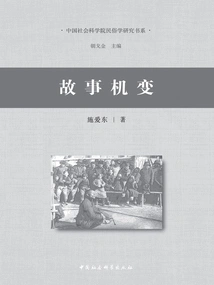
The Story Changes
Literature故事机变
Shi Aidong
Story changes include three aspects: 1. Stories, as folk prose narratives passed down orally, mutate anytime and anywhere; 2. Story mutation is not arbitrary mutation, but manifests as relatively stable "limited variation" of core elements and gradual "displacement" of detail replacement; 3. Variation is regular, and story variation is restricted by factors such as oral tradition, time and space environment, memory bias, and even popular culture, and has characteristics such as emotionality, patterning, and adaptability. This book borrows the concept of "machine change" (adaptive "change") to summarize the directional (non-arbitrary) variation characteristics of story communication and reconstruction. Starting from various aspects such as classic review, diachronic review, and theoretical reflection, we discuss the rules of how stories change with "chance"; and through empirical research such as field trips, communication experiments, and memory experiments, we specifically discuss the "chance" and "change" of stories as they adapt to changing circumstances.
Story changes include three aspects: 1. Stories, as folk prose narratives passed down orally, mutate anytime and anywhere; 2. Story mutation is not arbitrary mutation, but manifests as relatively stable "limited variation" of core elements and gradual "displacement" of detail replacement; 3. Variation is regular, and story variation is restricted by factors such as oral tradition, time and space environment, memory bias, and even popular culture, and has characteristics such as emotionality, patterning, and adaptability. This book borrows the concept of "machine change" (adaptive "change") to summarize the directional (non-arbitrary) variation characteristics of story communication and reconstruction. Starting from various aspects such as classic review, diachronic review, and theoretical reflection, we discuss the rules of how stories change with "chance"; and through empirical research such as field trips, communication experiments, and memory experiments, we specifically discuss the "chance" and "change" of stories as they adapt to changing circumstances.