Library
Browse and search books
3 novels found
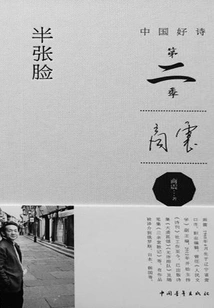
半张脸(中国好诗·第二季)
Shang Zhen
Shang Zhen belongs to a group of poetry writers who become stronger and more sophisticated over time - like a thin and sharp nail. "Half a Face" is his spiritual self-statement and can also be regarded as a representative text of his "poetic personality". His poems are "adult poems" - intellectual, deep, and cold. There are tons of coldness in his poems that make some people tremble with fear, and he will pull those injured people towards the distant fire. But he always uses another kind of "childlike innocence" to perfect the poet himself - emotion, enthusiasm and burning. What this coldness and heat produce is real poetry-real people, real poetry, and real temperament. He dared to expose himself and others, and he also dared to stab others. There is always a sword with a fine steel blade and a cold, frost-covered shin that runs through his poems. Sometimes you may ignore their existence, but from time to time they remind you to be careful and self-aware with their cold breath.
Shang Zhen belongs to a group of poetry writers who become stronger and more sophisticated over time - like a thin and sharp nail. "Half a Face" is his spiritual self-statement and can also be regarded as a representative text of his "poetic personality". His poems are "adult poems" - intellectual, deep, and cold. There are tons of coldness in his poems that make some people tremble with fear, and he will pull those injured people towards the distant fire. But he always uses another kind of "childlike innocence" to perfect the poet himself - emotion, enthusiasm and burning. What this coldness and heat produce is real poetry-real people, real poetry, and real temperament. He dared to expose himself and others, and he also dared to stab others. There is always a sword with a fine steel blade and a cold, frost-covered shin that runs through his poems. Sometimes you may ignore their existence, but from time to time they remind you to be careful and self-aware with their cold breath.
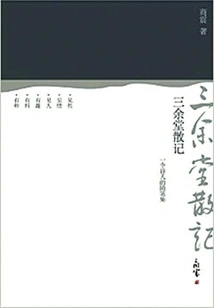
Sanyutang's Notes
Literature三余堂散记
Shang Zhen
Recommendation: Shang Zhen is a poet by nature. The poet's temperament, talent, courage, the poet's endless thoughts and rich emotions, and even the poet's drunkenness, childlike innocence and sadness can all be read in "San Yu Tang San Ji". Recommendation 2: Classic books, touching reality, it is the most common space for notebook-style essays. The same is true for "San Yu Tang San Ji", starting from "Zuo Zhuan" and "Historical Records", and ending with poems, wine and singing, one by one, readers can read them at any time and anywhere, and they will be happy to find one or two occasionally. Poets write poetic theories in the form of notes. Because of their divergent thinking and occasional flashes of inspiration, they have always been both thoughtful and readable, and are worth a look. In "San Yu Tang San Ji", Shang Zhen appears in Chinese classical literary theory and current life scenes. The whole book has a fairy spirit, an earth spirit, and a sharp spirit. Taken together, temperament wins. If there is a temperament, there will be live color, and if there is live color, it will produce fragrance; if there is live color, it will produce fragrance.
Recommendation: Shang Zhen is a poet by nature. The poet's temperament, talent, courage, the poet's endless thoughts and rich emotions, and even the poet's drunkenness, childlike innocence and sadness can all be read in "San Yu Tang San Ji". Recommendation 2: Classic books, touching reality, it is the most common space for notebook-style essays. The same is true for "San Yu Tang San Ji", starting from "Zuo Zhuan" and "Historical Records", and ending with poems, wine and singing, one by one, readers can read them at any time and anywhere, and they will be happy to find one or two occasionally. Poets write poetic theories in the form of notes. Because of their divergent thinking and occasional flashes of inspiration, they have always been both thoughtful and readable, and are worth a look. In "San Yu Tang San Ji", Shang Zhen appears in Chinese classical literary theory and current life scenes. The whole book has a fairy spirit, an earth spirit, and a sharp spirit. Taken together, temperament wins. If there is a temperament, there will be live color, and if there is live color, it will produce fragrance; if there is live color, it will produce fragrance.
San Yu Tang's Essays (excerpt)
Literature三余堂散记(节选)
Shang Zhen
After reading Zhong Rong's "Poetry", I had a deep impression of a passage: "Qi is an animal, and things are touching, so it shakes the temperament and forms various dances and chants. The three talents of illuminating the candle reflect all things, the spirit waits for it to be enjoyed, and the subtle book makes it known. Moving the heaven and earth, feeling the ghosts and gods, nothing is close to poetry." I secretly think that this is the cornerstone of the whole book. ? Poetry must have "qi". ? When I judge a poem, I first look at whether it has a coherent rhythm and dynamic momentum; then I look at the location and direction of its "qi". As for gentleness or majesty, it belongs to the poet's individual characteristics. "Qi" is the poet's externalized emotion. "Qi" must move, and movement is the creation. Only when the poet's "qi" moves can the heaven, earth, ghosts and gods move.
After reading Zhong Rong's "Poetry", I had a deep impression of a passage: "Qi is an animal, and things are touching, so it shakes the temperament and forms various dances and chants. The three talents of illuminating the candle reflect all things, the spirit waits for it to be enjoyed, and the subtle book makes it known. Moving the heaven and earth, feeling the ghosts and gods, nothing is close to poetry." I secretly think that this is the cornerstone of the whole book. ? Poetry must have "qi". ? When I judge a poem, I first look at whether it has a coherent rhythm and dynamic momentum; then I look at the location and direction of its "qi". As for gentleness or majesty, it belongs to the poet's individual characteristics. "Qi" is the poet's externalized emotion. "Qi" must move, and movement is the creation. Only when the poet's "qi" moves can the heaven, earth, ghosts and gods move.