Library
Browse and search novels
2 novels found
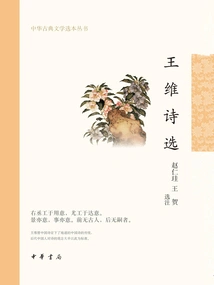
王维诗选(中华古典文学选本丛书)
Selected Notes By Zhao Rengui And Wang He
Wang Wei is a representative of landscape pastoral poetry in the prosperous Tang Dynasty, and is called "Wang Meng" together with Meng Haoran. Wang Wei's ancestral home was Taiyuan (today's Qixian County, Shanxi Province), and he was born in the first year of Chang'an (701), the first year of Empress Wu's reign. In his early years, he also yearned for fame, so he wrote many works about frontier fortresses. Wang Wei's poems are of various styles, especially the five rhymes. Wang Wei is proficient in music and painting, creating a quiet and beautiful poetic environment of "painting within poetry, poetry within painting". The beauty of emptiness and tranquility are the outstanding features of Wang Wei's poetry. The poems of Wang Wei selected in this book, on the basis of highlighting his pastoral works, comprehensively display the multi-faceted artistic characteristics of Wang Wei's poems, and are accompanied by concise annotations and analyzes to help readers appreciate the unique artistic conception of Wang Wei's poems.
Wang Wei is a representative of landscape pastoral poetry in the prosperous Tang Dynasty, and is called "Wang Meng" together with Meng Haoran. Wang Wei's ancestral home was Taiyuan (today's Qixian County, Shanxi Province), and he was born in the first year of Chang'an (701), the first year of Empress Wu's reign. In his early years, he also yearned for fame, so he wrote many works about frontier fortresses. Wang Wei's poems are of various styles, especially the five rhymes. Wang Wei is proficient in music and painting, creating a quiet and beautiful poetic environment of "painting within poetry, poetry within painting". The beauty of emptiness and tranquility are the outstanding features of Wang Wei's poetry. The poems of Wang Wei selected in this book, on the basis of highlighting his pastoral works, comprehensively display the multi-faceted artistic characteristics of Wang Wei's poems, and are accompanied by concise annotations and analyzes to help readers appreciate the unique artistic conception of Wang Wei's poems.
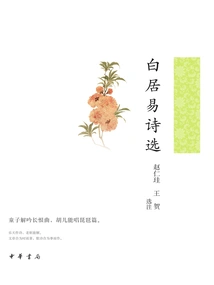
Selected Poems of Bai Juyi
Literature白居易诗选
Selected Notes By Zhao Rengui And Wang He
Bai Juyi, courtesy name Letian, was a Jinshi in the 16th year of Zhenyuan. In the 10th year of Yuanhe, he was demoted to Jiangzhou Sima for writing a letter. In his later years, he had a smooth official career and lived in Luoyang. He called himself "Xiangshan Jushi". In terms of creative concepts, Bai Juyi strongly emphasized the popularity and realism of poetry, and at the same time advocated the use of allegory in poetry to supplement current affairs. His poetry theory had an important impact on the poetry of the middle and late Tang Dynasty and even later generations. Bai Juyi's song-style poetry creation has a strong lyrical color based on narrative, which had a great influence at that time and in later generations. This book selects the most representative works from Bai Juyi's poetry collection, provides concise annotations on the words and allusions, and uses the analysis part to clarify the meaning of the whole poem and explain the artistic features, so that readers can understand the poetic meaning.
Bai Juyi, courtesy name Letian, was a Jinshi in the 16th year of Zhenyuan. In the 10th year of Yuanhe, he was demoted to Jiangzhou Sima for writing a letter. In his later years, he had a smooth official career and lived in Luoyang. He called himself "Xiangshan Jushi". In terms of creative concepts, Bai Juyi strongly emphasized the popularity and realism of poetry, and at the same time advocated the use of allegory in poetry to supplement current affairs. His poetry theory had an important impact on the poetry of the middle and late Tang Dynasty and even later generations. Bai Juyi's song-style poetry creation has a strong lyrical color based on narrative, which had a great influence at that time and in later generations. This book selects the most representative works from Bai Juyi's poetry collection, provides concise annotations on the words and allusions, and uses the analysis part to clarify the meaning of the whole poem and explain the artistic features, so that readers can understand the poetic meaning.