Library
Browse and search books
14 novels found
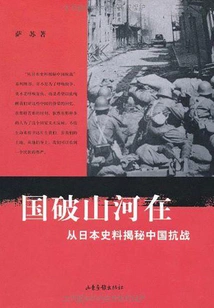
国破山河在
Sassou
The History of the War of Resistance Against Japan, edited by Sassou, tells a history of the Anti-Japanese War. The author of this book reviewed a large amount of information to help us understand the history of the Anti-Japanese War more comprehensively. History has passed, and now walking in the streets and alleys, you can still see the various traces left by that war - the commemorative monuments that can be seen everywhere in the city, and the large square-pointed tombstones in the cemetery, all silently describe the fading memory of that war.
The History of the War of Resistance Against Japan, edited by Sassou, tells a history of the Anti-Japanese War. The author of this book reviewed a large amount of information to help us understand the history of the Anti-Japanese War more comprehensively. History has passed, and now walking in the streets and alleys, you can still see the various traces left by that war - the commemorative monuments that can be seen everywhere in the city, and the large square-pointed tombstones in the cemetery, all silently describe the fading memory of that war.
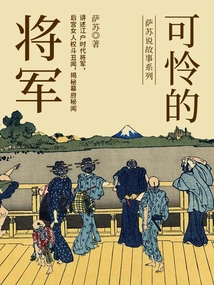
可怜的将军(萨苏说故事系列)
Sassou
This is another "Sassou Storytelling" series of works by the author following the best-selling books "Nine Talks in Beijing", "Beijing Jokes", "Ten Cases in Beijing" and "Animal Strange Cases". With spicy and humorous writing style and Sassou's unique perspective, it tells the story of the intrigues, love and hatred of the generals, wives and harem ladies of the Tokugawa Shogunate (Edo) era in Japan, and is a historical popular reading that analyzes the various personalities of the Japanese nation.
This is another "Sassou Storytelling" series of works by the author following the best-selling books "Nine Talks in Beijing", "Beijing Jokes", "Ten Cases in Beijing" and "Animal Strange Cases". With spicy and humorous writing style and Sassou's unique perspective, it tells the story of the intrigues, love and hatred of the generals, wives and harem ladies of the Tokugawa Shogunate (Edo) era in Japan, and is a historical popular reading that analyzes the various personalities of the Japanese nation.
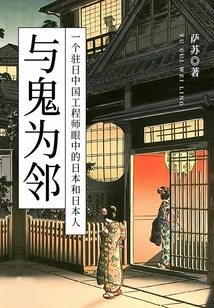
与鬼为邻:一个驻日中国工程师眼中的日本和日本人
Sassou
The whole book describes the encounters of Chinese people in Japan and Japanese people coming to China; the author's work experience in Japan, personal observation of Japanese political figures and political operations at the scene, and the author's feelings about Japanese society, customs, culture, education, and the world during the nine years he lived in Japan.
The whole book describes the encounters of Chinese people in Japan and Japanese people coming to China; the author's work experience in Japan, personal observation of Japanese political figures and political operations at the scene, and the author's feelings about Japanese society, customs, culture, education, and the world during the nine years he lived in Japan.
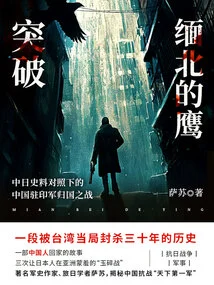
突破缅北的鹰:中日史料对照下的中国驻印军归国之路
Sassou
In the Asian battlefield of World War II, there were three battles called "Jade Broken Wars" by the Japanese, which were the battles in which the Japanese army was completely wiped out, namely the Battle of Tengchong, the Battle of Songshan and the Battle of Myitkyina. These three battles all took place during the return battle of the Chinese troops stationed in India. At the end of 1943, the Chinese troops stationed in India set out from Ledo, India, and began the battle in northern Myanmar to open up the China-India highway. For the first time, Sassou, a scholar in Japan, used a large amount of Japanese historical materials and compared them with Chinese and American historical materials to give a panoramic view of the return trip that lasted more than 400 days and spanned more than 1,600 kilometers in the book "Eagle Breaking Through Northern Myanmar" The whole process of the battle clearly reproduces the attack, defense and battlefield details of each battle from New Pingyang, Lagasu, Hukanggukou, Daluo, Mengguan, Varuban, Imphal to Myitkyina, Songshan, Longling, Bhamo and Mangyou. "Eye of the Enemy" describes how the "Blue Eagle" unit commanded by Sun Liren, known as "The First Army in the World" during the Anti-Japanese War, fought against six Japanese divisions, annihilated the main force of the 18th Division, known as the "King of the Jungle", and severely damaged three divisions and an independent mixed brigade.
In the Asian battlefield of World War II, there were three battles called "Jade Broken Wars" by the Japanese, which were the battles in which the Japanese army was completely wiped out, namely the Battle of Tengchong, the Battle of Songshan and the Battle of Myitkyina. These three battles all took place during the return battle of the Chinese troops stationed in India. At the end of 1943, the Chinese troops stationed in India set out from Ledo, India, and began the battle in northern Myanmar to open up the China-India highway. For the first time, Sassou, a scholar in Japan, used a large amount of Japanese historical materials and compared them with Chinese and American historical materials to give a panoramic view of the return trip that lasted more than 400 days and spanned more than 1,600 kilometers in the book "Eagle Breaking Through Northern Myanmar" The whole process of the battle clearly reproduces the attack, defense and battlefield details of each battle from New Pingyang, Lagasu, Hukanggukou, Daluo, Mengguan, Varuban, Imphal to Myitkyina, Songshan, Longling, Bhamo and Mangyou. "Eye of the Enemy" describes how the "Blue Eagle" unit commanded by Sun Liren, known as "The First Army in the World" during the Anti-Japanese War, fought against six Japanese divisions, annihilated the main force of the 18th Division, known as the "King of the Jungle", and severely damaged three divisions and an independent mixed brigade.
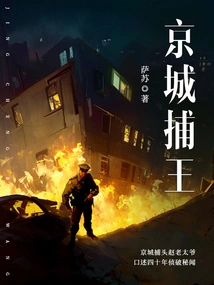
Capture the King in the Capital
Literature京城捕王
Sassou
The protagonist of "Sassu Storytelling Series: Capturing the King in Capital" is based on Zhao Changyin, the veteran criminal police captain of the Beijing Municipal Public Security Bureau. Most of the cases in the book were personally solved or participated in the detection by the old man. However, the details of the crimes, detection techniques, and people involved in some of the cases were changed, alienated, or downplayed during the narration. , The main purpose of combining some cases is to avoid causing copycat crimes or exposing detection methods, and to help better display the legend of the public security front in a literary form. Therefore, please do not completely equate the details of "Sassu Storytelling Series: King Catching in the Capital" with the plots and characters of real cases.
The protagonist of "Sassu Storytelling Series: Capturing the King in Capital" is based on Zhao Changyin, the veteran criminal police captain of the Beijing Municipal Public Security Bureau. Most of the cases in the book were personally solved or participated in the detection by the old man. However, the details of the crimes, detection techniques, and people involved in some of the cases were changed, alienated, or downplayed during the narration. , The main purpose of combining some cases is to avoid causing copycat crimes or exposing detection methods, and to help better display the legend of the public security front in a literary form. Therefore, please do not completely equate the details of "Sassu Storytelling Series: King Catching in the Capital" with the plots and characters of real cases.
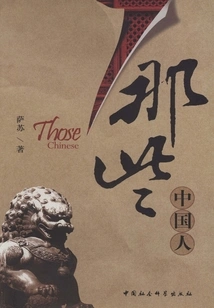
Those Chinese
Literature那些中国人
Sassou
This book is a collection of his essays. The stories of war are told in the chapters of scholars, soldiers, scientists, actors and ordinary people respectively, the stories of the Academy of Sciences and the stories of ordinary people are told in a eloquent and interesting way. No matter the big or small characters in his works, they are all living Chinese people. His descriptions will make you smile knowingly, tremble in your heart, or think deeply... He is trying his best to explore the most essential and common things among Chinese people.
This book is a collection of his essays. The stories of war are told in the chapters of scholars, soldiers, scientists, actors and ordinary people respectively, the stories of the Academy of Sciences and the stories of ordinary people are told in a eloquent and interesting way. No matter the big or small characters in his works, they are all living Chinese people. His descriptions will make you smile knowingly, tremble in your heart, or think deeply... He is trying his best to explore the most essential and common things among Chinese people.
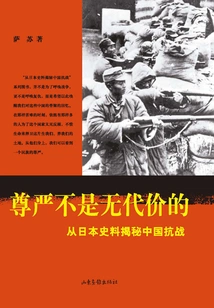
Dignity is Not Free
History尊严不是无代价的
Sassou
This book tells a history of the Anti-Japanese War. The author of this book has reviewed a large amount of materials to help us understand the history of the Anti-Japanese War more comprehensively. History has passed, and now walking in the streets and alleys, we can still see various traces left by that war - the commemorative monuments that can be seen everywhere in the city and the large square-pointed tombstones in the cemetery, all silently describe the fading memory of that war.
This book tells a history of the Anti-Japanese War. The author of this book has reviewed a large amount of materials to help us understand the history of the Anti-Japanese War more comprehensively. History has passed, and now walking in the streets and alleys, we can still see various traces left by that war - the commemorative monuments that can be seen everywhere in the city and the large square-pointed tombstones in the cemetery, all silently describe the fading memory of that war.
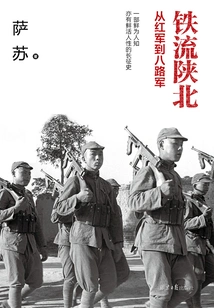
铁流陕北:从红军到八路军
Sassou
New details are revealed, and first-hand historical data analysis will completely clear up your old perceptions in minutes! This is a history of the Long March that is interesting, secretive, subversive, and full of vivid humanity. Before reading this book, don't say you really understand the Long March! "Iron River in Northern Shaanxi" is a documentary graphic work that reflects the Red Army's Long March. From a new perspective of the region from north to south, it interprets international reports on the red base areas in northern China during this period and pictures taken by international friends to recreate the Red Army. The unknown story of the army reproduces the process of how various troops arrived in northern Shaanxi one after another during the Long March and entered this new cradle of red, and shows how these red seeds went through fierce battles to regain a foothold on the Loess Plateau and start a new journey.
New details are revealed, and first-hand historical data analysis will completely clear up your old perceptions in minutes! This is a history of the Long March that is interesting, secretive, subversive, and full of vivid humanity. Before reading this book, don't say you really understand the Long March! "Iron River in Northern Shaanxi" is a documentary graphic work that reflects the Red Army's Long March. From a new perspective of the region from north to south, it interprets international reports on the red base areas in northern China during this period and pictures taken by international friends to recreate the Red Army. The unknown story of the army reproduces the process of how various troops arrived in northern Shaanxi one after another during the Long March and entered this new cradle of red, and shows how these red seeds went through fierce battles to regain a foothold on the Loess Plateau and start a new journey.
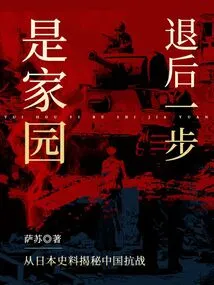
退后一步是家园:从日本史料揭秘中国抗战
Sassou
Sassou's writing style is smart and humorous, vividly presenting this heavy and exciting history to readers. The book also contains a large number of historical photos taken by Japan. Through mutual verification of Japanese historical materials and Chinese records, many precious historical deeds of Chinese soldiers and civilians resisting the enemy and defending the country have been reproduced or filled in. Most of the Japanese materials used by Sassou are veterans' memories, wartime reports, unpublished manuscripts and other materials that professional researchers have ignored or paid no attention to and are stored in Japanese archives, second-hand bookstores, and in private hands. Most of this information is the recollections of Japanese invaders of the military activities they participated in. Although their positions are different, they are highly authentic and have accurate details. However, the Chinese records are extremely lacking in data because they were mostly defensive battles and defeats. Especially the Japanese losses and battle details were either fabricated or missing. The Japanese data can enrich the records in this regard. Sassou's writing style is witty and lively, his emotions are sincere, and his research is rigorous. In each chapter, he reproduces the touching history of Chinese soldiers and civilians who died generously for national dignity, and Sassou's full feelings about his family and country are reflected everywhere. The book also contains a large number of historical photos taken by the Japanese during the Anti-Japanese War, with interactive graphics and text, adding more historical value.
Sassou's writing style is smart and humorous, vividly presenting this heavy and exciting history to readers. The book also contains a large number of historical photos taken by Japan. Through mutual verification of Japanese historical materials and Chinese records, many precious historical deeds of Chinese soldiers and civilians resisting the enemy and defending the country have been reproduced or filled in. Most of the Japanese materials used by Sassou are veterans' memories, wartime reports, unpublished manuscripts and other materials that professional researchers have ignored or paid no attention to and are stored in Japanese archives, second-hand bookstores, and in private hands. Most of this information is the recollections of Japanese invaders of the military activities they participated in. Although their positions are different, they are highly authentic and have accurate details. However, the Chinese records are extremely lacking in data because they were mostly defensive battles and defeats. Especially the Japanese losses and battle details were either fabricated or missing. The Japanese data can enrich the records in this regard. Sassou's writing style is witty and lively, his emotions are sincere, and his research is rigorous. In each chapter, he reproduces the touching history of Chinese soldiers and civilians who died generously for national dignity, and Sassou's full feelings about his family and country are reflected everywhere. The book also contains a large number of historical photos taken by the Japanese during the Anti-Japanese War, with interactive graphics and text, adding more historical value.
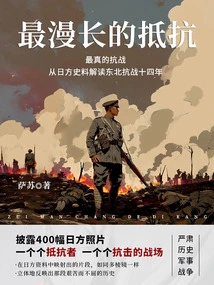
The Longest Resistance: Interpreting the Fourteen Years of the Northeast Anti-japanese War from Japanese Historical Materials
General Fiction最漫长的抵抗:从日方史料解读东北抗战十四年
Sassou
This is a documentary work of military history. This book uses more than 400 Japanese photos and maps collected by the author for the first time in Japan as clues. Through comparative analysis and textual research of Chinese and Japanese historical materials on the historical information in these photos, this book reveals the arduous and unyielding resistance experience of the Northeast Regular Army, the Northeast Anti-Japanese Volunteer Army and the Northeast Anti-Japanese Allied Forces in the Northeast region from 1931 to 1945. However, it disclosed the little-known important figures and events that took place on the Chinese battlefield between 1931 and 1945, including the military forces of China, the Soviet Union, and North Korea. It also revealed the games and contests surrounding the Northeast on the secret front at that time, such as the Soviet Union, Japan, the United Kingdom, Chinese spies, Doihara, Yoshiko Kawashima, etc. The first exclusive declassification case: (1) The whole story of the aborted assassination plan against Puyi in Tokyo; (2) The mystery of the death of Colonel Tetsuo Tonomiya, the "Father of the Manchuria Pioneer Corps"; (3) Takeda Takeda as the fictional spy king; (4) Analysis of the prototype of the protagonists in the TV series "Invincible" and "The Cliff"; (5) Research on the "China National Salvation Corps", a Chinese spy organization fighting in Japan.
This is a documentary work of military history. This book uses more than 400 Japanese photos and maps collected by the author for the first time in Japan as clues. Through comparative analysis and textual research of Chinese and Japanese historical materials on the historical information in these photos, this book reveals the arduous and unyielding resistance experience of the Northeast Regular Army, the Northeast Anti-Japanese Volunteer Army and the Northeast Anti-Japanese Allied Forces in the Northeast region from 1931 to 1945. However, it disclosed the little-known important figures and events that took place on the Chinese battlefield between 1931 and 1945, including the military forces of China, the Soviet Union, and North Korea. It also revealed the games and contests surrounding the Northeast on the secret front at that time, such as the Soviet Union, Japan, the United Kingdom, Chinese spies, Doihara, Yoshiko Kawashima, etc. The first exclusive declassification case: (1) The whole story of the aborted assassination plan against Puyi in Tokyo; (2) The mystery of the death of Colonel Tetsuo Tonomiya, the "Father of the Manchuria Pioneer Corps"; (3) Takeda Takeda as the fictional spy king; (4) Analysis of the prototype of the protagonists in the TV series "Invincible" and "The Cliff"; (5) Research on the "China National Salvation Corps", a Chinese spy organization fighting in Japan.
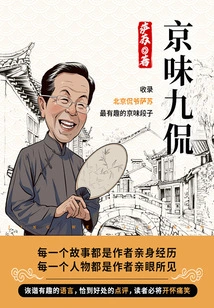
Beijing Flavor Nine Talks
Literature京味九侃
Sassou
This book focuses on police stories and blue sky anecdotes, and includes the latest and most interesting Beijing-style jokes by Beijing Kanye Sasu. Every story is Sassou's personal experience, and every character is what he has seen with his own eyes. With its humorous and interesting language and just right comments, readers will definitely laugh and gain knowledge.
This book focuses on police stories and blue sky anecdotes, and includes the latest and most interesting Beijing-style jokes by Beijing Kanye Sasu. Every story is Sassou's personal experience, and every character is what he has seen with his own eyes. With its humorous and interesting language and just right comments, readers will definitely laugh and gain knowledge.
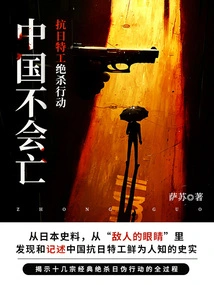
中国不会亡:抗日特工绝杀行动
Sassou
During the eight years of the Patriotic War, in addition to the martyrs on the bloody battlefield, Chinese agents also engaged in fierce battles with the Japanese and puppets behind enemy lines. Sassou, a historical scholar living in Japan, has lived in Japan for more than ten years and knows that this is an unbearably delicate nation. When this kind of meticulousness is combined with the cruelty and ferocity of fascism, you can imagine what kind of harm it will bring to China's anti-Japanese soldiers and civilians, and it also determines how difficult and dangerous the actions of our agents behind enemy lines will be. This book is the little-known historical facts of Chinese anti-Japanese agents discovered and recorded by the author from Japanese historical materials and "the eyes of the enemy". It shows in vivid details the espionage behind enemy lines during the Anti-Japanese War, especially the whole process of more than a dozen classic operations to kill the Japanese and puppets. The book is divided into four parts: "Humans, Ghosts, Punishers, and Soldiers". It not only contains legends about Chinese agents, but also reveals the background of enemy agents, as well as inside information on the training of anti-alliance armed agents, military commanders, and agent equipment. It comprehensively and in-depth displays the history of China's anti-Japanese covert front espionage war from a unique perspective.
During the eight years of the Patriotic War, in addition to the martyrs on the bloody battlefield, Chinese agents also engaged in fierce battles with the Japanese and puppets behind enemy lines. Sassou, a historical scholar living in Japan, has lived in Japan for more than ten years and knows that this is an unbearably delicate nation. When this kind of meticulousness is combined with the cruelty and ferocity of fascism, you can imagine what kind of harm it will bring to China's anti-Japanese soldiers and civilians, and it also determines how difficult and dangerous the actions of our agents behind enemy lines will be. This book is the little-known historical facts of Chinese anti-Japanese agents discovered and recorded by the author from Japanese historical materials and "the eyes of the enemy". It shows in vivid details the espionage behind enemy lines during the Anti-Japanese War, especially the whole process of more than a dozen classic operations to kill the Japanese and puppets. The book is divided into four parts: "Humans, Ghosts, Punishers, and Soldiers". It not only contains legends about Chinese agents, but also reveals the background of enemy agents, as well as inside information on the training of anti-alliance armed agents, military commanders, and agent equipment. It comprehensively and in-depth displays the history of China's anti-Japanese covert front espionage war from a unique perspective.
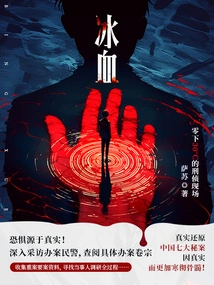
冰血:零下30℃的刑侦现场
Sassou
The human skin mask on the ice, the hanging of the headless female body on the ghost island, the extremely serious case of 33 corpses... This book is a collection of short mystery and suspense novels describing the desperate duel between police officers, border guards and criminals in Northeast China. The book describes the detection process of seven significant, bizarre and serious criminal cases, with ups and downs of the plot and high readability. The content of this book is based on the memories of the police handling the case and the case files, and is specific and true. All bloody, violent, and cruel details are true. It chills my bones because of the truth, and makes my hair stand on end because of its simplicity!
The human skin mask on the ice, the hanging of the headless female body on the ghost island, the extremely serious case of 33 corpses... This book is a collection of short mystery and suspense novels describing the desperate duel between police officers, border guards and criminals in Northeast China. The book describes the detection process of seven significant, bizarre and serious criminal cases, with ups and downs of the plot and high readability. The content of this book is based on the memories of the police handling the case and the case files, and is specific and true. All bloody, violent, and cruel details are true. It chills my bones because of the truth, and makes my hair stand on end because of its simplicity!
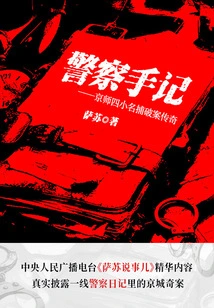
Police Notes: the Legend of Four Little Famous Detectives in the Capital City to Solve Cases
General Fiction警察手记:京师四小名捕破案传奇
Sassou
Lao Yin, a famous policeman in the capital, has been a policeman for decades and has developed a pair of sharp eyes, which makes criminals fearful. What's even more rare is that he actually recorded hundreds of cases, large and small, in his diary. Each case has twists and turns, just like a Sherlock Holmes detective story. Sasu, who loves to tell stories, found a treasure this time. He followed the clues and turned the old policeman's strange case in the capital upside down. Coupled with Sassou's vivid and Beijing-flavored interpretation, this collection of frontline police detective stories is suspenseful and exciting. There are weak intellectuals who have committed adultery and killed people and dismembered their bodies, there are "blind lone thieves" hiding on the No. 108 Tram, there are "qigong masters" who claim to have practiced martial arts since childhood and have unparalleled magical skills, there are gangs that dominate Beijing, Tianjin and Hebei and run rampant in the countryside... The criminals are cunning and fierce, the police are resourceful and courageous, and the case is exciting. In addition to Sassou's witty and humorous narration, there are also authentic criminal investigation notes written by police officer Lao Yin. The story is bizarre but not outrageous, and the content is rigorous but not serious. It makes people applaud after reading it and cannot bear to put it down.
Lao Yin, a famous policeman in the capital, has been a policeman for decades and has developed a pair of sharp eyes, which makes criminals fearful. What's even more rare is that he actually recorded hundreds of cases, large and small, in his diary. Each case has twists and turns, just like a Sherlock Holmes detective story. Sasu, who loves to tell stories, found a treasure this time. He followed the clues and turned the old policeman's strange case in the capital upside down. Coupled with Sassou's vivid and Beijing-flavored interpretation, this collection of frontline police detective stories is suspenseful and exciting. There are weak intellectuals who have committed adultery and killed people and dismembered their bodies, there are "blind lone thieves" hiding on the No. 108 Tram, there are "qigong masters" who claim to have practiced martial arts since childhood and have unparalleled magical skills, there are gangs that dominate Beijing, Tianjin and Hebei and run rampant in the countryside... The criminals are cunning and fierce, the police are resourceful and courageous, and the case is exciting. In addition to Sassou's witty and humorous narration, there are also authentic criminal investigation notes written by police officer Lao Yin. The story is bizarre but not outrageous, and the content is rigorous but not serious. It makes people applaud after reading it and cannot bear to put it down.