Library
Browse and search books
2 novels found
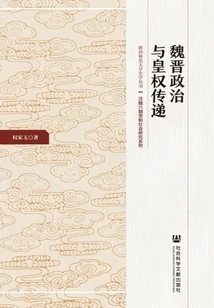
魏晋政治与皇权传递
Quan Jiayu
This book focuses on the political changes brought about by the two transfers of imperial power between the Cao Wei and Western Jin Dynasties. Starting from the transfer of imperial power, this book explores the political unrest brought about by the short-term situation of a weak king and a strong minister. The battles faced by Emperor Tuogu of Wei Ming and Emperor Hui of Jin when they were crown princes were two representative transfers of imperial power in the history of the Wei, Jin and Southern Dynasties. Emperor Wei Ming's change of orders largely determined the direction of Cao Wei's Zhengshi situation, and even determined that Cao Wei would eventually be replaced by the Sima family. The status of the prince during the period of Emperor Wu of the Western Jin Dynasty and the protracted struggle for the title of crown prince, directly affected the layout of the power structure of Emperor Wu of the Jin Dynasty. His reliance on and abandonment of Jia Chong and his use of Yang Jun made the Western Jin Dynasty finally form a political and military structure in which the emperor and his relatives were combined, which became the cause of the chaos in the Western Jin Dynasty.
This book focuses on the political changes brought about by the two transfers of imperial power between the Cao Wei and Western Jin Dynasties. Starting from the transfer of imperial power, this book explores the political unrest brought about by the short-term situation of a weak king and a strong minister. The battles faced by Emperor Tuogu of Wei Ming and Emperor Hui of Jin when they were crown princes were two representative transfers of imperial power in the history of the Wei, Jin and Southern Dynasties. Emperor Wei Ming's change of orders largely determined the direction of Cao Wei's Zhengshi situation, and even determined that Cao Wei would eventually be replaced by the Sima family. The status of the prince during the period of Emperor Wu of the Western Jin Dynasty and the protracted struggle for the title of crown prince, directly affected the layout of the power structure of Emperor Wu of the Jin Dynasty. His reliance on and abandonment of Jia Chong and his use of Yang Jun made the Western Jin Dynasty finally form a political and military structure in which the emperor and his relatives were combined, which became the cause of the chaos in the Western Jin Dynasty.
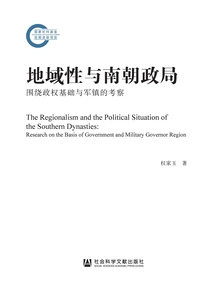
地域性与南朝政局:围绕政权基础与军镇的考察
Quan Jiayu
This book is divided into two parts. The first part explores the Yangzhou internal circulation model embodied by the Southern Dynasty regime centered on Jiankang from the perspective of political power. It focuses on analyzing the dependence of the Jiankang regime on Yangzhou and its financial crisis from a financial perspective, as well as the related poverty problem of scholars. At the same time, starting from the relationship between monarchs and ministers, we discuss the relationship between monarchs and ministers in the Southern Dynasties, showing the self-enclosed nature of the regime and the rapid consumption of effective forces in the process of transferring imperial power, thus drawing the conclusion that the regime began to decline after the rise of the metropolitan area and took over Jiankang. The following part starts with the metropolitan area. Analyzing the formation of the independence of the Southern Dynasty's metropolitan areas, the confrontation with the Northern Dynasties allowed the military power to be maintained, and the governorship allowed it to gain financial independence. The relative autonomy of the officials in the jurisdiction and the supply of ordnance from the headquarters made the Southern Dynasty's metropolitan areas evolve into a highly independent "vassal-like town" form.
This book is divided into two parts. The first part explores the Yangzhou internal circulation model embodied by the Southern Dynasty regime centered on Jiankang from the perspective of political power. It focuses on analyzing the dependence of the Jiankang regime on Yangzhou and its financial crisis from a financial perspective, as well as the related poverty problem of scholars. At the same time, starting from the relationship between monarchs and ministers, we discuss the relationship between monarchs and ministers in the Southern Dynasties, showing the self-enclosed nature of the regime and the rapid consumption of effective forces in the process of transferring imperial power, thus drawing the conclusion that the regime began to decline after the rise of the metropolitan area and took over Jiankang. The following part starts with the metropolitan area. Analyzing the formation of the independence of the Southern Dynasty's metropolitan areas, the confrontation with the Northern Dynasties allowed the military power to be maintained, and the governorship allowed it to gain financial independence. The relative autonomy of the officials in the jurisdiction and the supply of ordnance from the headquarters made the Southern Dynasty's metropolitan areas evolve into a highly independent "vassal-like town" form.