Library
Browse and search books
9 novels found
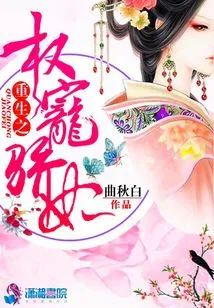
The Right of Rebirth and the Pampered Concubine
Ancient Romance重生之权宠骄妃
Qu Qiubai
When she woke up, she found that the person who doted on her and loved her like a treasure in this life was actually a cruel and ruthless husband in her previous life. She had already died for loving him once, how could she make the same mistake again! Of course, we need to clear up the relationship quickly. What? If you don't agree, it doesn't matter. Doesn't he hate women who are vulgar and aggressive the most, so he just cries, makes trouble and hangs himself, fights and acts like a hooligan. However... She neither guessed the beginning nor the ending. He was relying on her, and it was stickier than the legendary dog-skin plaster. What made her even more intolerable was his indulgence and infatuation for her, which he showed off all over the capital. The teahouses in the city talked about her favorite books every day, the singers in the restaurants sang the lyrics and music he composed for her, and no matter what she bought when she went shopping, the store automatically sent the bill to the palace! All those who spread rumors to slander her, bully her, and admire her were destroyed. It is said throughout the capital that the only stain on a certain king's wise life was: henpecking! He was too doting on the princess. A certain king: This is just the beginning. I can't live this day! How could she get married again if he continued to mislead her like this? "Princess, after so much trouble, it's time to go home. It's cold, and I have to warm your bed." A certain prince came up to her ruthlessly. They were said to be cold, heartless and ruthless! "That's for someone else. The princess naturally wants to love, cherish and protect her..." He came for her in this life, how could he let her go. It is said that she was really tempted by his gentle attack. How about giving him another chance? See how a powerful king regains his arrogant and adorable wife
When she woke up, she found that the person who doted on her and loved her like a treasure in this life was actually a cruel and ruthless husband in her previous life. She had already died for loving him once, how could she make the same mistake again! Of course, we need to clear up the relationship quickly. What? If you don't agree, it doesn't matter. Doesn't he hate women who are vulgar and aggressive the most, so he just cries, makes trouble and hangs himself, fights and acts like a hooligan. However... She neither guessed the beginning nor the ending. He was relying on her, and it was stickier than the legendary dog-skin plaster. What made her even more intolerable was his indulgence and infatuation for her, which he showed off all over the capital. The teahouses in the city talked about her favorite books every day, the singers in the restaurants sang the lyrics and music he composed for her, and no matter what she bought when she went shopping, the store automatically sent the bill to the palace! All those who spread rumors to slander her, bully her, and admire her were destroyed. It is said throughout the capital that the only stain on a certain king's wise life was: henpecking! He was too doting on the princess. A certain king: This is just the beginning. I can't live this day! How could she get married again if he continued to mislead her like this? "Princess, after so much trouble, it's time to go home. It's cold, and I have to warm your bed." A certain prince came up to her ruthlessly. They were said to be cold, heartless and ruthless! "That's for someone else. The princess naturally wants to love, cherish and protect her..." He came for her in this life, how could he let her go. It is said that she was really tempted by his gentle attack. How about giving him another chance? See how a powerful king regains his arrogant and adorable wife
Selected Works of Qu Qiubai
Literature瞿秋白文选
Qu Qiubai
Qu Qiubai is a famous prose writer and literary critic in modern China. He is also a major leader of the early Communist Party of China and one of the founders of China's revolutionary literature. This "Selected Works of Qu Qiubai" is one of the "Classic Paper Reading" series. Includes Qu Qiubai's representative works of prose, essays, literary theory and political commentary, with detailed revisions to the text. It is very helpful for readers to understand Qu Qiubai's person and writings.
Qu Qiubai is a famous prose writer and literary critic in modern China. He is also a major leader of the early Communist Party of China and one of the founders of China's revolutionary literature. This "Selected Works of Qu Qiubai" is one of the "Classic Paper Reading" series. Includes Qu Qiubai's representative works of prose, essays, literary theory and political commentary, with detailed revisions to the text. It is very helpful for readers to understand Qu Qiubai's person and writings.
Juan Man's Prison Diary
Literature涴漫的狱中日记
Qu Qiubai
Archaeologists have recently discovered many ancient documents on the East Asian continent. The place used to be sparsely populated, with venomous snakes and ferocious beasts running rampant; now it is still a vast, desolate and filthy land, with mountains of bones piled up, and old burrows of poisonous insects all over the ground. Unfortunately, they are also filled with silt. This is a relic after the flood. It is really not easy to study the ancient society here by examining the fossils underground and the ruins above ground. As for those documents - of course they were all tattered paper, with water marks, and messy, muddy and blood-stained "traces of birds and beasts". It was really difficult to see clearly. In addition, the words written on them looked like so-called hieroglyphs like ancient Egyptian characters. --It is very much like those scholars who studied hard when Napoleon first conquered Egypt. Sure enough, among these documents, several East Asian linguists examined a ragged piece of writing.
Archaeologists have recently discovered many ancient documents on the East Asian continent. The place used to be sparsely populated, with venomous snakes and ferocious beasts running rampant; now it is still a vast, desolate and filthy land, with mountains of bones piled up, and old burrows of poisonous insects all over the ground. Unfortunately, they are also filled with silt. This is a relic after the flood. It is really not easy to study the ancient society here by examining the fossils underground and the ruins above ground. As for those documents - of course they were all tattered paper, with water marks, and messy, muddy and blood-stained "traces of birds and beasts". It was really difficult to see clearly. In addition, the words written on them looked like so-called hieroglyphs like ancient Egyptian characters. --It is very much like those scholars who studied hard when Napoleon first conquered Egypt. Sure enough, among these documents, several East Asian linguists examined a ragged piece of writing.
Superfluous Words
Literature多余的话
Qu Qiubai
"Superfluous Words" was written by Qu Qiubai on the eve of his death. It is different from Fang Zhimin's "Prison Records", Fuchik's "Report under the Gallows", and even different from the poems in "Poems of Revolutionary Martyrs". Those works declare war on the enemy, while "Superfluous Words" digs deep into one's own soul. What one feels when reading is not the author's high-spirited fighting spirit, but the inner pain, melancholy, and boredom.
"Superfluous Words" was written by Qu Qiubai on the eve of his death. It is different from Fang Zhimin's "Prison Records", Fuchik's "Report under the Gallows", and even different from the poems in "Poems of Revolutionary Martyrs". Those works declare war on the enemy, while "Superfluous Words" digs deep into one's own soul. What one feels when reading is not the author's high-spirited fighting spirit, but the inner pain, melancholy, and boredom.
Extra Words (red Classic)
Literature多余的话(红色经典)
Qu Qiubai
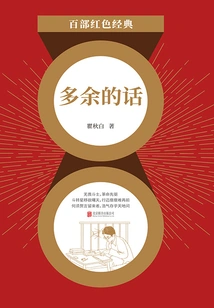
"Superfluous Words" are several retrospective and introspective articles written by Qu Qiubai on the eve of his death. The general title quotes "Those who know me, tell me I am worried; those who don't know me, tell me what I want" from Shuili in the Book of Songs as the inscription. Qu Qiubai presents the complex inner world and tortuous mental journey of a communist, such as romance, enthusiasm, persistence, depression, confusion, and determination, in his true colors in a confession of more than 20,000 words. The unique value of "Superfluous Words" lies in its frankness and truth. Readers can see a three-dimensional "person" in it. A respectable revolutionary leader and amiable intellectual made a frank deathbed confession, insisted on telling the truth, had the courage to self-analyze, and showed his pure and sincere heart. In addition, it also includes a number of literary and theoretical works created in different periods that criticize current ills and seek to save the nation.
"Superfluous Words" are several retrospective and introspective articles written by Qu Qiubai on the eve of his death. The general title quotes "Those who know me, tell me I am worried; those who don't know me, tell me what I want" from Shuili in the Book of Songs as the inscription. Qu Qiubai presents the complex inner world and tortuous mental journey of a communist, such as romance, enthusiasm, persistence, depression, confusion, and determination, in his true colors in a confession of more than 20,000 words. The unique value of "Superfluous Words" lies in its frankness and truth. Readers can see a three-dimensional "person" in it. A respectable revolutionary leader and amiable intellectual made a frank deathbed confession, insisted on telling the truth, had the courage to self-analyze, and showed his pure and sincere heart. In addition, it also includes a number of literary and theoretical works created in different periods that criticize current ills and seek to save the nation.
Heart History of Chidu (red Classic)
Literature赤都心史(红色经典)
Qu Qiubai
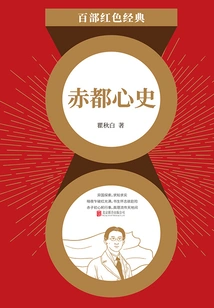
"Heart History of Chidu" specializes in Qu Qiubai's two masterpieces, "A History of Hungry Country" and "A History of Chidu Heart", aiming to give readers a clearer understanding of China's status in the world in that era described by Qu Qiubai and the "script of the psychological record" of a representative young Chinese intellectual who turned from democracy to communism. "The Journey of a Hungry Country" tells the author's hardships and twists and turns during his journey from Beijing to Harbin to Russia. It can also reveal the situation of China at that time and the sense of responsibility of intellectuals. "History of the Heart of Chidu" tells the author's experiences as a Chinese journalist in Moscow when he interacted with Russian social activists, writers, poets and other representatives. The personal experiences and feelings expressed by the author in the article are real and the experiences involved are rich. You may wish to read it.
"Heart History of Chidu" specializes in Qu Qiubai's two masterpieces, "A History of Hungry Country" and "A History of Chidu Heart", aiming to give readers a clearer understanding of China's status in the world in that era described by Qu Qiubai and the "script of the psychological record" of a representative young Chinese intellectual who turned from democracy to communism. "The Journey of a Hungry Country" tells the author's hardships and twists and turns during his journey from Beijing to Harbin to Russia. It can also reveal the situation of China at that time and the sense of responsibility of intellectuals. "History of the Heart of Chidu" tells the author's experiences as a Chinese journalist in Moscow when he interacted with Russian social activists, writers, poets and other representatives. The personal experiences and feelings expressed by the author in the article are real and the experiences involved are rich. You may wish to read it.
Selected Works of Qu Qiubai's Literature
Literature瞿秋白文学精品选
Qu Qiubai
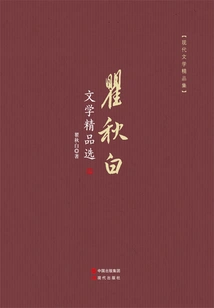
This book contains many literary works by the famous prose writer Qu Qiubai, including more than 20 pieces of poetry, prose and reportage. From the works, readers can get a glimpse of the mental journey of one of the most representative intellectuals of the 20th century as he pursued truth and explored China's bright future.
This book contains many literary works by the famous prose writer Qu Qiubai, including more than 20 pieces of poetry, prose and reportage. From the works, readers can get a glimpse of the mental journey of one of the most representative intellectuals of the 20th century as he pursued truth and explored China's bright future.
Hungry Country History
Literature饿乡纪程
Qu Qiubai
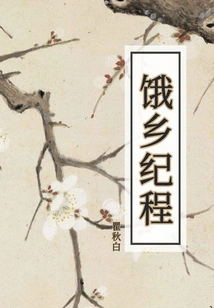
"Chronicles of a Hungry Country", also known as "Travel Notes on New Russia". Qu Qiubai's famous collection of essays, written from October 1920 to October 1921. At that time, the author went to the Soviet Union as a reporter, and this book is a travelogue from Harbin to Moscow. It broke through the "heavy barriers" spread by reactionaries at home and abroad, and truly reported the reality of Soviet Russia after the victory of the October Revolution.
"Chronicles of a Hungry Country", also known as "Travel Notes on New Russia". Qu Qiubai's famous collection of essays, written from October 1920 to October 1921. At that time, the author went to the Soviet Union as a reporter, and this book is a travelogue from Harbin to Moscow. It broke through the "heavy barriers" spread by reactionaries at home and abroad, and truly reported the reality of Soviet Russia after the victory of the October Revolution.
Superfluous Words
Literature多余的话
Qu Qiubai
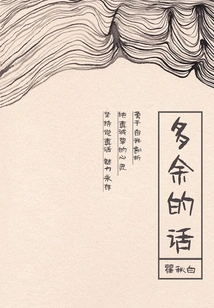
This book was written by Qu Qiubai on the eve of his death. The general title is followed by the quote "Those who know me, tell me I am worried; those who don't know me, tell me what I want" as the inscription. The main text lists a total of 7 titles: Why bother to say - preface to the times, "misunderstandings of history", fragile dual characters, Marxism and me, putschism and Li San line, "literati", farewell. Qu Qiubai presents the true colors of a communist's complex inner world and tortuous journey of romance, enthusiasm, persistence, depression, confusion, and determination in a confession of more than 20,000 words. The unique value of "Superfluous Words" lies in its frankness and truth. Readers see a real person in it. The personal experiences and feelings expressed in the article formed a strong contrast and conflict with the revolutionary current of the times, leaving historical mysteries with different interpretations for future generations, and also caused many misunderstandings and political aftermath after his death.
This book was written by Qu Qiubai on the eve of his death. The general title is followed by the quote "Those who know me, tell me I am worried; those who don't know me, tell me what I want" as the inscription. The main text lists a total of 7 titles: Why bother to say - preface to the times, "misunderstandings of history", fragile dual characters, Marxism and me, putschism and Li San line, "literati", farewell. Qu Qiubai presents the true colors of a communist's complex inner world and tortuous journey of romance, enthusiasm, persistence, depression, confusion, and determination in a confession of more than 20,000 words. The unique value of "Superfluous Words" lies in its frankness and truth. Readers see a real person in it. The personal experiences and feelings expressed in the article formed a strong contrast and conflict with the revolutionary current of the times, leaving historical mysteries with different interpretations for future generations, and also caused many misunderstandings and political aftermath after his death.