Library
Browse and search books
2 novels found
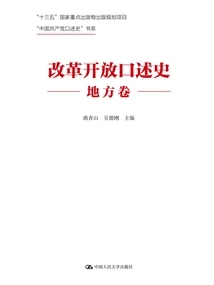
改革开放口述史(地方卷)
Qu Qingshan Editor-in-chief Wu Degang
This book selects representative major decisions and major events in various provinces (cities, autonomous regions, and municipalities directly under the Central Government) during the 40 years of reform and opening up in my country. Through interviews with dozens of veteran leaders and comrades at the provincial and ministerial levels, including Wang Maolin, Yu Youjun, Yang Rudai, Sun Ying, etc., The book uses oral history to show the process of many major decisions in the 40 years of reform and opening up, and comprehensively reviews many little-known details of major events in the process of reform and opening up across the country. The content covers the twists and turns of Shaanxi's economic system reform, the ins and outs of Yiwu's opening of the small commodity market, the past events of Chongqing's independent planning, the start of Sichuan's reform and opening up and poverty alleviation work, Yushu's post-disaster reconstruction, Fengyang's large-scale contract work, etc. All the articles in the book are narrated in the first person by those who have experienced them. Most of them are eyewitnesses and decision-makers of major events, and have long held provincial and ministerial leadership positions. The book not only reviews the facts, but also presents the mental journey of those who have experienced it. The purpose is to reproduce history truly, vividly and concretely, to provide first-hand information for the study of the history of reform and opening up, and to provide a vivid and vivid reading book of party history in the new era for the majority of party members, cadres and the masses.
This book selects representative major decisions and major events in various provinces (cities, autonomous regions, and municipalities directly under the Central Government) during the 40 years of reform and opening up in my country. Through interviews with dozens of veteran leaders and comrades at the provincial and ministerial levels, including Wang Maolin, Yu Youjun, Yang Rudai, Sun Ying, etc., The book uses oral history to show the process of many major decisions in the 40 years of reform and opening up, and comprehensively reviews many little-known details of major events in the process of reform and opening up across the country. The content covers the twists and turns of Shaanxi's economic system reform, the ins and outs of Yiwu's opening of the small commodity market, the past events of Chongqing's independent planning, the start of Sichuan's reform and opening up and poverty alleviation work, Yushu's post-disaster reconstruction, Fengyang's large-scale contract work, etc. All the articles in the book are narrated in the first person by those who have experienced them. Most of them are eyewitnesses and decision-makers of major events, and have long held provincial and ministerial leadership positions. The book not only reviews the facts, but also presents the mental journey of those who have experienced it. The purpose is to reproduce history truly, vividly and concretely, to provide first-hand information for the study of the history of reform and opening up, and to provide a vivid and vivid reading book of party history in the new era for the majority of party members, cadres and the masses.
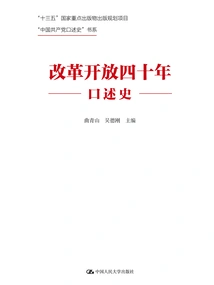
改革开放四十年口述史
Qu Qingshan Editor-in-chief Wu Degang
Through interviews with 49 old leaders and comrades, including Hu Fuming, Yuan Baohua, Wang Mengkui, Chen Jinhua, Liu Hongru, Wu Shaozu, and Long Xinmin, this book uses the form of oral history to show the process of many major decisions in the 40 years of reform and opening up, and comprehensively reviews many little-known details of major events in the reform and opening up process. The content involves the writing and revision process of "Practice is the Only Criterion for Testing Truth", the 1990 Beijing Asian Games, before and after the resolution to build the Three Gorges Project was passed, the return of Hong Kong and Macau, how China responded to the financial crisis, etc. All articles in the book are narrated in the first person by people who have experienced it. Some of them have long held leadership positions in the party and the country, and some work in important departments of the party and the country. They are witnesses and witnesses of the process of reform and opening up. They can be called a "living dictionary" and "living data" on the history of reform and opening up. This book not only reviews historical facts, but also presents the mental journey of those who experienced it and witnessed it. It truly, vividly and concretely reproduces history. It can provide first-hand information for the study of the history of reform and opening up, and can also be used as a reading book for party members, cadres and the masses in the new era of party history.
Through interviews with 49 old leaders and comrades, including Hu Fuming, Yuan Baohua, Wang Mengkui, Chen Jinhua, Liu Hongru, Wu Shaozu, and Long Xinmin, this book uses the form of oral history to show the process of many major decisions in the 40 years of reform and opening up, and comprehensively reviews many little-known details of major events in the reform and opening up process. The content involves the writing and revision process of "Practice is the Only Criterion for Testing Truth", the 1990 Beijing Asian Games, before and after the resolution to build the Three Gorges Project was passed, the return of Hong Kong and Macau, how China responded to the financial crisis, etc. All articles in the book are narrated in the first person by people who have experienced it. Some of them have long held leadership positions in the party and the country, and some work in important departments of the party and the country. They are witnesses and witnesses of the process of reform and opening up. They can be called a "living dictionary" and "living data" on the history of reform and opening up. This book not only reviews historical facts, but also presents the mental journey of those who experienced it and witnessed it. It truly, vividly and concretely reproduces history. It can provide first-hand information for the study of the history of reform and opening up, and can also be used as a reading book for party members, cadres and the masses in the new era of party history.