Library
Browse and search books
2 novels found
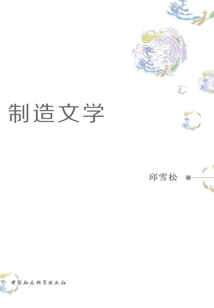
Making Literature
Literature制造文学
Qiu Xuesong
This collection of essays is a summary of the author's thinking over the years, revealing the author's literary views. Literature becomes "modern" not only because of the rise and fall of literary expressions, but also as a result of a comprehensive systematic project that includes institutional environment, literary concepts, consumption concepts, and even production methods and material carriers. Articles such as "Making "New Youth": Zheng Zhenduo before and after the May 4th Movement", "On the Relationship between Lu Xun's Novels and Ancient Short Pieces", "On the Significance and Breakthrough of "Narrative" in "History of Entrepreneurship"", "Shadows in "Cold Night": An Interpretation from a Feminist Perspective", and "On the Significance and Breakthrough of "Narrative" in "History of Entrepreneurship"" discuss the production process of "modern literature" through individual cases. The three articles "On the Poetics of the "Chinese New Poetry School"", "History and Imagination: Thoughts on the "Nine-leaf School of Poetry"", and "Presentation and Construction: Thoughts on Yuan Kejia's "On the Modernization of New Poetry"" focus on the "Chinese New Poetry School\u002FNine-leaf School of Poetry" and analyze the evolution of the meaning of this concept of literary history.
This collection of essays is a summary of the author's thinking over the years, revealing the author's literary views. Literature becomes "modern" not only because of the rise and fall of literary expressions, but also as a result of a comprehensive systematic project that includes institutional environment, literary concepts, consumption concepts, and even production methods and material carriers. Articles such as "Making "New Youth": Zheng Zhenduo before and after the May 4th Movement", "On the Relationship between Lu Xun's Novels and Ancient Short Pieces", "On the Significance and Breakthrough of "Narrative" in "History of Entrepreneurship"", "Shadows in "Cold Night": An Interpretation from a Feminist Perspective", and "On the Significance and Breakthrough of "Narrative" in "History of Entrepreneurship"" discuss the production process of "modern literature" through individual cases. The three articles "On the Poetics of the "Chinese New Poetry School"", "History and Imagination: Thoughts on the "Nine-leaf School of Poetry"", and "Presentation and Construction: Thoughts on Yuan Kejia's "On the Modernization of New Poetry"" focus on the "Chinese New Poetry School\u002FNine-leaf School of Poetry" and analyze the evolution of the meaning of this concept of literary history.
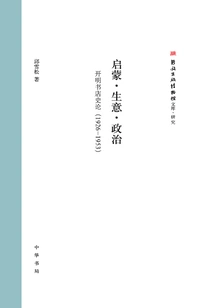
启蒙·生意·政治:开明书店史论(1926—1953)
Qiu Xuesong
As one of the five major publishing houses in the Republic of China, Kaiming Bookstore has left a mark in the history of modern publishing in China. It has made great contributions in the fields of new literature publishing, ancient book compilation, primary and secondary school textbooks, and youth books. Because of its strict style, it aims to create a good cultural atmosphere, advocate new ideas and life trends, and support new writers. It has gradually won widespread praise from the publishing industry and readers. "Enlightenment·Business·Politics: A History of the Enlightenment Bookstore (1926-1953)" focuses on the Kaiming Bookstore, making full use of the archives collected by local archives and publishing houses, the diaries and letters of the parties involved, newspapers and news commentaries, as well as government laws and regulations, interviews with enlightened people and other first-hand materials, using the writing method of narrative history to reproduce the story for us The twenty-seven years of evolution from the founding of Kaiming Bookstore in 1926 to the merger with Youth Publishing House in 1953 to become China Youth Publishing House provides us with detailed and nuanced cases for understanding the establishment of the publishing system in New China. The rich and complex historical aspects of "publishing" itself are also clearly presented in it.
As one of the five major publishing houses in the Republic of China, Kaiming Bookstore has left a mark in the history of modern publishing in China. It has made great contributions in the fields of new literature publishing, ancient book compilation, primary and secondary school textbooks, and youth books. Because of its strict style, it aims to create a good cultural atmosphere, advocate new ideas and life trends, and support new writers. It has gradually won widespread praise from the publishing industry and readers. "Enlightenment·Business·Politics: A History of the Enlightenment Bookstore (1926-1953)" focuses on the Kaiming Bookstore, making full use of the archives collected by local archives and publishing houses, the diaries and letters of the parties involved, newspapers and news commentaries, as well as government laws and regulations, interviews with enlightened people and other first-hand materials, using the writing method of narrative history to reproduce the story for us The twenty-seven years of evolution from the founding of Kaiming Bookstore in 1926 to the merger with Youth Publishing House in 1953 to become China Youth Publishing House provides us with detailed and nuanced cases for understanding the establishment of the publishing system in New China. The rich and complex historical aspects of "publishing" itself are also clearly presented in it.