Library
Browse and search books
1 novel found
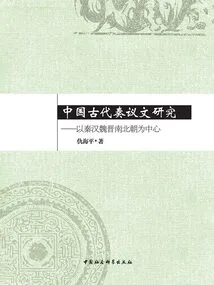
中国古代奏议文研究:以秦汉魏晋南北朝为中心
Qiu Haiping
Memorial essays are a large collection of ancient Chinese articles and have important research value. This book aims to examine the origin, generation and development of memorials in ancient China, and to clearly define the concept, research scope and stylistic characteristics of the genre. Focusing on the Qin, Han, Wei, Jin, Southern and Northern Dynasties, it conducts a stylistic analysis of memorials and related styles as well as the main categories of memorials. This book believes that memorials are petitions or discussion documents submitted to the monarch by central officials and local governors sent by the central government from the Qin and Han dynasties to the Ming and Qing Dynasties in ancient Chinese society when they exercised their participation in and discussion of political power. Memorials are the product of ancient Chinese bureaucratic political system and ritual and music culture. Its intrinsic attribute is "the status of monarch and minister" and its external characteristic is "imperial nature". Ancient Chinese memorials were conceived in the pre-Qin period and formally came into being in the Qin Dynasty. During the Han, Wei and Six Dynasties, the compilation of memorial collections and the study of memorial style contributed to the formation of the concept of memorial genre. During the Ming and Qing Dynasties, the study of zouyi style gradually became more and more in-depth. When Yao Nai's "Ancient Wen Ci Lei Tu" was published, the name "zouyi" was finally established. The stylistic analysis part of this book compares memorials with related styles such as imperial edicts, petitions, and lianzhu to examine the stylistic functions and characteristics of memorials. It also analyzes the main titles of memorials such as "Zhang", "Table", "Zou", "Yi", "Shu", "Qi", "Countermeasures" and "Fengshi", etc., And examines its stylistic format, stylistic function, stylistic characteristics and development changes. The innovation of this book is to make a more detailed analysis of the name and reality of the memorials from the perspective of stylistic generation, and to make a more detailed stylistic analysis of the main titles of the memorials.
Memorial essays are a large collection of ancient Chinese articles and have important research value. This book aims to examine the origin, generation and development of memorials in ancient China, and to clearly define the concept, research scope and stylistic characteristics of the genre. Focusing on the Qin, Han, Wei, Jin, Southern and Northern Dynasties, it conducts a stylistic analysis of memorials and related styles as well as the main categories of memorials. This book believes that memorials are petitions or discussion documents submitted to the monarch by central officials and local governors sent by the central government from the Qin and Han dynasties to the Ming and Qing Dynasties in ancient Chinese society when they exercised their participation in and discussion of political power. Memorials are the product of ancient Chinese bureaucratic political system and ritual and music culture. Its intrinsic attribute is "the status of monarch and minister" and its external characteristic is "imperial nature". Ancient Chinese memorials were conceived in the pre-Qin period and formally came into being in the Qin Dynasty. During the Han, Wei and Six Dynasties, the compilation of memorial collections and the study of memorial style contributed to the formation of the concept of memorial genre. During the Ming and Qing Dynasties, the study of zouyi style gradually became more and more in-depth. When Yao Nai's "Ancient Wen Ci Lei Tu" was published, the name "zouyi" was finally established. The stylistic analysis part of this book compares memorials with related styles such as imperial edicts, petitions, and lianzhu to examine the stylistic functions and characteristics of memorials. It also analyzes the main titles of memorials such as "Zhang", "Table", "Zou", "Yi", "Shu", "Qi", "Countermeasures" and "Fengshi", etc., And examines its stylistic format, stylistic function, stylistic characteristics and development changes. The innovation of this book is to make a more detailed analysis of the name and reality of the memorials from the perspective of stylistic generation, and to make a more detailed stylistic analysis of the main titles of the memorials.