Library
Browse and search books
2 novels found
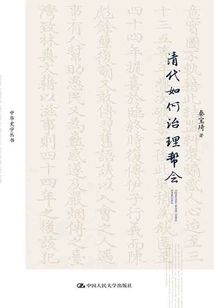
清代如何治理帮会(中华史学丛书)
Qin Baoqi
Gangs in the Qing Dynasty originated from "brothers of different surnames" organizations, and later developed into "hui party", which "formed alliances and established parties". After the Tiandihui emerged during the Qianlong period, a large number of Huihui parties with various names emerged. During the reign of Xian Tongzhi, Sichuan Tunlu developed brother into Laohui, also known as Pao brother or Honggang. After water transportation was diverted to the sea route, the Grain Ships and Sailors Gang merged with smuggling gangs such as Qingpi, Guangdan, and Fengke to form the Qinggang. As a result, the party expanded into a gang. The existence and development of gangs posed a major threat to the Qing regime. In addition to using force to attack them, the Qing authorities also formulated laws and regulations to punish gangs, and continuously added, deleted, and revised them. This curbed the development of gangs to a certain extent, maintained the stability of the Qing Dynasty's regime and ideological security, and provided useful reference for how to govern society today.
Gangs in the Qing Dynasty originated from "brothers of different surnames" organizations, and later developed into "hui party", which "formed alliances and established parties". After the Tiandihui emerged during the Qianlong period, a large number of Huihui parties with various names emerged. During the reign of Xian Tongzhi, Sichuan Tunlu developed brother into Laohui, also known as Pao brother or Honggang. After water transportation was diverted to the sea route, the Grain Ships and Sailors Gang merged with smuggling gangs such as Qingpi, Guangdan, and Fengke to form the Qinggang. As a result, the party expanded into a gang. The existence and development of gangs posed a major threat to the Qing regime. In addition to using force to attack them, the Qing authorities also formulated laws and regulations to punish gangs, and continuously added, deleted, and revised them. This curbed the development of gangs to a certain extent, maintained the stability of the Qing Dynasty's regime and ideological security, and provided useful reference for how to govern society today.
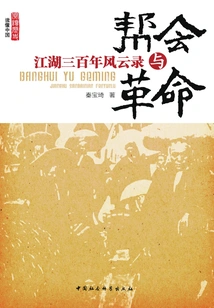
帮会与革命:江湖三百年风云录
Qin Baoqi
This book is a companion volume to "Three Hundred Years of Jianghu". Mainly based on archives, local chronicles, memoirs, etc., This book truly reproduces the intricate and confusing Jianghu society in China over the past three hundred years. It gives a panoramic description of the ups and downs experienced by gangs: they have gone through a vigorous revolutionary process, and they have also fallen into the underworld that was criticized by people... How did the Revolutionary Party of 1911 incite and guide the gangs to participate in the anti-Qing revolution? What active role did gangs play in the revolution? What negative impact did gangs have on the revolution? How did a gang transform into a mafia organization?
This book is a companion volume to "Three Hundred Years of Jianghu". Mainly based on archives, local chronicles, memoirs, etc., This book truly reproduces the intricate and confusing Jianghu society in China over the past three hundred years. It gives a panoramic description of the ups and downs experienced by gangs: they have gone through a vigorous revolutionary process, and they have also fallen into the underworld that was criticized by people... How did the Revolutionary Party of 1911 incite and guide the gangs to participate in the anti-Qing revolution? What active role did gangs play in the revolution? What negative impact did gangs have on the revolution? How did a gang transform into a mafia organization?