Library
Browse and search novels
2 novels found
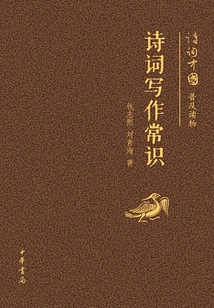
诗词写作常识(诗词中国普及读物)
Qian Zhixi Liu Qinghai
The book "Common Sense of Poetry Writing" was co-authored by Professor Qian Zhixi from the Department of Chinese at Peking University and Professor Liu Qinghai from Shanghai University. This book answers common questions in poetry creation in simple and easy-to-understand terms. In addition to introducing metrical knowledge, it also analyzes in detail unavoidable topics in poetry creation such as rules, word formation, antithesis, and sustenance, guiding beginners to create works that are both spiritual and physical.
The book "Common Sense of Poetry Writing" was co-authored by Professor Qian Zhixi from the Department of Chinese at Peking University and Professor Liu Qinghai from Shanghai University. This book answers common questions in poetry creation in simple and easy-to-understand terms. In addition to introducing metrical knowledge, it also analyzes in detail unavoidable topics in poetry creation such as rules, word formation, antithesis, and sustenance, guiding beginners to create works that are both spiritual and physical.
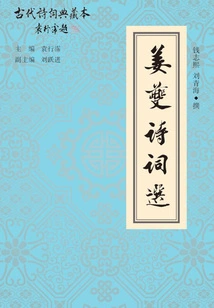
Selected Poems of Jiang Kui
Literature姜夔诗词选
Qian Zhixi Liu Qinghai
Jiang Kui was an important poet in the Southern Song Dynasty and a representative of the elegant school of literati poetry. His lyrics aim to be pure and elegant, rich in the beauty of music and show his extremely high artistic taste. In the history of Ci, Jiang Ci not only directly affected the history of Ci in the late Southern Song Dynasty, but also had a great influence on the Western Zhejiang Ci School in the Qing Dynasty. Jiang also has high achievements in poetry creation, especially his Qijue style, which is fresh and subtle, and his words are spiritual and purposeful. This book contains about 200,000 words, and selects 68 representative poems by Jiang Kui, including 24 poems and 44 lyrics, which relatively completely displays the overall achievements of Jiang Kui's poems. There is an "Introduction" at the front of the book, which is divided into three parts: "Jiang Kui's career and era", "Interpretation of the title of the collection "Songs of Taoist Baishi"" and "Jiang Kui's Poetry". It discusses Jiang Kui's life experience and achievements in poetry creation, which helps readers to fully understand Jiang Kui as a person and his works. As for the evaluation of specific works, it follows the style of the series and is divided into two parts: annotation and appreciation. The annotation part explains the creative background of the work, explains difficult words, reveals the source of the dictionary and the related allusions. It should be complicated when it is necessary, and it should be simple when it is suitable. The appraisal part is a relatively in-depth and detailed analysis of the meaning, structure, and artistic techniques of the work, and there are many interesting comments. In particular, the author's discussion on the melody of Baishi's poems is very enlightening. There is also an article "Baishi Ci Theory" at the back of the book for readers' reference.
Jiang Kui was an important poet in the Southern Song Dynasty and a representative of the elegant school of literati poetry. His lyrics aim to be pure and elegant, rich in the beauty of music and show his extremely high artistic taste. In the history of Ci, Jiang Ci not only directly affected the history of Ci in the late Southern Song Dynasty, but also had a great influence on the Western Zhejiang Ci School in the Qing Dynasty. Jiang also has high achievements in poetry creation, especially his Qijue style, which is fresh and subtle, and his words are spiritual and purposeful. This book contains about 200,000 words, and selects 68 representative poems by Jiang Kui, including 24 poems and 44 lyrics, which relatively completely displays the overall achievements of Jiang Kui's poems. There is an "Introduction" at the front of the book, which is divided into three parts: "Jiang Kui's career and era", "Interpretation of the title of the collection "Songs of Taoist Baishi"" and "Jiang Kui's Poetry". It discusses Jiang Kui's life experience and achievements in poetry creation, which helps readers to fully understand Jiang Kui as a person and his works. As for the evaluation of specific works, it follows the style of the series and is divided into two parts: annotation and appreciation. The annotation part explains the creative background of the work, explains difficult words, reveals the source of the dictionary and the related allusions. It should be complicated when it is necessary, and it should be simple when it is suitable. The appraisal part is a relatively in-depth and detailed analysis of the meaning, structure, and artistic techniques of the work, and there are many interesting comments. In particular, the author's discussion on the melody of Baishi's poems is very enlightening. There is also an article "Baishi Ci Theory" at the back of the book for readers' reference.