Library
Browse and search books
2 novels found
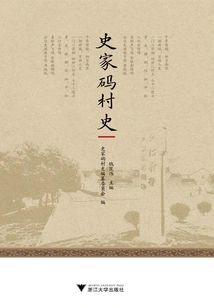
History of Shijiama Village
History史家码村史
Qian Maowei
Shijiama Village, Xiaying Street, Yinzhou District, Ningbo is an ancient village with a history of more than 700 years. The famous Shi family in the Southern Song Dynasty is one of its ancestors. Currently, the old village is being renovated and has been demolished. The compilation of village history is one of the historical and cultural projects for streets to preserve nostalgia. This book is a new village history designed based on the public community history concept of public history, which is different from the current village chronicle-type village history. It absorbs the advantages of existing village histories at home and abroad, and makes transcendental thinking based on the people-oriented principle. Starting from oral history and combining it with relevant documents is the biggest feature of its material sources. At the same time, a large number of pictures have been collected, with both pictures and texts, and are highly readable.
Shijiama Village, Xiaying Street, Yinzhou District, Ningbo is an ancient village with a history of more than 700 years. The famous Shi family in the Southern Song Dynasty is one of its ancestors. Currently, the old village is being renovated and has been demolished. The compilation of village history is one of the historical and cultural projects for streets to preserve nostalgia. This book is a new village history designed based on the public community history concept of public history, which is different from the current village chronicle-type village history. It absorbs the advantages of existing village histories at home and abroad, and makes transcendental thinking based on the people-oriented principle. Starting from oral history and combining it with relevant documents is the biggest feature of its material sources. At the same time, a large number of pictures have been collected, with both pictures and texts, and are highly readable.
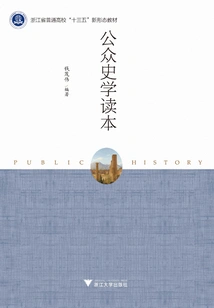
Public History Reader
History公众史学读本
Qian Maowei
There are 16 lectures in the book, and the logical arrangement is as follows: The first lecture is the introduction. Lectures 2 to 10 are contemporary public history records. We first talk about process and history, emphasizing that contemporary public processes must be transformed into textual history. Then we will think about it in three major aspects. First, the expansion of writing objects, from big people to small people, involves the three structural units of small people: personal history, family history, and community history. The second is the expansion of the participating groups, from a small group to the public, from agents to self-care. The third is the expansion of participation methods, from traditional documents to oral histories, videographies, and documentaries. Lectures 11 and 12 are about public cultural heritage, involving public historical archives and cultural heritage protection. Lectures 13 to 16 are popular history, involving the production and consumption of three major aspects: popular books, historical films and TV dramas, experts' popular history lectures, and public popular history writing. The format of each part consists of four parts: summary, classroom, selected articles, and practice. Breakthroughs in the compilation of Chinese public history textbooks, breakthroughs in the compilation style of textbooks, and breakthroughs in the concept of textbook construction. From textbooks to readers, from reading-based readers to seminar-based readers, it has adapted to the new normal of inquiry-based teaching. It fully meets the requirements for the construction of new forms of teaching materials and is therefore worthy of compilation and publication.
There are 16 lectures in the book, and the logical arrangement is as follows: The first lecture is the introduction. Lectures 2 to 10 are contemporary public history records. We first talk about process and history, emphasizing that contemporary public processes must be transformed into textual history. Then we will think about it in three major aspects. First, the expansion of writing objects, from big people to small people, involves the three structural units of small people: personal history, family history, and community history. The second is the expansion of the participating groups, from a small group to the public, from agents to self-care. The third is the expansion of participation methods, from traditional documents to oral histories, videographies, and documentaries. Lectures 11 and 12 are about public cultural heritage, involving public historical archives and cultural heritage protection. Lectures 13 to 16 are popular history, involving the production and consumption of three major aspects: popular books, historical films and TV dramas, experts' popular history lectures, and public popular history writing. The format of each part consists of four parts: summary, classroom, selected articles, and practice. Breakthroughs in the compilation of Chinese public history textbooks, breakthroughs in the compilation style of textbooks, and breakthroughs in the concept of textbook construction. From textbooks to readers, from reading-based readers to seminar-based readers, it has adapted to the new normal of inquiry-based teaching. It fully meets the requirements for the construction of new forms of teaching materials and is therefore worthy of compilation and publication.