Library
Browse and search books
1 novel found
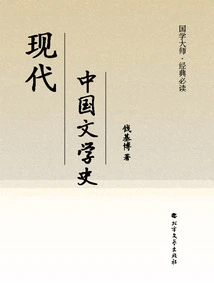
现代中国文学史(国学大师·经典必读)
Qian Jibo
The late Qing Dynasty and the early Republic of China was a period of great social change and an important turning point in literary history. The author of this book divides the literature at that time into two categories: one is ancient literature, represented by Wang Kaiyun, Zhang Taiyan, Liu Shipei, Chen Yan, Wang Guowei, Wu Meicun, etc.; One is new literature, represented by Kang Youwei, Liang Qichao, Yan Fu, Zhang Shizhao, and Hu Shi. This book is a masterpiece of the chronological literary history that takes the literature of this period as its content. The author has an in-depth exploration of the historical background and ideological roots of these representative figures. This book's "Compilation" describes ancient times, medieval times, modern times, and modern times, followed by modern literature. This is precisely to understand the changes between ancient and modern times. What is discussed in the book, "beginning with Wang Kaiyun and ending with Hu Shizhi," is mainly about modern literature and the so-called "old literature" after entering the twentieth century.
The late Qing Dynasty and the early Republic of China was a period of great social change and an important turning point in literary history. The author of this book divides the literature at that time into two categories: one is ancient literature, represented by Wang Kaiyun, Zhang Taiyan, Liu Shipei, Chen Yan, Wang Guowei, Wu Meicun, etc.; One is new literature, represented by Kang Youwei, Liang Qichao, Yan Fu, Zhang Shizhao, and Hu Shi. This book is a masterpiece of the chronological literary history that takes the literature of this period as its content. The author has an in-depth exploration of the historical background and ideological roots of these representative figures. This book's "Compilation" describes ancient times, medieval times, modern times, and modern times, followed by modern literature. This is precisely to understand the changes between ancient and modern times. What is discussed in the book, "beginning with Wang Kaiyun and ending with Hu Shizhi," is mainly about modern literature and the so-called "old literature" after entering the twentieth century.