Library
Browse and search books
2 novels found
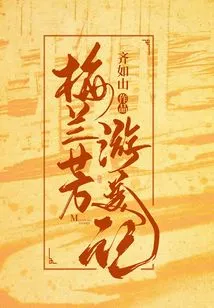
Mei Lanfang's Travels in America
Literature梅兰芳游美记
Qi Rushan
In 1929, Mei Lanfang went to the United States to perform the "new costume drama" "Fenhe Bend" (playing Liu Yingchun). "Fenhe Bend" tells the story of Tang Dynasty general Xue Gui returning to his hometown after an eighteen-year expedition and reuniting with his wife Liu Yingchun amid longing and misunderstanding. It is a touching story. The play breaks through the limitations of traditional Qingyi duet singing that does not focus on figure. It is a representative work of Mei Lanfang's major innovation in Peking Opera's female performing arts, which focuses on singing and dancing. Several plays made American men and women infatuated with each other, but they said, "I don't understand the lines, but I understand them in my heart." A person who walked into the dream of the overseas Chinese compatriots was almost nostalgic for their country, and it was really "hard to say goodbye when you want to see them." Mei Lanfang brought Peking Opera to the United States to perform in 1929, which became a memorable story in the cultural exchanges between China and the United States.
In 1929, Mei Lanfang went to the United States to perform the "new costume drama" "Fenhe Bend" (playing Liu Yingchun). "Fenhe Bend" tells the story of Tang Dynasty general Xue Gui returning to his hometown after an eighteen-year expedition and reuniting with his wife Liu Yingchun amid longing and misunderstanding. It is a touching story. The play breaks through the limitations of traditional Qingyi duet singing that does not focus on figure. It is a representative work of Mei Lanfang's major innovation in Peking Opera's female performing arts, which focuses on singing and dancing. Several plays made American men and women infatuated with each other, but they said, "I don't understand the lines, but I understand them in my heart." A person who walked into the dream of the overseas Chinese compatriots was almost nostalgic for their country, and it was really "hard to say goodbye when you want to see them." Mei Lanfang brought Peking Opera to the United States to perform in 1929, which became a memorable story in the cultural exchanges between China and the United States.
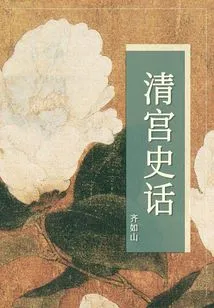
History of the Qing Palace
History清宫史话
Qi Rushan
The book "Memoirs of Qi Rushan: History of the Qing Palace" delicately and vividly restores the Qing court in Mr. Qi's memory. From food, clothing, housing and transportation to etiquette systems, some of the contents in the book are what Mr. Qi heard and saw with his own ears, and some are first-hand information he obtained after consulting the files of the Ministry of Internal Affairs, the Jingshi Room, and the Imperial Kitchen Room. Mr. Qi is like an excellent narrator, leading readers on a journey through the mysterious royal forbidden areas. Qi Rushan is a literary and artistic scholar, but he is by no means a simple scholar. He understands people, knows things, understands politics, is broad-minded, insightful, and knows how to live. He even specially studied the Three Hundred and Sixty Lines of Peking, talked with chefs in large and small restaurants, and wrote books on food such as "Summary of Cooking". He is known as a revolutionary, historian, artist, writer and folklorist. He is a good example of modern intellectuals, and his legendary life is fully presented in his memoirs.
The book "Memoirs of Qi Rushan: History of the Qing Palace" delicately and vividly restores the Qing court in Mr. Qi's memory. From food, clothing, housing and transportation to etiquette systems, some of the contents in the book are what Mr. Qi heard and saw with his own ears, and some are first-hand information he obtained after consulting the files of the Ministry of Internal Affairs, the Jingshi Room, and the Imperial Kitchen Room. Mr. Qi is like an excellent narrator, leading readers on a journey through the mysterious royal forbidden areas. Qi Rushan is a literary and artistic scholar, but he is by no means a simple scholar. He understands people, knows things, understands politics, is broad-minded, insightful, and knows how to live. He even specially studied the Three Hundred and Sixty Lines of Peking, talked with chefs in large and small restaurants, and wrote books on food such as "Summary of Cooking". He is known as a revolutionary, historian, artist, writer and folklorist. He is a good example of modern intellectuals, and his legendary life is fully presented in his memoirs.