Library
Browse and search novels
1 novel found
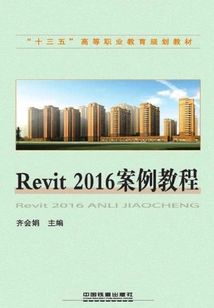
Revit 2016 Case Tutorial
LiteratureRevit 2016案例教程
Qi Huijuan
This book is a task-driven textbook based on actual engineering projects. The book is divided into 14 modules. Module 1 and Module 2 respectively introduce the understanding of Revit2016 software, view display control and basic operations. Modules 3 to 10 follow the principle of "from the whole to the part", starting from the whole, gradually refining, and organizing relevant content in a task-driven manner, which are: setting the project location; creating the site and site components; creating and editing elevations and axis grids; creating walls; creating doors and windows; creating floors, ceilings, and roofs; creating handrails, stairs, ramps, and openings; creating building components; and creating rooms. Module 11 introduces the knowledge of perspective effect of Revit2016 software model, that is, the rendering and roaming of buildings; Module 12 introduces how to create architectural construction drawings in Revit2016; Module 13 introduces how to achieve collaborative work; Module 14 introduces the related concepts of families. This book can be used as a primary and intermediate training tutorial for construction and civil engineering majors in universities and vocational and technical colleges, and can also be used as a reference book for the majority of engineering and technical personnel engaged in BIM work.
This book is a task-driven textbook based on actual engineering projects. The book is divided into 14 modules. Module 1 and Module 2 respectively introduce the understanding of Revit2016 software, view display control and basic operations. Modules 3 to 10 follow the principle of "from the whole to the part", starting from the whole, gradually refining, and organizing relevant content in a task-driven manner, which are: setting the project location; creating the site and site components; creating and editing elevations and axis grids; creating walls; creating doors and windows; creating floors, ceilings, and roofs; creating handrails, stairs, ramps, and openings; creating building components; and creating rooms. Module 11 introduces the knowledge of perspective effect of Revit2016 software model, that is, the rendering and roaming of buildings; Module 12 introduces how to create architectural construction drawings in Revit2016; Module 13 introduces how to achieve collaborative work; Module 14 introduces the related concepts of families. This book can be used as a primary and intermediate training tutorial for construction and civil engineering majors in universities and vocational and technical colleges, and can also be used as a reference book for the majority of engineering and technical personnel engaged in BIM work.