Library
Browse and search books
2 novels found
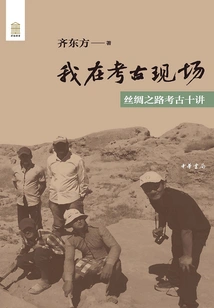
我在考古现场:丝绸之路考古十讲
Qi Dongfang
The Silk Road is a road of commerce and trade, a road of dialogue between the East and the West, a road of friendly exchanges, and a road of cultural exchange and integration. The author of this book leads everyone to re-walk the Silk Road and experience ancient civilizations from Xi'an, Suiye, Samarkand, Bukhara, and Istanbul; and through unforgettable experiences in his archaeological career, such as the excavation of the Tubo Tomb in Dulan, Qinghai, the exploration of the sunken ship "Black Stone", etc., He can see archaeological sites, read unearthed cultural relics, witness distant history with his own eyes, and explore unknown civilizations with his own hands. This book contains a large number of photos of archaeological sites and exquisite cultural relics, making it a rare archaeological visual feast.
The Silk Road is a road of commerce and trade, a road of dialogue between the East and the West, a road of friendly exchanges, and a road of cultural exchange and integration. The author of this book leads everyone to re-walk the Silk Road and experience ancient civilizations from Xi'an, Suiye, Samarkand, Bukhara, and Istanbul; and through unforgettable experiences in his archaeological career, such as the excavation of the Tubo Tomb in Dulan, Qinghai, the exploration of the sunken ship "Black Stone", etc., He can see archaeological sites, read unearthed cultural relics, witness distant history with his own eyes, and explore unknown civilizations with his own hands. This book contains a large number of photos of archaeological sites and exquisite cultural relics, making it a rare archaeological visual feast.
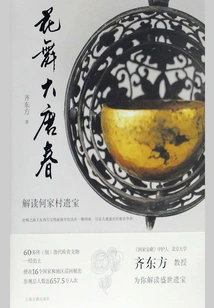
花舞大唐春:解读何家村遗宝
Qi Dongfang
The manuscript was originally serialized in Guangzhou Daily under the title "Decrypting Hejiacun". It mainly focuses on the gold and silverware hoard unearthed in the Forest of Steles in Xi'an in 1970. A total of more than 1,000 pieces were unearthed from the Hejiacun cellar, which were hidden in two large pottery urns and a silver jar. The materials include gold, silver, jade, pottery, etc., With fine workmanship, beautiful shapes, and high artistic value. Most of them were daily necessities of the Tang royal family. In May 2004, 65 pieces (groups) of exquisite treasures from Hejia Village were unveiled at Peking University for the first time, including the "scent bag" worn by Concubine Yang, the dancing horse of the romantic emperor Xuanzong of the Tang Dynasty, the mysterious "Golden Kaiyuan Tongbao", etc. Regarding the mystery of the buried treasures of Hejia Village and the hidden stories behind the 65 pieces (sets) of artifacts, Qi Dongfang explained them one by one in a "puzzle-solving" tone.
The manuscript was originally serialized in Guangzhou Daily under the title "Decrypting Hejiacun". It mainly focuses on the gold and silverware hoard unearthed in the Forest of Steles in Xi'an in 1970. A total of more than 1,000 pieces were unearthed from the Hejiacun cellar, which were hidden in two large pottery urns and a silver jar. The materials include gold, silver, jade, pottery, etc., With fine workmanship, beautiful shapes, and high artistic value. Most of them were daily necessities of the Tang royal family. In May 2004, 65 pieces (groups) of exquisite treasures from Hejia Village were unveiled at Peking University for the first time, including the "scent bag" worn by Concubine Yang, the dancing horse of the romantic emperor Xuanzong of the Tang Dynasty, the mysterious "Golden Kaiyuan Tongbao", etc. Regarding the mystery of the buried treasures of Hejia Village and the hidden stories behind the 65 pieces (sets) of artifacts, Qi Dongfang explained them one by one in a "puzzle-solving" tone.