Library
Browse and search books
3 novels found
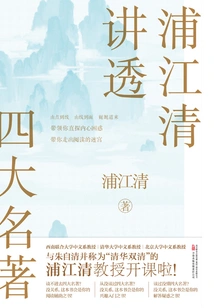
浦江清讲透四大名著
Pujiangqing
This book is a book on the appreciation of Chinese classical literature that is both scientific and artistic. It is compiled from the lecture notes on the history of classical literature compiled by Mr. Pu Jiangqing. It covers a collection of literary thoughts accumulated by him while teaching at Tsinghua University, Southwest Associated University, and Peking University for many years. After repeated deliberation and revision, it has unique insights, novel arguments, and eloquent explanations. It has both depth and breadth, ideological and artistic qualities, and comprehensively reveals the essence and true meaning of the four great classics, from macroscopic ancient political thoughts to microscopic story plots and character analysis. In a language you can understand, it will take you through time and space, have long conversations with the masters of the Ming and Qing Dynasties, and truly appreciate the immortal classical charm of the "Four Great Classics".
This book is a book on the appreciation of Chinese classical literature that is both scientific and artistic. It is compiled from the lecture notes on the history of classical literature compiled by Mr. Pu Jiangqing. It covers a collection of literary thoughts accumulated by him while teaching at Tsinghua University, Southwest Associated University, and Peking University for many years. After repeated deliberation and revision, it has unique insights, novel arguments, and eloquent explanations. It has both depth and breadth, ideological and artistic qualities, and comprehensively reveals the essence and true meaning of the four great classics, from macroscopic ancient political thoughts to microscopic story plots and character analysis. In a language you can understand, it will take you through time and space, have long conversations with the masters of the Ming and Qing Dynasties, and truly appreciate the immortal classical charm of the "Four Great Classics".
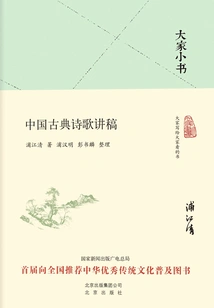
大家小书:中国古典诗歌讲稿
Pujiangqing
This book is compiled from the works of Mr. Pu Jiangqing, a famous literary historian in my country, and is divided into four parts, namely stylistic explanation, writer analysis, work selection, and literary criticism. The content includes "The Book of Songs" and language, the era and characteristics of "The Songs of Chu" and its differences from the "Book of Songs", Exploring the Origin of Ci and Music, Exploring the Origin of Ci and Music (continued), the introduction to "Selected Ci and Music", Sanqu in the Yuan Dynasty, on novels, etc. It has high academic value and is a classic in the field of Chinese literature.
This book is compiled from the works of Mr. Pu Jiangqing, a famous literary historian in my country, and is divided into four parts, namely stylistic explanation, writer analysis, work selection, and literary criticism. The content includes "The Book of Songs" and language, the era and characteristics of "The Songs of Chu" and its differences from the "Book of Songs", Exploring the Origin of Ci and Music, Exploring the Origin of Ci and Music (continued), the introduction to "Selected Ci and Music", Sanqu in the Yuan Dynasty, on novels, etc. It has high academic value and is a classic in the field of Chinese literature.
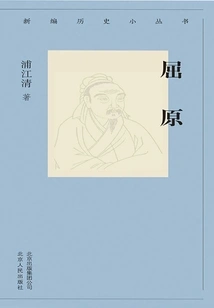
新编历史小丛书:屈原
Pujiangqing
At the end of 1947, Mr. Pu Jiangqing and Mr. Zhu Ziqing participated in the signature campaign of "A Letter to the Students and the Government for the Anti-Civil War Movement" organized by Qian Duansheng and others. After Mr. Zhu died of illness, he led all the teachers and students of the Chinese Department to usher in the peaceful liberation of Beijing, and actively participated in revolutionary movements such as land reform and the War to Resist U. S. Aggression and Aid Korea. The article "Qu Yuan" he wrote was included in "Twelve Poets of the Motherland" compiled by Tsinghua University teachers and students, and all the proceeds were donated to the Chinese People's Volunteers.
At the end of 1947, Mr. Pu Jiangqing and Mr. Zhu Ziqing participated in the signature campaign of "A Letter to the Students and the Government for the Anti-Civil War Movement" organized by Qian Duansheng and others. After Mr. Zhu died of illness, he led all the teachers and students of the Chinese Department to usher in the peaceful liberation of Beijing, and actively participated in revolutionary movements such as land reform and the War to Resist U. S. Aggression and Aid Korea. The article "Qu Yuan" he wrote was included in "Twelve Poets of the Motherland" compiled by Tsinghua University teachers and students, and all the proceeds were donated to the Chinese People's Volunteers.