Library
Browse and search books
5 novels found
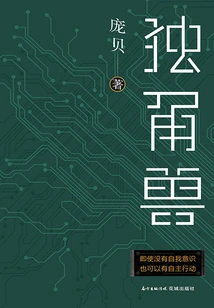
Unicorn
General Fiction独角兽
Pompeii
In a city in southern China, Ai Ke, the former chairman of Yunxin Corporation who was unjustly imprisoned, was released early due to improved lie detection technology. Dr. Ai Ke is a top biosensing expert who graduated from Princeton. Relying on his EEG sensing technology, Yunxin Company is expected to quickly become a unicorn company in the robotics industry. Unicorn EEG sensing technology was originally invented by Aike, but now it has been stolen by a foreign company and countersued for infringement. Ai Ke restored experimental evidence for the transnational intellectual property lawsuit the company was facing, and this experiment triggered the "autonomous action" of a robot based on Ai Ke's missing girlfriend... This was a supercritical experiment about human nature. More fantasy than reality, more reality than science fiction.
In a city in southern China, Ai Ke, the former chairman of Yunxin Corporation who was unjustly imprisoned, was released early due to improved lie detection technology. Dr. Ai Ke is a top biosensing expert who graduated from Princeton. Relying on his EEG sensing technology, Yunxin Company is expected to quickly become a unicorn company in the robotics industry. Unicorn EEG sensing technology was originally invented by Aike, but now it has been stolen by a foreign company and countersued for infringement. Ai Ke restored experimental evidence for the transnational intellectual property lawsuit the company was facing, and this experiment triggered the "autonomous action" of a robot based on Ai Ke's missing girlfriend... This was a supercritical experiment about human nature. More fantasy than reality, more reality than science fiction.
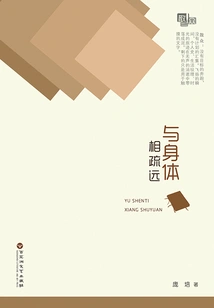
Alienation from Body
Literature与身体相疏远
Pompeii
"Alienation from the Body" is a collection of essays by Mr. Pompeo, a representative writer of new prose. These include selected chapters of "Whispers" written in the early years and recent works "Five Memories" and "Old Events". The author restores the images deep in time one by one through deep memories. Every detail of a family located in the south of the Yangtze River is exposed in the author's gentle and beautiful words. Regardless of the love between brothers and sisters, the love of parents, and the friendship between teachers and teachers, they are all deeply touching under his superb writing style.
"Alienation from the Body" is a collection of essays by Mr. Pompeo, a representative writer of new prose. These include selected chapters of "Whispers" written in the early years and recent works "Five Memories" and "Old Events". The author restores the images deep in time one by one through deep memories. Every detail of a family located in the south of the Yangtze River is exposed in the author's gentle and beautiful words. Regardless of the love between brothers and sisters, the love of parents, and the friendship between teachers and teachers, they are all deeply touching under his superb writing style.
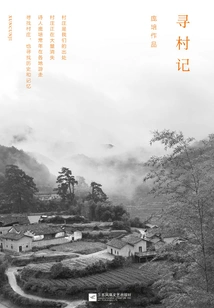
Looking for a Village
Literature寻村记
Pompeii
This book contains two long articles. The article "Looking for a Village" is an objective record of the author's travels to villages in various places. The author's footprints are all over countless villages, from the seaside to the Western Regions, from Yunnan to Mobei. During the endless travels, the author encountered and went deep into each village, feeling the kindness and acceptance of the village, a thing that has existed for tens of thousands of years, to mankind. The author tries his best to introduce the village's overview, history, style, details and decadence to readers from an objective perspective, with little subjective expression, and uses extremely restrained and calm words to depict an exciting picture of life in the past. "The Lonely Huangshan" takes Huangshan as the only writing object, synthesizes his own mountaineering and travel experiences, writes about Huangshan from all possible angles, observes and describes Huangshan in the entire world, and compares Huangshan with everything, such as music, philosophy, architecture, foreign lands, history, etc. This is a "Huangshan Ji" that is completely different from any previous works.
This book contains two long articles. The article "Looking for a Village" is an objective record of the author's travels to villages in various places. The author's footprints are all over countless villages, from the seaside to the Western Regions, from Yunnan to Mobei. During the endless travels, the author encountered and went deep into each village, feeling the kindness and acceptance of the village, a thing that has existed for tens of thousands of years, to mankind. The author tries his best to introduce the village's overview, history, style, details and decadence to readers from an objective perspective, with little subjective expression, and uses extremely restrained and calm words to depict an exciting picture of life in the past. "The Lonely Huangshan" takes Huangshan as the only writing object, synthesizes his own mountaineering and travel experiences, writes about Huangshan from all possible angles, observes and describes Huangshan in the entire world, and compares Huangshan with everything, such as music, philosophy, architecture, foreign lands, history, etc. This is a "Huangshan Ji" that is completely different from any previous works.
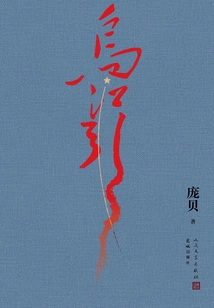
Wujiangyin
General Fiction乌江引
Pompeii
The manuscript is a full-length novel with a word count of 160,000 words. The manuscript uses "sketch" and "profile" as its main structure, with the work of the Second Bureau of the Central Military Commission, the technical investigation and intelligence agency on the Long March, as the core, recreating the arduous anti-encirclement and suppression struggle on the Long March. Especially around 1935, after the huge losses in the Battle of Xiangjiang, the critical juncture of where our party and army were headed, the intelligence work of the Second Bureau played a crucial role. This book is based on this period of history. After extensive review of declassified archives, the author used solid historical materials and objective historical facts to create characters with novel imagination and reproduce history with "non-fiction" writing. He not only wrote about the spirit of the Long March, the demeanor of great men and the dedication and sacrifice of the officers and soldiers of the Second Bureau, but also wrote about the significance of red history to today. What is even more commendable is that the novel is cleverly conceived. It uses the activities in the secret front of the Second Bureau, the history of several key figures in the Second Bureau and the difficult searches of descendants to cleverly connect the entire history of the Long March, the Anti-Japanese War, and the War of Liberation, and write about the youth, faith, wisdom and original intention of a generation of communists. It is both intimate and touching, yet magnificent and has strong appeal and profound educational significance. It is a rare and excellent party history novel in recent years.
The manuscript is a full-length novel with a word count of 160,000 words. The manuscript uses "sketch" and "profile" as its main structure, with the work of the Second Bureau of the Central Military Commission, the technical investigation and intelligence agency on the Long March, as the core, recreating the arduous anti-encirclement and suppression struggle on the Long March. Especially around 1935, after the huge losses in the Battle of Xiangjiang, the critical juncture of where our party and army were headed, the intelligence work of the Second Bureau played a crucial role. This book is based on this period of history. After extensive review of declassified archives, the author used solid historical materials and objective historical facts to create characters with novel imagination and reproduce history with "non-fiction" writing. He not only wrote about the spirit of the Long March, the demeanor of great men and the dedication and sacrifice of the officers and soldiers of the Second Bureau, but also wrote about the significance of red history to today. What is even more commendable is that the novel is cleverly conceived. It uses the activities in the secret front of the Second Bureau, the history of several key figures in the Second Bureau and the difficult searches of descendants to cleverly connect the entire history of the Long March, the Anti-Japanese War, and the War of Liberation, and write about the youth, faith, wisdom and original intention of a generation of communists. It is both intimate and touching, yet magnificent and has strong appeal and profound educational significance. It is a rare and excellent party history novel in recent years.
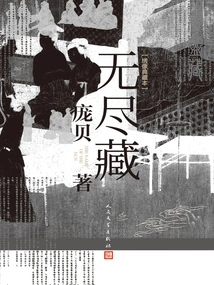
Endless Collection: Collection of Embroidered Figures
General Fiction无尽藏:绣像典藏本
Pompeii
The novel takes the history of the Southern Tang Dynasty as the center, uses the famous Southern Tang general Lin Renzhao as the introduction, uses the "Triple Prophecy Picture" as the clue, uses "Han Xizai's Night Banquet Picture" and its "geographical" field as the layout, and uses the jade seal symbolizing imperial power as the "foreshadowing" to tell a "story" of revenge that combines politics, history, martial arts, and fantasy shadows. This is a novel that pays homage to Borges, and is also a work that is immersed in traditional Chinese culture. It is a mixture of various novel types with elegant writing, unique plot, and reflections on reality in the maze of history.
The novel takes the history of the Southern Tang Dynasty as the center, uses the famous Southern Tang general Lin Renzhao as the introduction, uses the "Triple Prophecy Picture" as the clue, uses "Han Xizai's Night Banquet Picture" and its "geographical" field as the layout, and uses the jade seal symbolizing imperial power as the "foreshadowing" to tell a "story" of revenge that combines politics, history, martial arts, and fantasy shadows. This is a novel that pays homage to Borges, and is also a work that is immersed in traditional Chinese culture. It is a mixture of various novel types with elegant writing, unique plot, and reflections on reality in the maze of history.