Library
Browse and search books
4 novels found
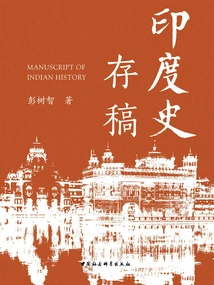
Indian History Archives
History印度史存稿
Peng Shuzhi
"The Preserved Manuscripts of Indian History" is the result of Professor Peng Shuzhi's early research on the modern history of South Asia. The whole book is divided into chapters such as "Xiaobu Manuscripts (Part 1)", "Xiaobu Manuscripts (Part 2)", "Xiaobu Manuscripts" and "Xiaobu Manuscripts". Starting from Marxist historical materialism, this book systematically explains the Indian anti-British uprising from 1857 to 1859, the economic and social motivations, historical processes and influences of the Indian independence movement from 1905 to 1908, as well as the nationalist thoughts and practices of Tilak and others. It has reference value for understanding the changes in India's modern history.
"The Preserved Manuscripts of Indian History" is the result of Professor Peng Shuzhi's early research on the modern history of South Asia. The whole book is divided into chapters such as "Xiaobu Manuscripts (Part 1)", "Xiaobu Manuscripts (Part 2)", "Xiaobu Manuscripts" and "Xiaobu Manuscripts". Starting from Marxist historical materialism, this book systematically explains the Indian anti-British uprising from 1857 to 1859, the economic and social motivations, historical processes and influences of the Indian independence movement from 1905 to 1908, as well as the nationalist thoughts and practices of Tilak and others. It has reference value for understanding the changes in India's modern history.
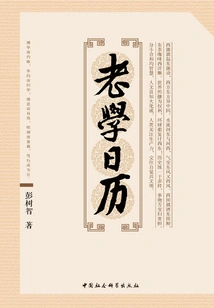
Old School Calendar
Literature老学日历
Peng Shuzhi
This is a scholarly work written by an old man who is over eighty years old. With the vicissitudes of time, it uses the calendar format of 2012 as a guide to record Qin Xue's book journey. Looking up and down, it takes 11 themes as its latitude, including "Building People to Learn", "Historical Memory", "Poetic Life", "Philosophical Words of Philosophers", and "Natural Humanity", showing the learning trajectory of thinking. Consistently, it focuses on the historical concept of conscious exchanges between human civilizations. The Success of Humanity is the sixth work with the same theme after "The Theory of Civilized Exchanges", "The Records of Shu Lu Hongzong", "Hundred Records of Songyu Zhai", "The Theory of Liangzhai Civilization Consciousness", and "My Concept of Civilization", collectively referred to as the "Six Steps of Civilized Exchanges".
This is a scholarly work written by an old man who is over eighty years old. With the vicissitudes of time, it uses the calendar format of 2012 as a guide to record Qin Xue's book journey. Looking up and down, it takes 11 themes as its latitude, including "Building People to Learn", "Historical Memory", "Poetic Life", "Philosophical Words of Philosophers", and "Natural Humanity", showing the learning trajectory of thinking. Consistently, it focuses on the historical concept of conscious exchanges between human civilizations. The Success of Humanity is the sixth work with the same theme after "The Theory of Civilized Exchanges", "The Records of Shu Lu Hongzong", "Hundred Records of Songyu Zhai", "The Theory of Liangzhai Civilization Consciousness", and "My Concept of Civilization", collectively referred to as the "Six Steps of Civilized Exchanges".
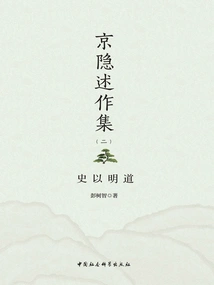
Collection of Jing Yin's Narratives (2)
Literature京隐述作集(二)
Peng Shuzhi
Jingyin is the alias of Mr. Peng Shuzhi. "Collection of Jing Yin's Works" explores the self-conscious way of human civilization communication from three aspects: "writing to carry the Tao", "history to clarify the Tao" and "philosophy to discuss the Tao". It is Mr. Peng's new scholarly work. The book pays attention to the exchanges between Eastern and Western civilizations, the development of aesthetics in human history, and aims to pay attention to the human heart. It comprehensively displays the thinking of the older generation of historical scholars on the humanistic spirit. Now the first two volumes are published, "Philosophy Discussing Tao" and will be published in the future. The second volume of "The Collection of Jingyin's Works", "History Yi Ming Dao", is divided into six parts. The first chronicle: exploring the origins of human civilization's exchanges; the second historical chronicle: explaining the way of "consciousness" in human civilization's exchanges; the third historical chronicle: explaining the way of life of "learning from the old trees in the forest" (Part 1); the fourth historical chronicle: clarifying the way of life of "learning from the old trees in the forest" (Part 2); the fifth historical chronicle: the way of scholarly study in middle schools; and the sixth historical chronicling: the way of communication and interaction in which one can sustain the many and the many can nourish the one. Finally, there are memories and book reviews from students.
Jingyin is the alias of Mr. Peng Shuzhi. "Collection of Jing Yin's Works" explores the self-conscious way of human civilization communication from three aspects: "writing to carry the Tao", "history to clarify the Tao" and "philosophy to discuss the Tao". It is Mr. Peng's new scholarly work. The book pays attention to the exchanges between Eastern and Western civilizations, the development of aesthetics in human history, and aims to pay attention to the human heart. It comprehensively displays the thinking of the older generation of historical scholars on the humanistic spirit. Now the first two volumes are published, "Philosophy Discussing Tao" and will be published in the future. The second volume of "The Collection of Jingyin's Works", "History Yi Ming Dao", is divided into six parts. The first chronicle: exploring the origins of human civilization's exchanges; the second historical chronicle: explaining the way of "consciousness" in human civilization's exchanges; the third historical chronicle: explaining the way of life of "learning from the old trees in the forest" (Part 1); the fourth historical chronicle: clarifying the way of life of "learning from the old trees in the forest" (Part 2); the fifth historical chronicle: the way of scholarly study in middle schools; and the sixth historical chronicling: the way of communication and interaction in which one can sustain the many and the many can nourish the one. Finally, there are memories and book reviews from students.
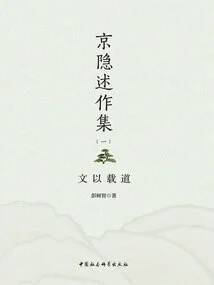
Collection of Jing Yin's Narratives (1)
Literature京隐述作集(一)
Peng Shuzhi
Jingyin is the alias of Mr. Peng Shuzhi. "Collection of Jing Yin's Works" explores the self-conscious way of human civilization communication from three aspects: "writing to carry the Tao", "history to clarify the Tao" and "philosophy to discuss the Tao". It is Mr. Peng's new scholarly work. The book pays attention to the exchanges between Eastern and Western civilizations, the development of aesthetics in human history, and aims to pay attention to the human heart. It comprehensively displays the thinking of the older generation of historical scholars on the humanistic spirit. Now the first two volumes are published, "Philosophy Discussing Tao" and will be published in the future. The first volume of "The Collection of Jingyin's Works" is "Wen Yi Zhidao", which is divided into four parts. The first part contains the Tao of Joy; the second part contains the Tao of Beauty; the third part contains the Tao of Poetry; and the fourth part contains the Tao of Narrative. It discusses the exchanges between Eastern and Western civilizations, the development of Chinese aesthetics, and the merits of traditional Chinese scholarship. Finally, there are mixed reflections from interviews with Mr. Peng from academic circles.
Jingyin is the alias of Mr. Peng Shuzhi. "Collection of Jing Yin's Works" explores the self-conscious way of human civilization communication from three aspects: "writing to carry the Tao", "history to clarify the Tao" and "philosophy to discuss the Tao". It is Mr. Peng's new scholarly work. The book pays attention to the exchanges between Eastern and Western civilizations, the development of aesthetics in human history, and aims to pay attention to the human heart. It comprehensively displays the thinking of the older generation of historical scholars on the humanistic spirit. Now the first two volumes are published, "Philosophy Discussing Tao" and will be published in the future. The first volume of "The Collection of Jingyin's Works" is "Wen Yi Zhidao", which is divided into four parts. The first part contains the Tao of Joy; the second part contains the Tao of Beauty; the third part contains the Tao of Poetry; and the fourth part contains the Tao of Narrative. It discusses the exchanges between Eastern and Western civilizations, the development of Chinese aesthetics, and the merits of traditional Chinese scholarship. Finally, there are mixed reflections from interviews with Mr. Peng from academic circles.