Library
Browse and search books
1 novel found
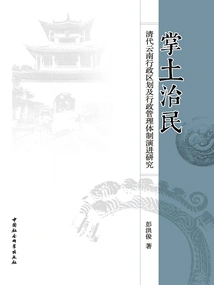
掌土治民:清代云南行政区划及行政管理体制演进研究
Peng Hongjun
From the perspective of historical geography, this book explores the process of the Qing Dynasty's deepening of "controlling the land and governing the people" in Yunnan. By sorting out the changes in different land and population management systems such as formal administrative divisions, the Mu Family Village, the Weisuo system, and the chieftain system, it reveals the integrated evolution of Yunnan's administrative divisions and administrative management systems in the Qing Dynasty. By the end of the Qing Dynasty, Yunnan's formal administrative divisions had been established in a vast area except the chieftain areas in the semi-circle of the southwest border. The Qing Dynasty's power to directly "control the land and govern the people" in Yunnan had been greatly deepened and expanded. "Governing the land and governing the people" was the basis for the integrated evolution of Yunnan's administrative divisions and administrative management systems in the Qing Dynasty, and was also the intrinsic factor driving its development and evolution.
From the perspective of historical geography, this book explores the process of the Qing Dynasty's deepening of "controlling the land and governing the people" in Yunnan. By sorting out the changes in different land and population management systems such as formal administrative divisions, the Mu Family Village, the Weisuo system, and the chieftain system, it reveals the integrated evolution of Yunnan's administrative divisions and administrative management systems in the Qing Dynasty. By the end of the Qing Dynasty, Yunnan's formal administrative divisions had been established in a vast area except the chieftain areas in the semi-circle of the southwest border. The Qing Dynasty's power to directly "control the land and govern the people" in Yunnan had been greatly deepened and expanded. "Governing the land and governing the people" was the basis for the integrated evolution of Yunnan's administrative divisions and administrative management systems in the Qing Dynasty, and was also the intrinsic factor driving its development and evolution.