Library
Browse and search books
8 novels found
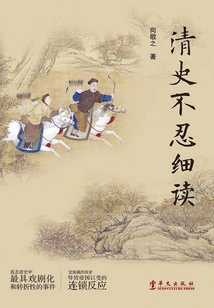
清史不忍细读
Pay Tribute To Him
By reading a large number of Ming and Qing records, daily life notes, Zhu comments, memorials, archives, notes, local chronicles, etc., The author uses a "historical writing" method to describe the Qing Dynasty in "Qing History Cannot Bear to Read Closely". There are court disputes, palace explorations, authenticity analysis, praise and criticism, positive and negative criticisms. He directly hits the dramatic and turning events in Qing history, and detects the chain reaction of accidental factors that led to the great changes in the empire. The alternation of light and dark is thrilling. The book is divided into five chapters, namely "The Destiny of Liaodong", "Dingping the Central Plains", "The Confusion of Kang and Yong", "The Rise and Decline of Qian and Jiaxing" and "The Afterglow of the Empire". Open this book and you will see the evolution of the Qing Dynasty in the past three hundred years: passion and cold-bloodedness, debauchery and restraint, wisdom and stupidity, prosperity and decline...
By reading a large number of Ming and Qing records, daily life notes, Zhu comments, memorials, archives, notes, local chronicles, etc., The author uses a "historical writing" method to describe the Qing Dynasty in "Qing History Cannot Bear to Read Closely". There are court disputes, palace explorations, authenticity analysis, praise and criticism, positive and negative criticisms. He directly hits the dramatic and turning events in Qing history, and detects the chain reaction of accidental factors that led to the great changes in the empire. The alternation of light and dark is thrilling. The book is divided into five chapters, namely "The Destiny of Liaodong", "Dingping the Central Plains", "The Confusion of Kang and Yong", "The Rise and Decline of Qian and Jiaxing" and "The Afterglow of the Empire". Open this book and you will see the evolution of the Qing Dynasty in the past three hundred years: passion and cold-bloodedness, debauchery and restraint, wisdom and stupidity, prosperity and decline...
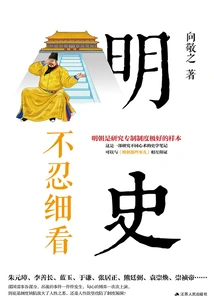
明史不忍细看
Pay Tribute To Him
"The History of the Ming Dynasty Can't Bear to Look Closely" takes the official history of the Ming and Qing dynasties and related historical records as clues, and launches a more objective and pertinent mutually reinforcing research and commentary on the many historical issues of the Ming Dynasty from prosperity to decline and finally to destruction after the Tumubao Incident. "The History of the Ming Dynasty Can't Bear to Look Closely" mainly uses the political actions and relationships between emperors and ministers of emperors, powerful eunuchs, traitors and other civil servants and generals as the entry point for research, with positive and negative criticisms. It discusses the decline of the Ming Dynasty and the rapid rise of Liaodong and Manchuria, as well as the root causes of the rise and fall of the peasant wars, including the mid-term imperial power struggle and Chongzhen Gang. The problems of governing the country, the overt and covert struggles between the cabinet and the generals, the crux of Li Zicheng and Zhang Xianzhong's difficulty in achieving great things, and the different political choices of officials and officials in the late Ming Dynasty, etc., Comprehensively and intensively summarized the bloody reality of the rupture and reconstruction of the social order in the Ming and Qing Dynasties: no master can save the Ming Dynasty, and the suspicion of the emperor and his ministers leaves the endgame. During the rescue, the great talent finally gave up, and the two ministers pretended to be confused.
"The History of the Ming Dynasty Can't Bear to Look Closely" takes the official history of the Ming and Qing dynasties and related historical records as clues, and launches a more objective and pertinent mutually reinforcing research and commentary on the many historical issues of the Ming Dynasty from prosperity to decline and finally to destruction after the Tumubao Incident. "The History of the Ming Dynasty Can't Bear to Look Closely" mainly uses the political actions and relationships between emperors and ministers of emperors, powerful eunuchs, traitors and other civil servants and generals as the entry point for research, with positive and negative criticisms. It discusses the decline of the Ming Dynasty and the rapid rise of Liaodong and Manchuria, as well as the root causes of the rise and fall of the peasant wars, including the mid-term imperial power struggle and Chongzhen Gang. The problems of governing the country, the overt and covert struggles between the cabinet and the generals, the crux of Li Zicheng and Zhang Xianzhong's difficulty in achieving great things, and the different political choices of officials and officials in the late Ming Dynasty, etc., Comprehensively and intensively summarized the bloody reality of the rupture and reconstruction of the social order in the Ming and Qing Dynasties: no master can save the Ming Dynasty, and the suspicion of the emperor and his ministers leaves the endgame. During the rescue, the great talent finally gave up, and the two ministers pretended to be confused.
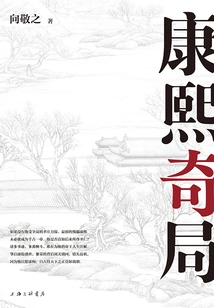
Kangxi's Strange Game
History康熙奇局
Pay Tribute To Him
"The Strange Game of Kangxi" focuses on the rights and wrongs of Kangxi's rule for decades. From multiple perspectives such as "removing vassals", "powerful ministers", "governing skills", "employing people", "seizing direct lineage" and "passing on the throne", it restores Kangxi, a powerful figure who was iron-fisted, arbitrary, enlightened and wise, and reveals the emperor hidden behind the prosperity of Kangxi's prosperous era. Political struggles, scheming and human desires, the struggle between powerful ministers in the court, and the secrets in the inner courtyard of the palace... Comprehensively interpret the intricate relationship between political struggle and orthodoxy, nation and world, human feelings and imperial power, emptiness and bloodshed, as well as the profound connotation of rationally and objectively questioning Kangxi's power and human misalignment.
"The Strange Game of Kangxi" focuses on the rights and wrongs of Kangxi's rule for decades. From multiple perspectives such as "removing vassals", "powerful ministers", "governing skills", "employing people", "seizing direct lineage" and "passing on the throne", it restores Kangxi, a powerful figure who was iron-fisted, arbitrary, enlightened and wise, and reveals the emperor hidden behind the prosperity of Kangxi's prosperous era. Political struggles, scheming and human desires, the struggle between powerful ministers in the court, and the secrets in the inner courtyard of the palace... Comprehensively interpret the intricate relationship between political struggle and orthodoxy, nation and world, human feelings and imperial power, emptiness and bloodshed, as well as the profound connotation of rationally and objectively questioning Kangxi's power and human misalignment.
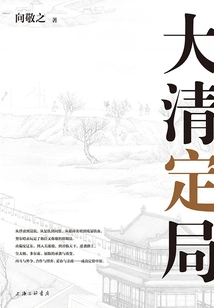
大清定局
Pay Tribute To Him
"The Final Destiny of the Qing Dynasty" interprets the founding history of the Qing Dynasty during the Ming and Qing Dynasties. It is divided into four chapters: Tianming Khan, Huang Taiji, Dorgon and Emperor Shunzhi. It tells the founding history of the Qing Dynasty from the Jurchen tribe to the unification of the Central Plains: from the Tianming Khan Nurhaci who changed the Yuan Dynasty and founded the country, to the Qing Emperor Taizong Huang Taiji changed his name to Khan and proclaimed himself emperor, and then Prince Rui, Dorgon, entered the Guan Dynasty as regent, and finally the ancestor of the Qing Dynasty Fulin Dingding Central Plains opened the curtain of Qing rule. He tried to restore the inheritance and changes of the emperors in the early Qing Dynasty, internal and external struggles for political power, cooperation and games in the fame and fortune market, until he successfully settled the history of the Central Plains.
"The Final Destiny of the Qing Dynasty" interprets the founding history of the Qing Dynasty during the Ming and Qing Dynasties. It is divided into four chapters: Tianming Khan, Huang Taiji, Dorgon and Emperor Shunzhi. It tells the founding history of the Qing Dynasty from the Jurchen tribe to the unification of the Central Plains: from the Tianming Khan Nurhaci who changed the Yuan Dynasty and founded the country, to the Qing Emperor Taizong Huang Taiji changed his name to Khan and proclaimed himself emperor, and then Prince Rui, Dorgon, entered the Guan Dynasty as regent, and finally the ancestor of the Qing Dynasty Fulin Dingding Central Plains opened the curtain of Qing rule. He tried to restore the inheritance and changes of the emperors in the early Qing Dynasty, internal and external struggles for political power, cooperation and games in the fame and fortune market, until he successfully settled the history of the Central Plains.
明清破局
Pay Tribute To Him
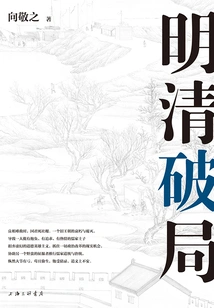
"Breaking the Ming and Qing Dynasties" takes the "Biography of Erchen" compiled since the 41st year of Qianlong's reign as the main research object, focusing on the life choices and historical actions of intellectuals during the Ming and Qing Dynasties: the author introduces it from 1644, a special period of "three days in the sky", and with the help of a large number of ancient historical books of the Ming and Qing Dynasties, returns to the scenes and behind-the-scenes of the Ming and Qing Dynasties. Based on careful research, he analyzes some controversial historical facts. The history has been clarified and corrected, and for the mysterious cases that have not yet been clearly concluded, we use human circumstances and make reasonable speculations, striving to restore the causes and consequences of the Ming ministers' surrender to the Qing Dynasty during the Ming and Qing Dynasties. Among them are Fan Wencheng and Hong Chengchou, who were the founders of the country, Sun Dingyuan, Kong Youde, etc. Who were loyal and martyred to the "two masters" of the Qing Dynasty, and Xie Sheng, Qian Qianyi, etc. Who served in the new dynasty but "made no achievements".
"Breaking the Ming and Qing Dynasties" takes the "Biography of Erchen" compiled since the 41st year of Qianlong's reign as the main research object, focusing on the life choices and historical actions of intellectuals during the Ming and Qing Dynasties: the author introduces it from 1644, a special period of "three days in the sky", and with the help of a large number of ancient historical books of the Ming and Qing Dynasties, returns to the scenes and behind-the-scenes of the Ming and Qing Dynasties. Based on careful research, he analyzes some controversial historical facts. The history has been clarified and corrected, and for the mysterious cases that have not yet been clearly concluded, we use human circumstances and make reasonable speculations, striving to restore the causes and consequences of the Ming ministers' surrender to the Qing Dynasty during the Ming and Qing Dynasties. Among them are Fan Wencheng and Hong Chengchou, who were the founders of the country, Sun Dingyuan, Kong Youde, etc. Who were loyal and martyred to the "two masters" of the Qing Dynasty, and Xie Sheng, Qian Qianyi, etc. Who served in the new dynasty but "made no achievements".
Yongzheng Mystery
History雍正迷局
Pay Tribute To Him
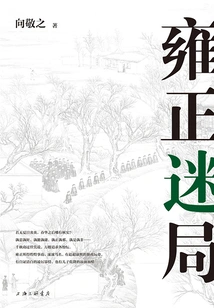
"The Mystery of Yongzheng" tells the history of how Emperor Yongzheng counterattacked from an "idle" prince to a "diligent" emperor. It not only writes about his outstanding political achievements in the thirteen years of his reign, but also writes about his attempts to rectify his name and reform in order to seize the throne and the historical events behind it. Yongzheng was determined to reform and reverse the long-standing shortcomings of the late Kangxi Dynasty. He worked hard, worked hard, and died young in his prime. The merits and demerits of a thousand years are open to speculation, and all kinds of pursuits are different. Yongzheng gained great achievements and notoriety. He was diligent and hard-working enough to catch up with Kangxi. He was fierce and ruthless in proving his innocence. He was also fueled by his son Qianlong...
"The Mystery of Yongzheng" tells the history of how Emperor Yongzheng counterattacked from an "idle" prince to a "diligent" emperor. It not only writes about his outstanding political achievements in the thirteen years of his reign, but also writes about his attempts to rectify his name and reform in order to seize the throne and the historical events behind it. Yongzheng was determined to reform and reverse the long-standing shortcomings of the late Kangxi Dynasty. He worked hard, worked hard, and died young in his prime. The merits and demerits of a thousand years are open to speculation, and all kinds of pursuits are different. Yongzheng gained great achievements and notoriety. He was diligent and hard-working enough to catch up with Kangxi. He was fierce and ruthless in proving his innocence. He was also fueled by his son Qianlong...
Ming Steam Age
History大明蒸汽时代
Pay Tribute To Him
Travel through time and become the story of Zhu Qizhen, the eldest son of Xuanzong I don't like the exaggerated writing style, so I wrote a novel to read. I hope everyone will like it too.
Travel through time and become the story of Zhu Qizhen, the eldest son of Xuanzong I don't like the exaggerated writing style, so I wrote a novel to read. I hope everyone will like it too.
清史四书(套装共4册)
Pay Tribute To Him
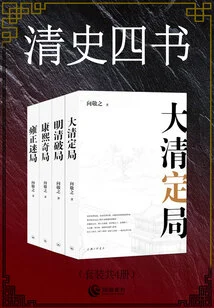
"The Settlement of the Qing Dynasty" interprets the history of the founding of the Qing Dynasty during the Ming and Qing Dynasties. It is divided into four chapters: Tianming Khan, Huang Taiji, Dorgon and Emperor Shunzhi. It tells the founding history of the Qing Dynasty from the Jurchen tribe to the unification of the Central Plains. "Breaking the Ming and Qing Dynasties" takes the "Biography of Erchen" compiled since the 41st year of Qianlong's reign as the main research object, focusing on the life choices and historical actions of intellectuals during the Ming and Qing Dynasties. "The Strange Game of Kangxi" focuses on the rights and wrongs of Kangxi's rule for decades. From multiple angles such as "removal of vassals", "powerful ministers", "governing skills", "employing people", "seizing direct descendants" and "passing the throne", it restores Kangxi, a powerful figure who was iron-fisted, arbitrary, enlightened and wise, and reveals the emperor's political intrigues and human desires hidden behind the prosperity of Kangxi's prosperous period. "The Mystery of Yongzheng" tells the history of how Emperor Yongzheng counterattacked from an "idle" prince to a "diligent" emperor. It not only writes about his outstanding political achievements in the thirteen years of his reign, but also writes about his attempts to rectify his name and reform in order to seize the throne and the historical events behind it.
"The Settlement of the Qing Dynasty" interprets the history of the founding of the Qing Dynasty during the Ming and Qing Dynasties. It is divided into four chapters: Tianming Khan, Huang Taiji, Dorgon and Emperor Shunzhi. It tells the founding history of the Qing Dynasty from the Jurchen tribe to the unification of the Central Plains. "Breaking the Ming and Qing Dynasties" takes the "Biography of Erchen" compiled since the 41st year of Qianlong's reign as the main research object, focusing on the life choices and historical actions of intellectuals during the Ming and Qing Dynasties. "The Strange Game of Kangxi" focuses on the rights and wrongs of Kangxi's rule for decades. From multiple angles such as "removal of vassals", "powerful ministers", "governing skills", "employing people", "seizing direct descendants" and "passing the throne", it restores Kangxi, a powerful figure who was iron-fisted, arbitrary, enlightened and wise, and reveals the emperor's political intrigues and human desires hidden behind the prosperity of Kangxi's prosperous period. "The Mystery of Yongzheng" tells the history of how Emperor Yongzheng counterattacked from an "idle" prince to a "diligent" emperor. It not only writes about his outstanding political achievements in the thirteen years of his reign, but also writes about his attempts to rectify his name and reform in order to seize the throne and the historical events behind it.