Library
Browse and search books
1 novel found
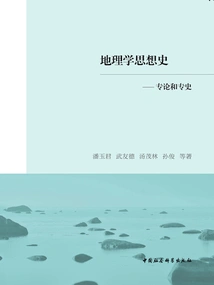
地理学思想史:专论和专史
Pan Yujun Wu Youde Tang Maolin Sun Jun Et Al.
The chapters in this book can be divided into three parts. The first part includes the first and second chapters, which mainly look for the laws of the development of geography from the traces of its development history, as well as the manifestations of the factors involved in these laws in the history of thought. The second part includes chapters 3, 4, 5, and 6, which mainly examines the historiography methodology of the history of geography. The historical materials come from representative historical materials of geography at home and abroad. It especially discusses the representative works of the contextual historiography methodology and the scientific and social history methodology. Chapters 7 to 11 are the last part of the book. These chapters are concerned with the overall characteristics of the development of contemporary geography. Among them, Chapter 7 provides a review of humanistic trends and influences in geography, trying to explain the significance of geography maintaining the necessary tension between rationality (narrow sense) and humanities; Chapter 8 discusses public issues in contemporary geography, sorting out some behavioral measures to achieve tension between geography academics and the public; Chapter 8 Chapter nine focuses on analyzing the different intellectual backgrounds of the debate on the "First Law of Geography". The main differences in the debate come from the differences in the scientific philosophy and sociology of science between the two parties; Chapter 10 focuses on the evolution of the paradigm of contemporary geography in China; Chapter 11 focuses on analyzing the different intellectual backgrounds in the discussion of contemporary geography development strategies.
The chapters in this book can be divided into three parts. The first part includes the first and second chapters, which mainly look for the laws of the development of geography from the traces of its development history, as well as the manifestations of the factors involved in these laws in the history of thought. The second part includes chapters 3, 4, 5, and 6, which mainly examines the historiography methodology of the history of geography. The historical materials come from representative historical materials of geography at home and abroad. It especially discusses the representative works of the contextual historiography methodology and the scientific and social history methodology. Chapters 7 to 11 are the last part of the book. These chapters are concerned with the overall characteristics of the development of contemporary geography. Among them, Chapter 7 provides a review of humanistic trends and influences in geography, trying to explain the significance of geography maintaining the necessary tension between rationality (narrow sense) and humanities; Chapter 8 discusses public issues in contemporary geography, sorting out some behavioral measures to achieve tension between geography academics and the public; Chapter 8 Chapter nine focuses on analyzing the different intellectual backgrounds of the debate on the "First Law of Geography". The main differences in the debate come from the differences in the scientific philosophy and sociology of science between the two parties; Chapter 10 focuses on the evolution of the paradigm of contemporary geography in China; Chapter 11 focuses on analyzing the different intellectual backgrounds in the discussion of contemporary geography development strategies.