Library
Browse and search books
1 novel found
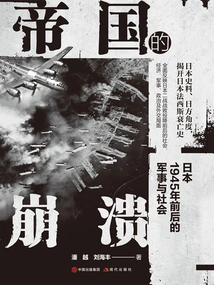
帝国的崩溃:日本1945年前后的军事与社会
Pan Yue Liu Haifeng
The year 1945, when Japan was about to collapse and lose the war, was the most tragic year in Japan's history, and it also contained many unique phenomena in many aspects. Based on historical facts and data, the author of this book comprehensively introduces the social, economic, military, political and diplomatic situation faced by Japan around 1945. Militarily, the Japanese army suffered from a breakdown in military discipline, improper tactics, strategies, and command issues, and even carried out crazy actions such as bombing the United States with balloon bombs. After disastrous defeats in the Battle of Luzon, the Battle of Iwo Jima, and the Battle of Irrawaddy, it ushered in its downfall. Socially and economically, the Imperial Japanese government controlled the clothing, food, occupation, savings, fertility, entertainment, etc. Of its citizens, and used the saved materials for the military. Diplomatically, the Japanese cabinet sought directions for an honorable surrender. The two atomic bombs dropped by the United States on Hiroshima and Nagasaki brought the Japanese Empire to its ultimate demise. Japan in 1945 was a transitional stage between the past and the next. The author's narrative is objective and well-founded, aiming to give readers a clear understanding of the post-war Far East history and a better outlook for the future.
The year 1945, when Japan was about to collapse and lose the war, was the most tragic year in Japan's history, and it also contained many unique phenomena in many aspects. Based on historical facts and data, the author of this book comprehensively introduces the social, economic, military, political and diplomatic situation faced by Japan around 1945. Militarily, the Japanese army suffered from a breakdown in military discipline, improper tactics, strategies, and command issues, and even carried out crazy actions such as bombing the United States with balloon bombs. After disastrous defeats in the Battle of Luzon, the Battle of Iwo Jima, and the Battle of Irrawaddy, it ushered in its downfall. Socially and economically, the Imperial Japanese government controlled the clothing, food, occupation, savings, fertility, entertainment, etc. Of its citizens, and used the saved materials for the military. Diplomatically, the Japanese cabinet sought directions for an honorable surrender. The two atomic bombs dropped by the United States on Hiroshima and Nagasaki brought the Japanese Empire to its ultimate demise. Japan in 1945 was a transitional stage between the past and the next. The author's narrative is objective and well-founded, aiming to give readers a clear understanding of the post-war Far East history and a better outlook for the future.