Library
Browse and search books
1 novel found
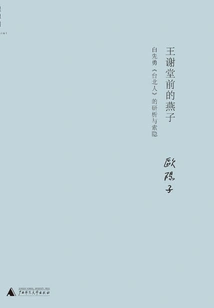
Swallows in Front of Wang Xiantang: Analysis and Exploration of Bai Xianyong's "taipei People
Literature王谢堂前的燕子:白先勇《台北人》的研析与索隐
Ouyangzi
Classic literary criticism, along with classic literary works, is always necessary to read. Bai Xianyong's collection of short stories "Taipei People" is a deeply complex work. In the thirty years since its publication, there have been countless research and review articles on its themes and artistic techniques. The author of "Swallows in Front of Wang Xie Tang" compiled in 1976, Ouyang Zi, as a classmate and friend of Bai Xianyong who founded the magazine "Modern Literature" and went to the United States to study together, has the advantage that others are not easy to catch up with. It is also a scenery in the literary world for her to comment on "Taipei People". Ouyang Zi used the "New Criticism" method, which was extremely influential in Western academic circles at that time, to comment on "Taipei Man". Through systematic induction, he discussed its meaning and imagery through themes such as "the ratio between the past and the present", "the battle between soul and body" and "the mystery of life and death". The three themes are interrelated and embrace each other, forming the inner chain that connects these fourteen short stories.
Classic literary criticism, along with classic literary works, is always necessary to read. Bai Xianyong's collection of short stories "Taipei People" is a deeply complex work. In the thirty years since its publication, there have been countless research and review articles on its themes and artistic techniques. The author of "Swallows in Front of Wang Xie Tang" compiled in 1976, Ouyang Zi, as a classmate and friend of Bai Xianyong who founded the magazine "Modern Literature" and went to the United States to study together, has the advantage that others are not easy to catch up with. It is also a scenery in the literary world for her to comment on "Taipei People". Ouyang Zi used the "New Criticism" method, which was extremely influential in Western academic circles at that time, to comment on "Taipei Man". Through systematic induction, he discussed its meaning and imagery through themes such as "the ratio between the past and the present", "the battle between soul and body" and "the mystery of life and death". The three themes are interrelated and embrace each other, forming the inner chain that connects these fourteen short stories.