Library
Browse and search books
2 novels found
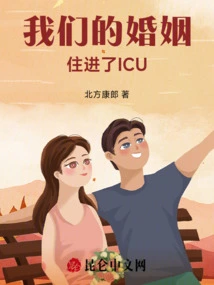
Our Marriage Was Admitted to the Icu
Realistic Fiction我们的婚姻,住进了ICU
Northern Kanglang
All marriages that seem to be stable have a set of corroding psychological clocks hidden inside - misaligned perceptions, emotional dormancy, and confrontation of wills. Those once synchronized heartbeats and tacit understanding will eventually fall silent in silence and become a cold, empty shell. Lin Jingwei and Chen Zhiyuan's fifteen-year marriage only left them with irritability at the dinner table, an unspoken plan to travel alone to Tibet, and a tenderness that they ignored each other; Su Jin and Zhou Mingzhe exhausted their enthusiasm in the disputes over wedding dresses and invitations not long after their wedding, and their unexpected pregnancy made the conflict worse; Shen Qingru and Zhao Zhiping lost their common joy and trust in the cold diagram of the division of labor in childcare. When the marriage was diagnosed as "critically ill", they did not have a bloody breakup, but only countless moments of "wanting to escape but not leaving". Until the appearance of Liang Shuhan, like a cruel mirror, revealed the truth about the collapse of marriage - it was never love that died first, but curiosity and perception. The temptation in the consulting room, the collision in the workshop, the anonymous kindness in the pottery class, the pause of silence in the rainstorm... They avoid the "redemption myth", and in the clumsy temptation, learn to listen to each other's fragility, and reassemble the appearance of "us" in the broken details. There is no perfect reconciliation, only the courage to grow in the rift; there is no standard answer, only countless moments of "still choosing each other". This is not a guide to marriage repair, but a real record of marriage by a group of adults - it turns out that marriage is never the end of love, but the most difficult lifelong practice. Even if you are admitted to the ICU, there is still the possibility of restarting your heartbeat.
All marriages that seem to be stable have a set of corroding psychological clocks hidden inside - misaligned perceptions, emotional dormancy, and confrontation of wills. Those once synchronized heartbeats and tacit understanding will eventually fall silent in silence and become a cold, empty shell. Lin Jingwei and Chen Zhiyuan's fifteen-year marriage only left them with irritability at the dinner table, an unspoken plan to travel alone to Tibet, and a tenderness that they ignored each other; Su Jin and Zhou Mingzhe exhausted their enthusiasm in the disputes over wedding dresses and invitations not long after their wedding, and their unexpected pregnancy made the conflict worse; Shen Qingru and Zhao Zhiping lost their common joy and trust in the cold diagram of the division of labor in childcare. When the marriage was diagnosed as "critically ill", they did not have a bloody breakup, but only countless moments of "wanting to escape but not leaving". Until the appearance of Liang Shuhan, like a cruel mirror, revealed the truth about the collapse of marriage - it was never love that died first, but curiosity and perception. The temptation in the consulting room, the collision in the workshop, the anonymous kindness in the pottery class, the pause of silence in the rainstorm... They avoid the "redemption myth", and in the clumsy temptation, learn to listen to each other's fragility, and reassemble the appearance of "us" in the broken details. There is no perfect reconciliation, only the courage to grow in the rift; there is no standard answer, only countless moments of "still choosing each other". This is not a guide to marriage repair, but a real record of marriage by a group of adults - it turns out that marriage is never the end of love, but the most difficult lifelong practice. Even if you are admitted to the ICU, there is still the possibility of restarting your heartbeat.

挤过了晚高峰,才敢说爱你
Northern Kanglang
In the Beijing subway during the evening rush hour, Chen Yu was pushed away by the crowd, his face pressed against the glass, his mind empty. He didn't know that in the opposite carriage, a girl named Su Wan was also leaning against the door in a daze. She had just finished hanging up the phone urging her to get married, and her eyes were a little red. Two extremely ordinary migrant workers, taking the same subway every day, working the same shift, and eating the same takeout. One is working hard at an Internet company, and the other is spending time in an office building. I have long given up my illusions about love - this city is too big, it would be nice to be able to understand myself. Until the day of the company team building, a hot pot meal, and the wrong fat beef on the table, she said something for the stranger. He glanced at her one more time. Just at this glance, I saw it. But love, for them, has never been romantic. It was when he worked overtime until late at night, and the two of them carpooled back, and she was so sleepy that she leaned on his shoulder; it was when he was laid off and didn't dare to tell her, so he pretended to go to work every day and sat in the park all day; it was when her parents introduced him to a civil servant, and she said, "I have a partner," and her mother said, "The one who doesn't have a house or a car?"; It was when he broke his leg while delivering food, and she changed his dressing while crying, and he said, "How about we forget it," and she hugged him tighter. There was also a pair of people who chose another path. He thought meeting her meant escaping from prison, and she thought love could save everything. Later I realized that something was wrong and the outcome was doomed from the beginning. Ten years. From a rented house to having my own home, from two people to three people. This book is written for every migrant worker who has squeezed through the evening rush hour. Those days were hard, but with you here, I could endure them.
In the Beijing subway during the evening rush hour, Chen Yu was pushed away by the crowd, his face pressed against the glass, his mind empty. He didn't know that in the opposite carriage, a girl named Su Wan was also leaning against the door in a daze. She had just finished hanging up the phone urging her to get married, and her eyes were a little red. Two extremely ordinary migrant workers, taking the same subway every day, working the same shift, and eating the same takeout. One is working hard at an Internet company, and the other is spending time in an office building. I have long given up my illusions about love - this city is too big, it would be nice to be able to understand myself. Until the day of the company team building, a hot pot meal, and the wrong fat beef on the table, she said something for the stranger. He glanced at her one more time. Just at this glance, I saw it. But love, for them, has never been romantic. It was when he worked overtime until late at night, and the two of them carpooled back, and she was so sleepy that she leaned on his shoulder; it was when he was laid off and didn't dare to tell her, so he pretended to go to work every day and sat in the park all day; it was when her parents introduced him to a civil servant, and she said, "I have a partner," and her mother said, "The one who doesn't have a house or a car?"; It was when he broke his leg while delivering food, and she changed his dressing while crying, and he said, "How about we forget it," and she hugged him tighter. There was also a pair of people who chose another path. He thought meeting her meant escaping from prison, and she thought love could save everything. Later I realized that something was wrong and the outcome was doomed from the beginning. Ten years. From a rented house to having my own home, from two people to three people. This book is written for every migrant worker who has squeezed through the evening rush hour. Those days were hard, but with you here, I could endure them.