Library
Browse and search books
1 novel found
殷墟出土陶器
Niu Shishan, Yue Hongbin, Chief Editor Yue Zhanwei
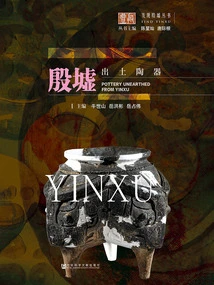
Yin Ruins is known as the holy land of Chinese archaeology. Over the past 90 years of archeology at Yin Ruins, rich cultural relics of the Yin and Shang dynasties have been discovered, and a large number of ceramic cultural relics have been unearthed, which can be divided into ordinary pottery (or coarse clay pottery), white pottery, hard pottery, primitive porcelain and glazed pottery. Through comprehensive research on the cultural relics of the Yin Ruins, including pottery relics, a periodization system of the late Shang culture has been established, which roughly corresponds to the lineage of the Shang kings recorded in the "Yin Benji" and revised by the royal genealogy in the Yin Ruins inscriptions. Based on the study of the internal composition, formation, and changes of the Yinxu culture, we can further explore issues such as Shang culture, the relationship between Shang culture and surrounding bronze culture, and the interaction of groups of people.
Yin Ruins is known as the holy land of Chinese archaeology. Over the past 90 years of archeology at Yin Ruins, rich cultural relics of the Yin and Shang dynasties have been discovered, and a large number of ceramic cultural relics have been unearthed, which can be divided into ordinary pottery (or coarse clay pottery), white pottery, hard pottery, primitive porcelain and glazed pottery. Through comprehensive research on the cultural relics of the Yin Ruins, including pottery relics, a periodization system of the late Shang culture has been established, which roughly corresponds to the lineage of the Shang kings recorded in the "Yin Benji" and revised by the royal genealogy in the Yin Ruins inscriptions. Based on the study of the internal composition, formation, and changes of the Yinxu culture, we can further explore issues such as Shang culture, the relationship between Shang culture and surrounding bronze culture, and the interaction of groups of people.