Library
Browse and search books
2 novels found
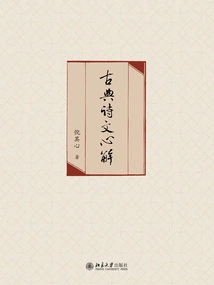
古典诗文心解(全2册)
Ni Qixin
This book is a collection of Mr. Ni Qixin's works and is divided into three parts. The first part is Mr. Ni's representative research articles on classical poetry and prose since his academic studies. It does not involve opera novels. It is also accompanied by three papers on literature. The articles in this part are representative works of Mr. Ni's academic studies for more than 30 years. There are many insights on ancient poetry and literature, which are of great reference for the current research on classical poetry and prose. The second part is about academic research. Mr. Ni is a student of Mr. Lin Geng. He is rigorous in scholarship and knowledgeable. This part chooses Mr. Ni's daily essays and academic insights, which will be of great benefit to our current research on literature and history. The third part is the appreciation of classical masterpieces. These articles were written in the 1980s. During this period, many famous scholars had a special liking for appreciation articles and wrote many popular famous articles. Famous scholars such as Jin Kaicheng, Chu Binjie, Yuan Xingpei and other famous scholars had a large number of appreciation articles. This was also a response to the overwhelming needs of the 1980s and the people's extreme thirst for knowledge. The appreciation of these famous writers not only emphasizes explanations, but also sublimates, explaining profound things in simple terms. From this we can also get a glimpse of the current academic trends.
This book is a collection of Mr. Ni Qixin's works and is divided into three parts. The first part is Mr. Ni's representative research articles on classical poetry and prose since his academic studies. It does not involve opera novels. It is also accompanied by three papers on literature. The articles in this part are representative works of Mr. Ni's academic studies for more than 30 years. There are many insights on ancient poetry and literature, which are of great reference for the current research on classical poetry and prose. The second part is about academic research. Mr. Ni is a student of Mr. Lin Geng. He is rigorous in scholarship and knowledgeable. This part chooses Mr. Ni's daily essays and academic insights, which will be of great benefit to our current research on literature and history. The third part is the appreciation of classical masterpieces. These articles were written in the 1980s. During this period, many famous scholars had a special liking for appreciation articles and wrote many popular famous articles. Famous scholars such as Jin Kaicheng, Chu Binjie, Yuan Xingpei and other famous scholars had a large number of appreciation articles. This was also a response to the overwhelming needs of the 1980s and the people's extreme thirst for knowledge. The appreciation of these famous writers not only emphasizes explanations, but also sublimates, explaining profound things in simple terms. From this we can also get a glimpse of the current academic trends.
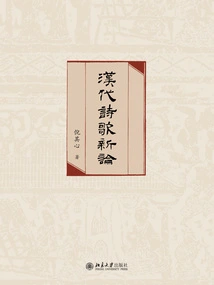
New Discussion on Poetry of Han Dynasty
Literature汉代诗歌新论
Ni Qixin
"A New Theory of Poetry in the Han Dynasty" is different from other writings on the literary history of the Han Dynasty. It starts from the famous unsolved case in the history of Chinese poetry - whether the popular poems with names such as Li Ling and Ban Jieyu are forged or not. It uses half the space to tell why the poets of the Han Dynasty wrote poems without leaving their names, and the contradiction between the concept and reality of poetry in the Han Dynasty. On the one hand, the tradition of inheriting and developing the culture and art of the pre-Qin Dynasty gradually established the dominance of Confucian poetry. On the one hand, the truly dynamic "vulgar" poetry of the Han Dynasty was in a state of free development and free competition. With the support of the upper class, unintentional or intentional, it challenged the past "elegant and upright" poetry, and was finally recognized as "ancient poetry" and became a new elegant and upright form. The first three chapters of "New Theory of Poetry in the Han Dynasty" are "Poets Have No Laurels", "The Rigidity and Alienation of Four-Character Poetry" and "The Rise, Fall and Stereotype of Chu Song and Sao Style". They carefully analyze the undercurrents of literary development in the middle and early Han Dynasty. The fourth chapter is "The Challenge of Emperor Wu of the Han Dynasty - the Establishment and Abolition of the Yuefu Institution" , on the other hand, shows that under certain historical conditions, the emperor's will to revitalize the country, even his almost absurd behavior, can also be consistent with the direction of historical progress. The replacement and renewal of refined and popular is irreversible. The development of Han Yuefu undoubtedly proves this point. The last three chapters of "New Theory of Poetry of the Han Dynasty" vividly exaggerate the art and beauty of the poetry of the Han Dynasty. This beauty is not the shackles of beauty restricted by metrical limitations in later generations, but the lively and vivid vitality of the ancestors. As the author of "New Theory of Poetry of the Han Dynasty" has always wanted to tell readers, the poetry of the Han Dynasty has something that has been ignored for a long time, namely bloodiness, simplicity, innocence, and an important free and unfettered spirit. This is precisely the reason why poetry exists. The poets of the Han Dynasty were praised later because they followed human nature. Therefore, all kinds of poetry formats existed in the Han Dynasty, unlike the Tang Dynasty where neat verses flourished. The content and artistic expression of poetry are also diverse, such as most of the Han Dynasty Yuefu poems that are clear and clear, simple and exaggerated; the Five Ancients of the Han Dynasty, which are praised by later generations and are said to continue the coquettish style; the Han Dynasty miscellaneous ballads that can be allegorical, allegorical or even mixed with prophecies.
"A New Theory of Poetry in the Han Dynasty" is different from other writings on the literary history of the Han Dynasty. It starts from the famous unsolved case in the history of Chinese poetry - whether the popular poems with names such as Li Ling and Ban Jieyu are forged or not. It uses half the space to tell why the poets of the Han Dynasty wrote poems without leaving their names, and the contradiction between the concept and reality of poetry in the Han Dynasty. On the one hand, the tradition of inheriting and developing the culture and art of the pre-Qin Dynasty gradually established the dominance of Confucian poetry. On the one hand, the truly dynamic "vulgar" poetry of the Han Dynasty was in a state of free development and free competition. With the support of the upper class, unintentional or intentional, it challenged the past "elegant and upright" poetry, and was finally recognized as "ancient poetry" and became a new elegant and upright form. The first three chapters of "New Theory of Poetry in the Han Dynasty" are "Poets Have No Laurels", "The Rigidity and Alienation of Four-Character Poetry" and "The Rise, Fall and Stereotype of Chu Song and Sao Style". They carefully analyze the undercurrents of literary development in the middle and early Han Dynasty. The fourth chapter is "The Challenge of Emperor Wu of the Han Dynasty - the Establishment and Abolition of the Yuefu Institution" , on the other hand, shows that under certain historical conditions, the emperor's will to revitalize the country, even his almost absurd behavior, can also be consistent with the direction of historical progress. The replacement and renewal of refined and popular is irreversible. The development of Han Yuefu undoubtedly proves this point. The last three chapters of "New Theory of Poetry of the Han Dynasty" vividly exaggerate the art and beauty of the poetry of the Han Dynasty. This beauty is not the shackles of beauty restricted by metrical limitations in later generations, but the lively and vivid vitality of the ancestors. As the author of "New Theory of Poetry of the Han Dynasty" has always wanted to tell readers, the poetry of the Han Dynasty has something that has been ignored for a long time, namely bloodiness, simplicity, innocence, and an important free and unfettered spirit. This is precisely the reason why poetry exists. The poets of the Han Dynasty were praised later because they followed human nature. Therefore, all kinds of poetry formats existed in the Han Dynasty, unlike the Tang Dynasty where neat verses flourished. The content and artistic expression of poetry are also diverse, such as most of the Han Dynasty Yuefu poems that are clear and clear, simple and exaggerated; the Five Ancients of the Han Dynasty, which are praised by later generations and are said to continue the coquettish style; the Han Dynasty miscellaneous ballads that can be allegorical, allegorical or even mixed with prophecies.