Library
Browse and search books
18 novels found
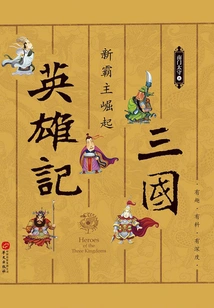
三国英雄记·新霸主崛起
Nanmen Prefect
This book reinterprets that century-old history with the theme of "heroes". It tells readers about the historical events that have occurred in the order of time. It not only pays attention to the process of history itself, but also pays attention to the laws under the appearance of history. It explores why winners succeed and why losers fail. It rectifies the origins of many people and things that are prone to deviations in understanding, promotes and criticizes, narrates and reflects, and reproduces that period of history from a new perspective. In people's minds, the "Three Kingdoms" is a broad concept. It cannot only be understood as the 60 years from the founding of Cao Wei (220 years) to the fall of Sun Wu (280 years). It should also include a period at the end of the Han Dynasty. The book starts from 180 years before the Yellow Turban Uprising and ends in 280 years, which is exactly 100 years, so it is called "One Hundred Years of the Three Kingdoms at the End of the Han Dynasty".
This book reinterprets that century-old history with the theme of "heroes". It tells readers about the historical events that have occurred in the order of time. It not only pays attention to the process of history itself, but also pays attention to the laws under the appearance of history. It explores why winners succeed and why losers fail. It rectifies the origins of many people and things that are prone to deviations in understanding, promotes and criticizes, narrates and reflects, and reproduces that period of history from a new perspective. In people's minds, the "Three Kingdoms" is a broad concept. It cannot only be understood as the 60 years from the founding of Cao Wei (220 years) to the fall of Sun Wu (280 years). It should also include a period at the end of the Han Dynasty. The book starts from 180 years before the Yellow Turban Uprising and ends in 280 years, which is exactly 100 years, so it is called "One Hundred Years of the Three Kingdoms at the End of the Han Dynasty".
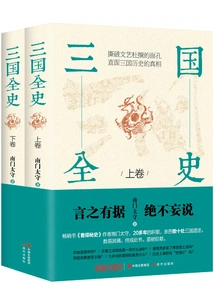
三国全史(全集)
Nanmen Prefect
The Three Kingdoms were an era of heroes, wars, and weapons. The Three Kingdoms were an era of wisdom and planning, divisions and divisions, and divisions. Lu Xun once said that China is a nation with the spirit of the Three Kingdoms. For a long time, influenced by the literary and artistic work "Romance of the Three Kingdoms", the TV series "Three Kingdoms" and Yi Zhongtian's "Three Kingdoms", people seem to have already concluded what happened in the Three Kingdoms. But what is the truth of history? Have you been misunderstood or misunderstood? The Chief of Nanmen spent more than 20 years searching historical records, analyzing historical facts, and personally visited dozens of ancient relics of the Three Kingdoms. Using the writing style of official history and the concept of complete history, he revised his drafts several times and wrote a masterpiece that tells readers the historical truth of the Three Kingdoms! The truth often subverts concepts and exceeds imagination! Shocking!
The Three Kingdoms were an era of heroes, wars, and weapons. The Three Kingdoms were an era of wisdom and planning, divisions and divisions, and divisions. Lu Xun once said that China is a nation with the spirit of the Three Kingdoms. For a long time, influenced by the literary and artistic work "Romance of the Three Kingdoms", the TV series "Three Kingdoms" and Yi Zhongtian's "Three Kingdoms", people seem to have already concluded what happened in the Three Kingdoms. But what is the truth of history? Have you been misunderstood or misunderstood? The Chief of Nanmen spent more than 20 years searching historical records, analyzing historical facts, and personally visited dozens of ancient relics of the Three Kingdoms. Using the writing style of official history and the concept of complete history, he revised his drafts several times and wrote a masterpiece that tells readers the historical truth of the Three Kingdoms! The truth often subverts concepts and exceeds imagination! Shocking!
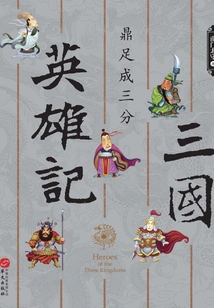
三国英雄记·鼎足成三分
Nanmen Prefect
This book reinterprets that century-old history with the theme of "heroes". It tells readers about the historical events that have occurred in the order of time. It not only pays attention to the process of history itself, but also pays attention to the laws under the appearance of history. It explores why winners succeed and why losers fail. It rectifies the origins of many people and things that are prone to deviations in understanding, promotes and criticizes, narrates and reflects, and reproduces that period of history from a new perspective. In people's minds, the "Three Kingdoms" is a broad concept. It cannot only be understood as the 60 years from the founding of Cao Wei (220 years) to the fall of Sun Wu (280 years). It should also include a period at the end of the Han Dynasty. The book starts from 180 years before the Yellow Turban Uprising and ends in 280 years, which is exactly 100 years, so it is called "One Hundred Years of the Three Kingdoms at the End of the Han Dynasty".
This book reinterprets that century-old history with the theme of "heroes". It tells readers about the historical events that have occurred in the order of time. It not only pays attention to the process of history itself, but also pays attention to the laws under the appearance of history. It explores why winners succeed and why losers fail. It rectifies the origins of many people and things that are prone to deviations in understanding, promotes and criticizes, narrates and reflects, and reproduces that period of history from a new perspective. In people's minds, the "Three Kingdoms" is a broad concept. It cannot only be understood as the 60 years from the founding of Cao Wei (220 years) to the fall of Sun Wu (280 years). It should also include a period at the end of the Han Dynasty. The book starts from 180 years before the Yellow Turban Uprising and ends in 280 years, which is exactly 100 years, so it is called "One Hundred Years of the Three Kingdoms at the End of the Han Dynasty".
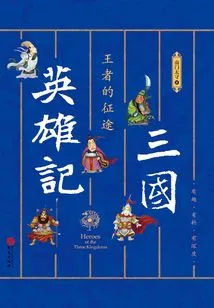
三国英雄记·王者的征途
Nanmen Prefect
This book reinterprets that century-old history with the theme of "heroes". It tells readers about the historical events that have occurred in the order of time. It not only pays attention to the process of history itself, but also pays attention to the laws under the appearance of history. It explores why winners succeed and why losers fail. It rectifies the origins of many people and things that are prone to deviations in understanding, promotes and criticizes, narrates and reflects, and reproduces that period of history from a new perspective. In people's minds, the "Three Kingdoms" is a broad concept. It cannot only be understood as the 60 years from the founding of Cao Wei (220 years) to the fall of Sun Wu (280 years). It should also include a period at the end of the Han Dynasty. The book starts from 180 years before the Yellow Turban Uprising and ends in 280 years, which is exactly 100 years, so it is called "One Hundred Years of the Three Kingdoms at the End of the Han Dynasty".
This book reinterprets that century-old history with the theme of "heroes". It tells readers about the historical events that have occurred in the order of time. It not only pays attention to the process of history itself, but also pays attention to the laws under the appearance of history. It explores why winners succeed and why losers fail. It rectifies the origins of many people and things that are prone to deviations in understanding, promotes and criticizes, narrates and reflects, and reproduces that period of history from a new perspective. In people's minds, the "Three Kingdoms" is a broad concept. It cannot only be understood as the 60 years from the founding of Cao Wei (220 years) to the fall of Sun Wu (280 years). It should also include a period at the end of the Han Dynasty. The book starts from 180 years before the Yellow Turban Uprising and ends in 280 years, which is exactly 100 years, so it is called "One Hundred Years of the Three Kingdoms at the End of the Han Dynasty".
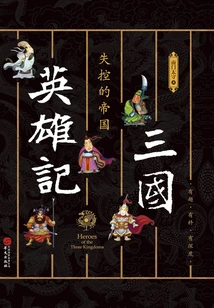
三国英雄记·失控的帝国
Nanmen Prefect
This book reinterprets that century-old history with the theme of "heroes". It tells readers about the historical events that have occurred in the order of time. It not only pays attention to the process of history itself, but also pays attention to the laws under the appearance of history. It explores why winners succeed and why losers fail. It rectifies the origins of many people and things that are prone to deviations in understanding, promotes and criticizes, narrates and reflects, and reproduces that period of history from a new perspective. In people's minds, the "Three Kingdoms" is a broad concept. It cannot only be understood as the 60 years from the founding of Cao Wei (220 years) to the fall of Sun Wu (280 years). It should also include a period at the end of the Han Dynasty. The book starts from 180 years before the Yellow Turban Uprising and ends in 280 years, which is exactly 100 years, so it is called "One Hundred Years of the Three Kingdoms at the End of the Han Dynasty".
This book reinterprets that century-old history with the theme of "heroes". It tells readers about the historical events that have occurred in the order of time. It not only pays attention to the process of history itself, but also pays attention to the laws under the appearance of history. It explores why winners succeed and why losers fail. It rectifies the origins of many people and things that are prone to deviations in understanding, promotes and criticizes, narrates and reflects, and reproduces that period of history from a new perspective. In people's minds, the "Three Kingdoms" is a broad concept. It cannot only be understood as the 60 years from the founding of Cao Wei (220 years) to the fall of Sun Wu (280 years). It should also include a period at the end of the Han Dynasty. The book starts from 180 years before the Yellow Turban Uprising and ends in 280 years, which is exactly 100 years, so it is called "One Hundred Years of the Three Kingdoms at the End of the Han Dynasty".
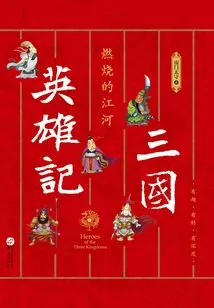
三国英雄记·燃烧的江河
Nanmen Prefect
This book reinterprets that century-old history with the theme of "heroes". It tells readers about the historical events that have occurred in the order of time. It not only pays attention to the process of history itself, but also pays attention to the laws under the appearance of history. It explores why winners succeed and why losers fail. It rectifies the origins of many people and things that are prone to deviations in understanding, promotes and criticizes, narrates and reflects, and reproduces that period of history from a new perspective. In people's minds, the "Three Kingdoms" is a broad concept. It cannot only be understood as the 60 years from the founding of Cao Wei (220 years) to the fall of Sun Wu (280 years). It should also include a period at the end of the Han Dynasty. The book starts from 180 years before the Yellow Turban Uprising and ends in 280 years, which is exactly 100 years, so it is called "One Hundred Years of the Three Kingdoms at the End of the Han Dynasty".
This book reinterprets that century-old history with the theme of "heroes". It tells readers about the historical events that have occurred in the order of time. It not only pays attention to the process of history itself, but also pays attention to the laws under the appearance of history. It explores why winners succeed and why losers fail. It rectifies the origins of many people and things that are prone to deviations in understanding, promotes and criticizes, narrates and reflects, and reproduces that period of history from a new perspective. In people's minds, the "Three Kingdoms" is a broad concept. It cannot only be understood as the 60 years from the founding of Cao Wei (220 years) to the fall of Sun Wu (280 years). It should also include a period at the end of the Han Dynasty. The book starts from 180 years before the Yellow Turban Uprising and ends in 280 years, which is exactly 100 years, so it is called "One Hundred Years of the Three Kingdoms at the End of the Han Dynasty".
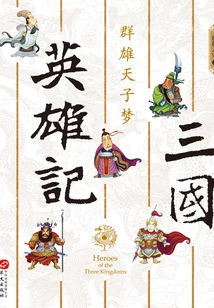
三国英雄记·群雄天子梦
Nanmen Prefect
This book reinterprets that century-old history with the theme of "heroes". It tells readers about the historical events that have occurred in the order of time. It not only pays attention to the process of history itself, but also pays attention to the laws under the appearance of history. It explores why winners succeed and why losers fail. It rectifies the origins of many people and things that are prone to deviations in understanding, promotes and criticizes, narrates and reflects, and reproduces that period of history from a new perspective. In people's minds, the "Three Kingdoms" is a broad concept. It cannot only be understood as the 60 years from the founding of Cao Wei (220 years) to the fall of Sun Wu (280 years). It should also include a period at the end of the Han Dynasty. The book starts from 180 years before the Yellow Turban Uprising and ends in 280 years, which is exactly 100 years, so it is called "One Hundred Years of the Three Kingdoms at the End of the Han Dynasty".
This book reinterprets that century-old history with the theme of "heroes". It tells readers about the historical events that have occurred in the order of time. It not only pays attention to the process of history itself, but also pays attention to the laws under the appearance of history. It explores why winners succeed and why losers fail. It rectifies the origins of many people and things that are prone to deviations in understanding, promotes and criticizes, narrates and reflects, and reproduces that period of history from a new perspective. In people's minds, the "Three Kingdoms" is a broad concept. It cannot only be understood as the 60 years from the founding of Cao Wei (220 years) to the fall of Sun Wu (280 years). It should also include a period at the end of the Han Dynasty. The book starts from 180 years before the Yellow Turban Uprising and ends in 280 years, which is exactly 100 years, so it is called "One Hundred Years of the Three Kingdoms at the End of the Han Dynasty".
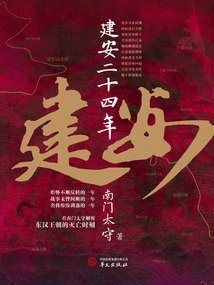
建安二十四年
Nanmen Prefect
"Twenty-Four Years of Jian'an" tells the major events that occurred in the twenty-fourth year of Jian'an (219) at the end of the Eastern Han Dynasty. It continues the logical structure and language style of "The Thirteen Years of Jian'an". It has ten chapters in total and uses the months to connect ten locations. It takes the Battle of Dingjun Mountain, the Battle of Hanzhong, Guan Yu's Northern Expedition, Sun Quan's sneak attack on Jingzhou and other major events as the core. By quoting "Three Kingdoms" "Zhi", "Zi Zhi Tong Jian" and other ancient historical materials provide detailed explanations of the complex struggles and ebbs and flows of the three military groups of Cao Cao, Sun Quan, and Liu Bei on the eve of the fall of the Eastern Han Dynasty. They restore history, analyze the mysteries behind historical events, reveal the historical logic of the evolution from the late Han Dynasty to the Three Kingdoms, and clearly and vividly describe this year full of "surprises" for readers.
"Twenty-Four Years of Jian'an" tells the major events that occurred in the twenty-fourth year of Jian'an (219) at the end of the Eastern Han Dynasty. It continues the logical structure and language style of "The Thirteen Years of Jian'an". It has ten chapters in total and uses the months to connect ten locations. It takes the Battle of Dingjun Mountain, the Battle of Hanzhong, Guan Yu's Northern Expedition, Sun Quan's sneak attack on Jingzhou and other major events as the core. By quoting "Three Kingdoms" "Zhi", "Zi Zhi Tong Jian" and other ancient historical materials provide detailed explanations of the complex struggles and ebbs and flows of the three military groups of Cao Cao, Sun Quan, and Liu Bei on the eve of the fall of the Eastern Han Dynasty. They restore history, analyze the mysteries behind historical events, reveal the historical logic of the evolution from the late Han Dynasty to the Three Kingdoms, and clearly and vividly describe this year full of "surprises" for readers.
细读三国一百年
Nanmen Prefect
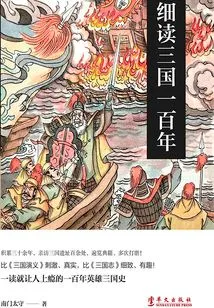
The Three Kingdoms in a narrow sense refers to the period when the three regimes of Wei, Shu, and Wu coexisted. The Three Kingdoms in a broad sense start from 184 AD and end in 280 AD, which is about 100 years. This is because many Three Kingdoms figures that people are usually familiar with, such as Cao Cao, Yuan Shao, Yuan Shu, Lu Bu, Gongsun Zan, Dong Zhuo, etc. Were active in the more than 30 years before the establishment of the Three Kingdoms regime. The "Three Kingdoms One Hundred Years" proposed in this manuscript refers to this period of the Three Kingdoms period. The book focuses on interpreting the key moments of the Three Kingdoms era and the historical truth behind many controversial events. It strives to present the hidden stories behind important historical figures and historical events based on historical materials, reshape the stereotyped and single impressions of these historical figures, and restore a comprehensive and true history to readers.
The Three Kingdoms in a narrow sense refers to the period when the three regimes of Wei, Shu, and Wu coexisted. The Three Kingdoms in a broad sense start from 184 AD and end in 280 AD, which is about 100 years. This is because many Three Kingdoms figures that people are usually familiar with, such as Cao Cao, Yuan Shao, Yuan Shu, Lu Bu, Gongsun Zan, Dong Zhuo, etc. Were active in the more than 30 years before the establishment of the Three Kingdoms regime. The "Three Kingdoms One Hundred Years" proposed in this manuscript refers to this period of the Three Kingdoms period. The book focuses on interpreting the key moments of the Three Kingdoms era and the historical truth behind many controversial events. It strives to present the hidden stories behind important historical figures and historical events based on historical materials, reshape the stereotyped and single impressions of these historical figures, and restore a comprehensive and true history to readers.
乱世出枭雄(第三部):三国人物统一记
Nanmen Prefect
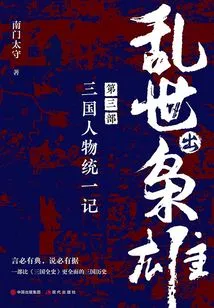
The Three Kingdoms is an era in which heroes are not judged by their origins. The Three Kingdoms is an era in which heroes are not judged by our enemies. The Three Kingdoms is an era in which heroes are not judged by success or failure. As the saying goes, "In troubled times, heroes emerge." In the history of the Three Kingdoms, many legendary figures emerged. They were either heroes, heroes, or outstanding people. Some of them were extremely loyal and courageous, some had superior intelligence, some adhered to the bottom line, some adhered to principles, some were loyal, and some persisted in their ideals. However, Wang Gang untied the alliance, the world was divided, and the four seas were divided. In the misery of troubled times, people have no hope of living; in the sorrow of troubled times, life is worse than death; in the autumn of troubled times, people's minds are unified. Everyone hopes that the troubled times will end as soon as possible, and the world will return to unification, with Wang Gang unified, the Central Plains under one master, and China restored under one government. For this ideal goal, Cao Cao "served the emperor's orders and refused to submit to them", Liu Bei established the Shu Kingdom in accordance with the unification of the Han Dynasty, and Jiangdong's foundation was based on dangers, and they all struggled for unification throughout their lives. The general trend of the world is that if it is divided for a long time, it will be united, and if it is united for a long time, it will be divided. The Wei State conquered Shu, destroyed the weak Shu Han, and opened the prelude to the unification of the world. The Sima family, covering the sky with one hand, usurped the Wei Dynasty and established the Jin Dynasty. They attacked Wu in six directions. Their power was overwhelming. The three families returned to the Jin Dynasty and the world was unified.
The Three Kingdoms is an era in which heroes are not judged by their origins. The Three Kingdoms is an era in which heroes are not judged by our enemies. The Three Kingdoms is an era in which heroes are not judged by success or failure. As the saying goes, "In troubled times, heroes emerge." In the history of the Three Kingdoms, many legendary figures emerged. They were either heroes, heroes, or outstanding people. Some of them were extremely loyal and courageous, some had superior intelligence, some adhered to the bottom line, some adhered to principles, some were loyal, and some persisted in their ideals. However, Wang Gang untied the alliance, the world was divided, and the four seas were divided. In the misery of troubled times, people have no hope of living; in the sorrow of troubled times, life is worse than death; in the autumn of troubled times, people's minds are unified. Everyone hopes that the troubled times will end as soon as possible, and the world will return to unification, with Wang Gang unified, the Central Plains under one master, and China restored under one government. For this ideal goal, Cao Cao "served the emperor's orders and refused to submit to them", Liu Bei established the Shu Kingdom in accordance with the unification of the Han Dynasty, and Jiangdong's foundation was based on dangers, and they all struggled for unification throughout their lives. The general trend of the world is that if it is divided for a long time, it will be united, and if it is united for a long time, it will be divided. The Wei State conquered Shu, destroyed the weak Shu Han, and opened the prelude to the unification of the world. The Sima family, covering the sky with one hand, usurped the Wei Dynasty and established the Jin Dynasty. They attacked Wu in six directions. Their power was overwhelming. The three families returned to the Jin Dynasty and the world was unified.
Thirteen Years of Jian'an
History建安十三年
Nanmen Prefect
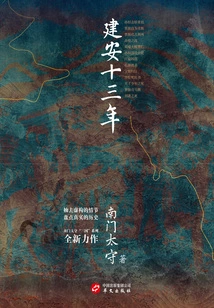
This book takes the thirteenth year of Jian'an as the starting point for interpreting the history of the Three Kingdoms in the late Han Dynasty. It is divided into eight chapters at eight different locations. It tells the story of many famous historical events such as the Battle of Chibi, the murder of Kong Rong, Cai Wenji's return to the Han Dynasty, Sun Quan's siege of Hefei, etc. It removes the fictional plots and takes stock of the real history. It rearranges the major and minor events that happened in this year according to time, restores the true situation of this year, interprets the historical logic behind the puzzle from a new perspective, and analyzes the impact of the events of this year on subsequent history.
This book takes the thirteenth year of Jian'an as the starting point for interpreting the history of the Three Kingdoms in the late Han Dynasty. It is divided into eight chapters at eight different locations. It tells the story of many famous historical events such as the Battle of Chibi, the murder of Kong Rong, Cai Wenji's return to the Han Dynasty, Sun Quan's siege of Hefei, etc. It removes the fictional plots and takes stock of the real history. It rearranges the major and minor events that happened in this year according to time, restores the true situation of this year, interprets the historical logic behind the puzzle from a new perspective, and analyzes the impact of the events of this year on subsequent history.
Cao Cao's Art of War
History曹操的孙子兵法
Nanmen Prefect
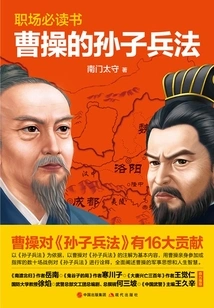
"Cao Cao's Art of War by Sun Tzu" is a work by the best-selling author Nanmen Taishou. "Art of War by Sun Tzu" is a sacred text of military science and is regarded as the "first of martial arts" or "Bing Jing". Sun Wu is also revered as the "Sage of War" by later generations. "Sun Tzu's Art of War" is the highest achievement of ancient Chinese military theory and a world-renowned holy book of oriental military science. This book selects a complete manuscript, retains the original appearance of the ancient text, and punctuates it in accordance with today's prevailing standards. Use classic battles or cases that Cao Cao personally participated in or commanded to explain the secrets and essence of "The Art of War". Each chapter of this book is composed of five parts: the original text, annotations, translations, classic wars, and analysis of the art of war. The text is contrasted and the annotations are detailed, making it easy to read. The text is translated word for word and corresponds to the original text and annotations, so you can quickly understand the meaning of the original text.
"Cao Cao's Art of War by Sun Tzu" is a work by the best-selling author Nanmen Taishou. "Art of War by Sun Tzu" is a sacred text of military science and is regarded as the "first of martial arts" or "Bing Jing". Sun Wu is also revered as the "Sage of War" by later generations. "Sun Tzu's Art of War" is the highest achievement of ancient Chinese military theory and a world-renowned holy book of oriental military science. This book selects a complete manuscript, retains the original appearance of the ancient text, and punctuates it in accordance with today's prevailing standards. Use classic battles or cases that Cao Cao personally participated in or commanded to explain the secrets and essence of "The Art of War". Each chapter of this book is composed of five parts: the original text, annotations, translations, classic wars, and analysis of the art of war. The text is contrasted and the annotations are detailed, making it easy to read. The text is translated word for word and corresponds to the original text and annotations, so you can quickly understand the meaning of the original text.
The First Ten Years
History正始十年
Nanmen Prefect
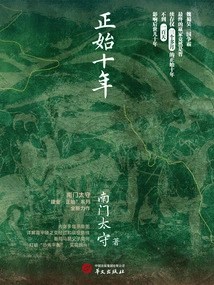
Zhengshi is the reign name used by Cao Fang, the third emperor of Cao Wei. It started in 240 and ended in 249. In the tenth year of Zhengshi (249), Cao Fang issued an edict to change the reign name to Jiaping in April of this year. In the tenth year of Zhengshi (249), it only lasted for more than three months. However, many major events happened in these 100 days or so, affecting the history of the following years, decades or even longer. This book focuses on the historical events that occurred around the tenth year of Zhengshi (249), explores the causes and consequences of the Gaopingling coup launched by Sima Yi and his son, and summarizes historical experience and lessons without sparing historical details. This book does not intend to overturn the verdict or "whitewash" Sima Yi and his son. Instead, it focuses on the imprint of the times on them and analyzes the causes of contradictions and complexity and their impact on historical development.
Zhengshi is the reign name used by Cao Fang, the third emperor of Cao Wei. It started in 240 and ended in 249. In the tenth year of Zhengshi (249), Cao Fang issued an edict to change the reign name to Jiaping in April of this year. In the tenth year of Zhengshi (249), it only lasted for more than three months. However, many major events happened in these 100 days or so, affecting the history of the following years, decades or even longer. This book focuses on the historical events that occurred around the tenth year of Zhengshi (249), explores the causes and consequences of the Gaopingling coup launched by Sima Yi and his son, and summarizes historical experience and lessons without sparing historical details. This book does not intend to overturn the verdict or "whitewash" Sima Yi and his son. Instead, it focuses on the imprint of the times on them and analyzes the causes of contradictions and complexity and their impact on historical development.
三国全史1:群雄逐鹿(笔记插图版)
Nanmen Prefect
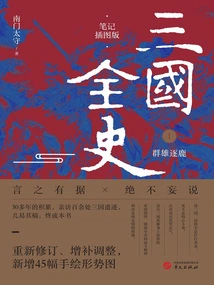
The Three Kingdoms were an era of heroes, constant wars, and wars. The Three Kingdoms were an era of wisdom and scheming, continuous and horizontal games, and combinations and divisions. This is a macro-panoramic historical reading, an authoritative and professional historical reading, a uniquely insightful historical reading, and a vivid and interesting historical reading. The Grand Administrator of Nanmen spent more than 30 years searching historical records, analyzing historical facts, and personally visited more than a hundred historical sites of the Three Kingdoms. He used the writing style of official history and the concept of complete history, revised his drafts several times, and wrote this masterpiece to tell the readers the historical truth of the Three Kingdoms! This book was written from the end of the Eastern Han Dynasty, including the eunuchs' rebellion, He Jin's murder, Dong Zhuo's entry into the capital, the Suanzao Alliance, Emperor Xian's westward movement, Dong Zhuo's assassination, Wang Yun's misadventure of the country, Emperor Xian's return eastward, the fall of Yijing, and the sweeping Jiangdong, the conquest of Tao Qian, shooting halberds at Yuanmen, Yuan Shu proclaiming himself emperor, making wine with green plums, Lu Bu's destruction, Yuan Shu's defeat, the Battle of Guandu, the Battle of Chibi, the alliance between Sun and Liu, the Battle of Tongguan, Liu Bei's entry into Sichuan, etc. Among them, historical facts such as the Battle of Chibi was just an encounter and the protagonist of the straw boat borrowing arrows was Sun Quan instead of Zhuge Liang. They have always been exaggerated and fictionalized by literature and art. Based on historical facts, this book clarifies the origins, restores the original appearance of history, and tells readers the true history of the Three Kingdoms.
The Three Kingdoms were an era of heroes, constant wars, and wars. The Three Kingdoms were an era of wisdom and scheming, continuous and horizontal games, and combinations and divisions. This is a macro-panoramic historical reading, an authoritative and professional historical reading, a uniquely insightful historical reading, and a vivid and interesting historical reading. The Grand Administrator of Nanmen spent more than 30 years searching historical records, analyzing historical facts, and personally visited more than a hundred historical sites of the Three Kingdoms. He used the writing style of official history and the concept of complete history, revised his drafts several times, and wrote this masterpiece to tell the readers the historical truth of the Three Kingdoms! This book was written from the end of the Eastern Han Dynasty, including the eunuchs' rebellion, He Jin's murder, Dong Zhuo's entry into the capital, the Suanzao Alliance, Emperor Xian's westward movement, Dong Zhuo's assassination, Wang Yun's misadventure of the country, Emperor Xian's return eastward, the fall of Yijing, and the sweeping Jiangdong, the conquest of Tao Qian, shooting halberds at Yuanmen, Yuan Shu proclaiming himself emperor, making wine with green plums, Lu Bu's destruction, Yuan Shu's defeat, the Battle of Guandu, the Battle of Chibi, the alliance between Sun and Liu, the Battle of Tongguan, Liu Bei's entry into Sichuan, etc. Among them, historical facts such as the Battle of Chibi was just an encounter and the protagonist of the straw boat borrowing arrows was Sun Quan instead of Zhuge Liang. They have always been exaggerated and fictionalized by literature and art. Based on historical facts, this book clarifies the origins, restores the original appearance of history, and tells readers the true history of the Three Kingdoms.
三国全史2:天下归一(笔记插图版)
Nanmen Prefect
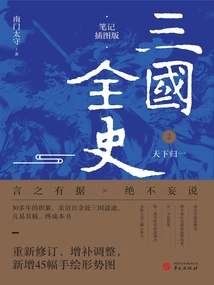
The Three Kingdoms were an era of heroes, constant wars, and wars. The Three Kingdoms were an era of wisdom and scheming, continuous and horizontal games, and combinations and divisions. This is a macro-panoramic historical reading, an authoritative and professional historical reading, a uniquely insightful historical reading, and a vivid and interesting historical reading. The Grand Administrator of Nanmen spent more than 30 years searching historical records, analyzing historical facts, and personally visited more than a hundred historical sites of the Three Kingdoms. He used the writing style of official history and the concept of complete history, revised his drafts several times, and wrote this masterpiece to tell the readers the historical truth of the Three Kingdoms! This book tells the story of the Battle of Hanzhong, the seizure of the legitimate son in the Wei Palace, the changes in Jingzhou, the Han-Wei Dynasty and the Zen Dynasty, the Battle of Yiling, Zhuge's Southern Expedition, the Shu-Han Northern Expedition, Sun Quan proclaiming himself emperor, the pacification of the three rebellions in Liaodong and Huainan, the return of the Three Kingdoms to Jin, and the unification of the world. Among them, the "Empty City Strategy", which is well known to women and children, did not happen in the history of the Three Kingdoms, but there are historical facts such as Zhao Yun's "Empty Camp Strategy", which have always been exaggerated and fictionalized by literature and art. Based on historical facts, this book clarifies the origins, restores the original appearance of history, and tells readers the true history of the Three Kingdoms.
The Three Kingdoms were an era of heroes, constant wars, and wars. The Three Kingdoms were an era of wisdom and scheming, continuous and horizontal games, and combinations and divisions. This is a macro-panoramic historical reading, an authoritative and professional historical reading, a uniquely insightful historical reading, and a vivid and interesting historical reading. The Grand Administrator of Nanmen spent more than 30 years searching historical records, analyzing historical facts, and personally visited more than a hundred historical sites of the Three Kingdoms. He used the writing style of official history and the concept of complete history, revised his drafts several times, and wrote this masterpiece to tell the readers the historical truth of the Three Kingdoms! This book tells the story of the Battle of Hanzhong, the seizure of the legitimate son in the Wei Palace, the changes in Jingzhou, the Han-Wei Dynasty and the Zen Dynasty, the Battle of Yiling, Zhuge's Southern Expedition, the Shu-Han Northern Expedition, Sun Quan proclaiming himself emperor, the pacification of the three rebellions in Liaodong and Huainan, the return of the Three Kingdoms to Jin, and the unification of the world. Among them, the "Empty City Strategy", which is well known to women and children, did not happen in the history of the Three Kingdoms, but there are historical facts such as Zhao Yun's "Empty Camp Strategy", which have always been exaggerated and fictionalized by literature and art. Based on historical facts, this book clarifies the origins, restores the original appearance of history, and tells readers the true history of the Three Kingdoms.
Heroes Emerge in Troubled Times (part 1): the Counterattack of Characters from the Three Kingdoms
History乱世出枭雄(第一部):三国人物逆袭记
Nanmen Prefect
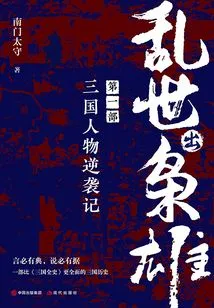
At the end of the Eastern Han Dynasty, foreign relatives had exclusive power, eunuchs took over power, and the land was red with yellow turbans. In troubled times, many heroes have risen together, and heroes have emerged in large numbers. He Jin is in the front, Dong Zhuo succeeds, Yuan Shao succeeds, Cao Cao rises, Lu Bu raises his voice, Liu Bei spreads his name, Sun Jian conquers, Sun Ce returns eastward, Sun Quan dominates the map, and Kong Ming works hard and contributes good strategies. Heroes are chasing each other, heroes are fighting each other, and in troubled times, many legendary counterattack figures have emerged in the Central Plains, the most prominent of which include Cao Cao, Liu Bei, Sun Quan, Zhuge Liang, Sima Yi, etc. Cao Cao, who was originally a eunuch, had a short and ugly appearance. However, with his talent strategy of "elevating talents only by his talents", he recruited talents from all over the world, established a forest of generals, and a horde of counselors, and finally unified the north. Although they failed in the southern expedition, they succeeded in Guanzhong and joined forces with Wu to conquer Shu, thus establishing the Cao Wei Empire. Liu Bei was originally a descendant of a declining clan who made a living by selling shoes and weaving mats. However, by virtue of his people-oriented attitude, he won the hearts of the world and became sworn friends with Guan Yu and Zhang Fei. He appointed loyal and brave men such as Zhao Yun, Huang Zhong and Ma Chao to fight in the south and north. He established himself in Jingzhou and traveled to Bashu, eventually becoming the great cause of the Shu Han Dynasty. Sun Quan was orphaned at the age of seven and came to power at the age of eighteen. He used Zhang Zhao and Lu Su for literature and Zhou Yu and Lu Xun for military affairs. He allied with Shu to resist Wei, used Wei to attack Shu, and later allied with Shu Tucun. Among the Three Kingdoms, it became the longest-lasting country and established the foundation of Jiangdong. Zhuge Liang, a commoner in Nanyang, worked hard to cultivate Longmu and share the world. He joined Wu to fight against Cao and went to Jingyi. He made three expeditions to Qishan Mountain and made five expeditions to the Central Plains. He devoted himself to death and died. He eventually became a virtuous man and a model for intellectuals of all ages. Sima Yi originally wanted to return to seclusion, but was forced to serve as an official by Cao Cao. However, he was not used in the official position and was seized several times. He was still "unbearable". He worked hard and created a new pattern, which finally laid the foundation for the "three families returning to Jin" and became the founder of the Western Jin Dynasty.
At the end of the Eastern Han Dynasty, foreign relatives had exclusive power, eunuchs took over power, and the land was red with yellow turbans. In troubled times, many heroes have risen together, and heroes have emerged in large numbers. He Jin is in the front, Dong Zhuo succeeds, Yuan Shao succeeds, Cao Cao rises, Lu Bu raises his voice, Liu Bei spreads his name, Sun Jian conquers, Sun Ce returns eastward, Sun Quan dominates the map, and Kong Ming works hard and contributes good strategies. Heroes are chasing each other, heroes are fighting each other, and in troubled times, many legendary counterattack figures have emerged in the Central Plains, the most prominent of which include Cao Cao, Liu Bei, Sun Quan, Zhuge Liang, Sima Yi, etc. Cao Cao, who was originally a eunuch, had a short and ugly appearance. However, with his talent strategy of "elevating talents only by his talents", he recruited talents from all over the world, established a forest of generals, and a horde of counselors, and finally unified the north. Although they failed in the southern expedition, they succeeded in Guanzhong and joined forces with Wu to conquer Shu, thus establishing the Cao Wei Empire. Liu Bei was originally a descendant of a declining clan who made a living by selling shoes and weaving mats. However, by virtue of his people-oriented attitude, he won the hearts of the world and became sworn friends with Guan Yu and Zhang Fei. He appointed loyal and brave men such as Zhao Yun, Huang Zhong and Ma Chao to fight in the south and north. He established himself in Jingzhou and traveled to Bashu, eventually becoming the great cause of the Shu Han Dynasty. Sun Quan was orphaned at the age of seven and came to power at the age of eighteen. He used Zhang Zhao and Lu Su for literature and Zhou Yu and Lu Xun for military affairs. He allied with Shu to resist Wei, used Wei to attack Shu, and later allied with Shu Tucun. Among the Three Kingdoms, it became the longest-lasting country and established the foundation of Jiangdong. Zhuge Liang, a commoner in Nanyang, worked hard to cultivate Longmu and share the world. He joined Wu to fight against Cao and went to Jingyi. He made three expeditions to Qishan Mountain and made five expeditions to the Central Plains. He devoted himself to death and died. He eventually became a virtuous man and a model for intellectuals of all ages. Sima Yi originally wanted to return to seclusion, but was forced to serve as an official by Cao Cao. However, he was not used in the official position and was seized several times. He was still "unbearable". He worked hard and created a new pattern, which finally laid the foundation for the "three families returning to Jin" and became the founder of the Western Jin Dynasty.
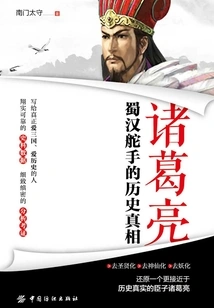
诸葛亮:蜀汉舵手的历史真相
Nanmen Prefect
Zhuge Liang is a historical figure who has been transformed into a sage, a god, and even a demon. Especially after being artistically transformed in the novel "Romance of the Three Kingdoms" and TV series, he is regarded as the embodiment of wisdom. At the same time, some people also criticized and objected to Zhuge Liang. The author of "Zhuge Liang: The Historical Truth of the Shu Han Helmsman" adopts a serious and objective attitude, based on official historical records, and makes reasonable inferences and analyses, but does not fictionalize or joke, and presents Zhuge Liang's life as completely as possible, which is close to the historical reality. After careful textual research, the author sorted out and analyzed a large number of historical materials, and introduced many results of previous research on Zhuge Liang to interpret controversial topics one by one.
Zhuge Liang is a historical figure who has been transformed into a sage, a god, and even a demon. Especially after being artistically transformed in the novel "Romance of the Three Kingdoms" and TV series, he is regarded as the embodiment of wisdom. At the same time, some people also criticized and objected to Zhuge Liang. The author of "Zhuge Liang: The Historical Truth of the Shu Han Helmsman" adopts a serious and objective attitude, based on official historical records, and makes reasonable inferences and analyses, but does not fictionalize or joke, and presents Zhuge Liang's life as completely as possible, which is close to the historical reality. After careful textual research, the author sorted out and analyzed a large number of historical materials, and introduced many results of previous research on Zhuge Liang to interpret controversial topics one by one.
乱世出枭雄(第二部):三国人物征战记
Nanmen Prefect
The Three Kingdoms were in troubled times, with wars raging, wars rising, heroes vying for the throne, and conquests continuing. First there was the Yellow Turban Uprising, then Dong Zhuo took over the capital, and Lu Bu and Ding Yuan turned against each other. Then, the Kwantung Allied Forces rebelled against Dong Zhuo, Cao Cao launched an army against Jiwu, Dong Zhuo and Lu Bu became enemies, Li Jue, Guo Bang, and Fan Chou separatized Xiliang, Sun Ce swept across Jiangdong, Tao Qiancun was the site of four battles, Liu Bei gained and lost Xiaopei, Yuan Shao launched the Guandu War, and finally, Cao Cao burned Wuchao with a fire, defeating more with less, and unified the north. Cao Cao led his army across the dangerous pass of the Great Wall and fought fiercely at Bailang Mountain to stabilize the situation in the north. The proud Cao Cao sent his troops south, and the Battle of Chibi began. Liu Bei stayed under the fence, and Sun Quan was in danger of losing his eggs. Chibi burned tens of thousands of Cao's troops. In the end, Sun and Liu's coalition defeated Cao Cao's northern army with a small victory. Liu Bei and Sun Quan divided Jingzhou, Sun Quan secured the southeast, Liu Bei planned Xichuan, fought against Zhang Lu, captured Ma Chao, and occupied Yizhou, Guan Yu lost Jingzhou, Zhang Fei suffered a misfortune, and Liu Bei insisted on attacking Soochow. Lu Xun set fire to the Shu-Han camp for hundreds of miles, unexpectedly won, and saved Jiangdong's foundation. Liu Bei, whose vitality was severely damaged, had to retreat to Baidi City. Later, Zhuge Liang, the minister who had entrusted the solitary army, launched five expeditions into the Central Plains. Behind the fighting, intrigues, and battles of wits and courage between all parties, on the surface it is killing, conspiracy, and calculation. In fact, it is the suffering of the people, the decline of people's livelihood, and the disaster of living beings. Behind the war of the Three Kingdoms, tracing back to its origin and seeking its purpose, is the uprightness and feelings of family and country in the characters of the Three Kingdoms, as well as the perseverance, perseverance, sacrifice of life for righteousness, and unyielding loyalty of those heroes. It is a generation of virtuous people who dedicated themselves to death. This is the true value and significance of the Three Kingdoms!
The Three Kingdoms were in troubled times, with wars raging, wars rising, heroes vying for the throne, and conquests continuing. First there was the Yellow Turban Uprising, then Dong Zhuo took over the capital, and Lu Bu and Ding Yuan turned against each other. Then, the Kwantung Allied Forces rebelled against Dong Zhuo, Cao Cao launched an army against Jiwu, Dong Zhuo and Lu Bu became enemies, Li Jue, Guo Bang, and Fan Chou separatized Xiliang, Sun Ce swept across Jiangdong, Tao Qiancun was the site of four battles, Liu Bei gained and lost Xiaopei, Yuan Shao launched the Guandu War, and finally, Cao Cao burned Wuchao with a fire, defeating more with less, and unified the north. Cao Cao led his army across the dangerous pass of the Great Wall and fought fiercely at Bailang Mountain to stabilize the situation in the north. The proud Cao Cao sent his troops south, and the Battle of Chibi began. Liu Bei stayed under the fence, and Sun Quan was in danger of losing his eggs. Chibi burned tens of thousands of Cao's troops. In the end, Sun and Liu's coalition defeated Cao Cao's northern army with a small victory. Liu Bei and Sun Quan divided Jingzhou, Sun Quan secured the southeast, Liu Bei planned Xichuan, fought against Zhang Lu, captured Ma Chao, and occupied Yizhou, Guan Yu lost Jingzhou, Zhang Fei suffered a misfortune, and Liu Bei insisted on attacking Soochow. Lu Xun set fire to the Shu-Han camp for hundreds of miles, unexpectedly won, and saved Jiangdong's foundation. Liu Bei, whose vitality was severely damaged, had to retreat to Baidi City. Later, Zhuge Liang, the minister who had entrusted the solitary army, launched five expeditions into the Central Plains. Behind the fighting, intrigues, and battles of wits and courage between all parties, on the surface it is killing, conspiracy, and calculation. In fact, it is the suffering of the people, the decline of people's livelihood, and the disaster of living beings. Behind the war of the Three Kingdoms, tracing back to its origin and seeking its purpose, is the uprightness and feelings of family and country in the characters of the Three Kingdoms, as well as the perseverance, perseverance, sacrifice of life for righteousness, and unyielding loyalty of those heroes. It is a generation of virtuous people who dedicated themselves to death. This is the true value and significance of the Three Kingdoms!