Library
Browse and search books
1 novel found
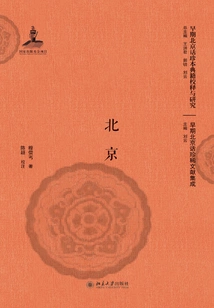
Beijing
General Fiction北京
Mu Rubei
The development of Beijing-flavored novels has a long history. In the Beijing literary world at the end of the Qing Dynasty and the beginning of the Republic of China, famous newspapers headed by Peng Yizhong opened up a broad stage for novelists to display their talents in vernacular newspapers. Beijing-flavored novelists represented by Xi Gong, Jian Dan, Leng Fo, and Ru Gai came to the fore and created thousands of Beijing-flavored literary works. They were enthusiastically sought after by the general public in the Beijing-Tianjin area. Their creative achievements have also become a highlight in the development history of Beijing-flavored literature. In a sense, the language of these Beijing-flavored novels is an encyclopedia of old Beijing dialect. Therefore, Jingwei'er novels have great research value in terms of literary value and language value. "Beijing" was a work with great influence at that time. The novel has an obvious autobiographical nature. It tells the story of Boyong, the editor of Dahua Daily, who experienced the vile phenomena in all walks of life in the Republic of China after returning from studying in Japan. The tragic experiences of the lower-class bannermen in the novel are quite sad. The book reproduces the social scene of old Beijing at that time and describes the journey of an idealist who wanted to change China.
The development of Beijing-flavored novels has a long history. In the Beijing literary world at the end of the Qing Dynasty and the beginning of the Republic of China, famous newspapers headed by Peng Yizhong opened up a broad stage for novelists to display their talents in vernacular newspapers. Beijing-flavored novelists represented by Xi Gong, Jian Dan, Leng Fo, and Ru Gai came to the fore and created thousands of Beijing-flavored literary works. They were enthusiastically sought after by the general public in the Beijing-Tianjin area. Their creative achievements have also become a highlight in the development history of Beijing-flavored literature. In a sense, the language of these Beijing-flavored novels is an encyclopedia of old Beijing dialect. Therefore, Jingwei'er novels have great research value in terms of literary value and language value. "Beijing" was a work with great influence at that time. The novel has an obvious autobiographical nature. It tells the story of Boyong, the editor of Dahua Daily, who experienced the vile phenomena in all walks of life in the Republic of China after returning from studying in Japan. The tragic experiences of the lower-class bannermen in the novel are quite sad. The book reproduces the social scene of old Beijing at that time and describes the journey of an idealist who wanted to change China.