Library
Browse and search books
1 novel found
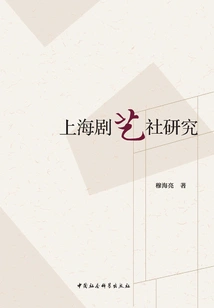
Research on Shanghai Drama Society
Literature上海剧艺社研究
Mu Hailiang
The Shanghai Drama Society (1938-1941, 1946-1948) was a progressive professional theater troupe directly led by the Communist Party of China. It was a banner of Shanghai's theater movement during the isolation period and after the war, and it also occupies a unique position in the history of Chinese drama. This book is the first concentrated, in-depth, and systematic study of the Shanghai Theater Society, and has academic significance to fill the gaps. The book has a total of 400,000 words and is divided into three parts (a total of 12 chapters). It explores the characteristics, achievements and historical limitations of the Shanghai Theater Society from three aspects: theater organization, repertoire construction and stage art. Based on specific and in-depth case studies, this book comprehensively uses the research methods of drama, history, and sociology, and takes this unique and typical theater troupe as the starting point to conduct a three-dimensional examination and multi-dimensional interpretation of the artistic composition, internal and external relationships, and production system of the dialogue drama, thereby exploring and revealing the cultural logic and historical motivations of the development, differentiation, maturity, and variation of modern drama from a new perspective. This has reference value in academic theory and methodology for future theater troupe research and even drama history research. The "Appendix" at the back of the book contains a detailed chronology of the Shanghai Theater Arts Society's activities, a list of performances, etc., Which not only supports the main text, but also has important historical value in itself.
The Shanghai Drama Society (1938-1941, 1946-1948) was a progressive professional theater troupe directly led by the Communist Party of China. It was a banner of Shanghai's theater movement during the isolation period and after the war, and it also occupies a unique position in the history of Chinese drama. This book is the first concentrated, in-depth, and systematic study of the Shanghai Theater Society, and has academic significance to fill the gaps. The book has a total of 400,000 words and is divided into three parts (a total of 12 chapters). It explores the characteristics, achievements and historical limitations of the Shanghai Theater Society from three aspects: theater organization, repertoire construction and stage art. Based on specific and in-depth case studies, this book comprehensively uses the research methods of drama, history, and sociology, and takes this unique and typical theater troupe as the starting point to conduct a three-dimensional examination and multi-dimensional interpretation of the artistic composition, internal and external relationships, and production system of the dialogue drama, thereby exploring and revealing the cultural logic and historical motivations of the development, differentiation, maturity, and variation of modern drama from a new perspective. This has reference value in academic theory and methodology for future theater troupe research and even drama history research. The "Appendix" at the back of the book contains a detailed chronology of the Shanghai Theater Arts Society's activities, a list of performances, etc., Which not only supports the main text, but also has important historical value in itself.