Library
Browse and search books
24 novels found
大清风云2:定鼎中原
Mr. Lu Ding
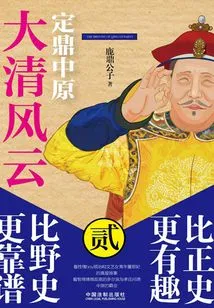
Xiaozhuang was a woman with great political wisdom. She accompanied Dorgon like a fierce tiger, observing Dorgon's behavior at any time and satisfying Dorgon's desires. She always mentioned Dorgon's title to that of the emperor's father and regent, thus avoiding Dorgon's ambition to kill the king and become self-reliant. Because of the words "Emperor Father and Regent", Qing history has left another major unsolved case: Did the Empress Dowager Xiaozhuang marry Dorgon? This unsolved case has yet to be concluded. However, judging from the conflict between Shunzhi and Xiaozhuang, the relationship between Xiaozhuang and Dorgon deeply hurt Shunzhi's young heart. Therefore, after Shunzhi took charge, he always opposed his mother. Xiaozhuang was not an easy man, and he made things difficult for Shunzhi's favored concubine Dong E. Finally, Dong E died young, and Shunzhi soon contracted smallpox. He and Dong E became a pair of short-lived mandarin ducks, and they flew to heaven together. Shunzhi's life was a tragedy. Living under the shadow of Dorgon for a long time made him physically and mentally distorted. Since then, he has been unable to find a balance between body and mind. In the end, he failed to become a monk and died short-lived. It was a misfortune for him to be born into an imperial family.
Xiaozhuang was a woman with great political wisdom. She accompanied Dorgon like a fierce tiger, observing Dorgon's behavior at any time and satisfying Dorgon's desires. She always mentioned Dorgon's title to that of the emperor's father and regent, thus avoiding Dorgon's ambition to kill the king and become self-reliant. Because of the words "Emperor Father and Regent", Qing history has left another major unsolved case: Did the Empress Dowager Xiaozhuang marry Dorgon? This unsolved case has yet to be concluded. However, judging from the conflict between Shunzhi and Xiaozhuang, the relationship between Xiaozhuang and Dorgon deeply hurt Shunzhi's young heart. Therefore, after Shunzhi took charge, he always opposed his mother. Xiaozhuang was not an easy man, and he made things difficult for Shunzhi's favored concubine Dong E. Finally, Dong E died young, and Shunzhi soon contracted smallpox. He and Dong E became a pair of short-lived mandarin ducks, and they flew to heaven together. Shunzhi's life was a tragedy. Living under the shadow of Dorgon for a long time made him physically and mentally distorted. Since then, he has been unable to find a balance between body and mind. In the end, he failed to become a monk and died short-lived. It was a misfortune for him to be born into an imperial family.
大清风云1:帝国崛起
Mr. Lu Ding
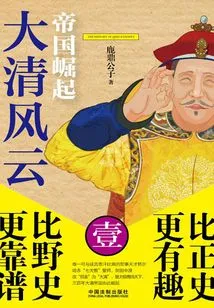
The history of the Qing Dynasty spans nearly three hundred years. During these three hundred years, weird things, strange things, tragedies, and hateful things happened one after another. Every three hundred years is wonderful, every year has strong taste, and every year has lingering emotions of joy, anger, love, and hate. The entire three hundred years of the Qing Dynasty encompassed almost all the extreme aspects of human nature. Three hundred years of endless love and hate. Nurhachi established Houjin with thirteen armored cavalry, leaving countless corpses behind him. He eventually fell under the city of Ningyuan, in the hands of an unknown scholar Yuan Chonghuan, and died in depression. This is the greatest irony of God for a violent conqueror. Subsequently, the Nurhachi disciples began to fight with each other in a battle of wits and courage, and finally Huang Taiji became the boss through strategy. Huang Taiji spent his whole life fighting against the Ming Dynasty. After his sudden death, the rule of the Qing Dynasty fell into crisis. The dispute between Dorgon and Hauge finally favored Shunzhi. After Dorgon led the Qing army into the customs, he became the regent of the emperor's father, wielding the military and political power of the country in one hand, and Shunzhi was completely ignored. At this time, the lives of Xiaozhuang, Shunzi, mother and son were in danger at any time. At this critical moment, Xiaozhuang sacrificed his life to protect the Qing Dynasty, stabilized Dorgon, and finally allowed the Qing Dynasty to escape this disaster.
The history of the Qing Dynasty spans nearly three hundred years. During these three hundred years, weird things, strange things, tragedies, and hateful things happened one after another. Every three hundred years is wonderful, every year has strong taste, and every year has lingering emotions of joy, anger, love, and hate. The entire three hundred years of the Qing Dynasty encompassed almost all the extreme aspects of human nature. Three hundred years of endless love and hate. Nurhachi established Houjin with thirteen armored cavalry, leaving countless corpses behind him. He eventually fell under the city of Ningyuan, in the hands of an unknown scholar Yuan Chonghuan, and died in depression. This is the greatest irony of God for a violent conqueror. Subsequently, the Nurhachi disciples began to fight with each other in a battle of wits and courage, and finally Huang Taiji became the boss through strategy. Huang Taiji spent his whole life fighting against the Ming Dynasty. After his sudden death, the rule of the Qing Dynasty fell into crisis. The dispute between Dorgon and Hauge finally favored Shunzhi. After Dorgon led the Qing army into the customs, he became the regent of the emperor's father, wielding the military and political power of the country in one hand, and Shunzhi was completely ignored. At this time, the lives of Xiaozhuang, Shunzi, mother and son were in danger at any time. At this critical moment, Xiaozhuang sacrificed his life to protect the Qing Dynasty, stabilized Dorgon, and finally allowed the Qing Dynasty to escape this disaster.
大清风云3:康熙大帝
Mr. Lu Ding
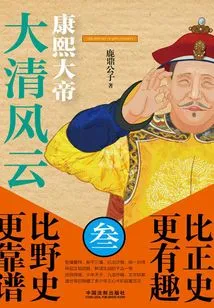
The history of the Qing Dynasty spans nearly three hundred years. During these three hundred years, weird things, strange things, tragedies, and hateful things happened one after another. Every three hundred years is wonderful, every year has strong taste, and every year has lingering emotions of joy, anger, love, and hate. The entire three hundred years of the Qing Dynasty encompassed almost all the extreme aspects of human nature. Three hundred years of endless love and hate. Kangxi's governance and diplomacy were nothing more than using Confucianism externally and Huang Lao internally, so he was able to get rid of Obai without anyone noticing, put down the rebellion of the Three Feudatories, regain Taiwan, pacify Junggar, and repel the invasion of Tsarist Russia... Throughout the Qing Dynasty, the art of emperors reached its peak in the hands of Kangxi.
The history of the Qing Dynasty spans nearly three hundred years. During these three hundred years, weird things, strange things, tragedies, and hateful things happened one after another. Every three hundred years is wonderful, every year has strong taste, and every year has lingering emotions of joy, anger, love, and hate. The entire three hundred years of the Qing Dynasty encompassed almost all the extreme aspects of human nature. Three hundred years of endless love and hate. Kangxi's governance and diplomacy were nothing more than using Confucianism externally and Huang Lao internally, so he was able to get rid of Obai without anyone noticing, put down the rebellion of the Three Feudatories, regain Taiwan, pacify Junggar, and repel the invasion of Tsarist Russia... Throughout the Qing Dynasty, the art of emperors reached its peak in the hands of Kangxi.
大清风云8:曲终人散
Mr. Lu Ding
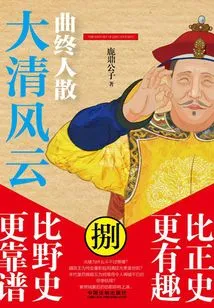
The last gasp of the Eastern dynasty under the great changes in the world, the struggle of the declining empire in the midst of devastation is lamentable. The emperor who desperately seeks change, the patriots who are not afraid of bloodshed, and the resisting people who do not bow to the invaders jointly compose the last magnificent elegiac song in the afterglow of the feudal empire. Guangxu, who sought change alone, the "Six Gentlemen of 1898" who died generously, and Sun Yat-sen, who overthrew the imperial system, all used their own methods to save the land of China that was already riddled with holes.
The last gasp of the Eastern dynasty under the great changes in the world, the struggle of the declining empire in the midst of devastation is lamentable. The emperor who desperately seeks change, the patriots who are not afraid of bloodshed, and the resisting people who do not bow to the invaders jointly compose the last magnificent elegiac song in the afterglow of the feudal empire. Guangxu, who sought change alone, the "Six Gentlemen of 1898" who died generously, and Sun Yat-sen, who overthrew the imperial system, all used their own methods to save the land of China that was already riddled with holes.
大清风云7:风雨飘摇
Mr. Lu Ding
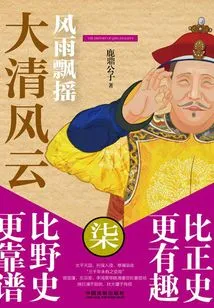
This book introduces the turbulent Qing Dynasty during the Xianfeng period. Emperor Xianfeng took over the power of the Qing Empire amidst the turmoil. He also wanted to achieve something, but unfortunately, bad luck. On one side, there were internal worries of the Taiping Heavenly Kingdom, and on the other side, there were external threats from the great powers. The Second Opium War pushed the unlucky emperor into a tragic situation where he was attacked from both sides. The treasury was empty, and his ministers failed to live up to expectations. Tianjin fell, Beijing fell, and the Old Summer Palace was burned to the ground... After his death, he handed over the government to a smart woman, who later became the Empress Dowager Cixi.
This book introduces the turbulent Qing Dynasty during the Xianfeng period. Emperor Xianfeng took over the power of the Qing Empire amidst the turmoil. He also wanted to achieve something, but unfortunately, bad luck. On one side, there were internal worries of the Taiping Heavenly Kingdom, and on the other side, there were external threats from the great powers. The Second Opium War pushed the unlucky emperor into a tragic situation where he was attacked from both sides. The treasury was empty, and his ministers failed to live up to expectations. Tianjin fell, Beijing fell, and the Old Summer Palace was burned to the ground... After his death, he handed over the government to a smart woman, who later became the Empress Dowager Cixi.
大清风云6:江河日下
Mr. Lu Ding
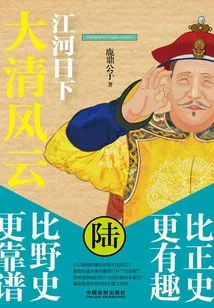
The political code of the Qing Dynasty's transition from prosperity to decline, the turning point of the decline of China's last feudal dynasty, uprisings and quelling chaos. The heyday of Kangxi and Qianlong was only a hundred years old. Peasant uprisings, Yao people uprisings, and Zhanggeer's Xinjiang rebellion had gradually emptied the Qing Dynasty's treasury; repeated assassinations made Jiaqing feel helpless after reflection; how could Daoguang, who had experienced the loss of power and humiliating the country's alliance, be regarded as a relatively blessed emperor... The Qing Empire, which was in the stage of disintegration from its prosperous age, was doomed.
The political code of the Qing Dynasty's transition from prosperity to decline, the turning point of the decline of China's last feudal dynasty, uprisings and quelling chaos. The heyday of Kangxi and Qianlong was only a hundred years old. Peasant uprisings, Yao people uprisings, and Zhanggeer's Xinjiang rebellion had gradually emptied the Qing Dynasty's treasury; repeated assassinations made Jiaqing feel helpless after reflection; how could Daoguang, who had experienced the loss of power and humiliating the country's alliance, be regarded as a relatively blessed emperor... The Qing Empire, which was in the stage of disintegration from its prosperous age, was doomed.
这才是清朝2:定鼎中原(第2版)
Mr. Lu Ding
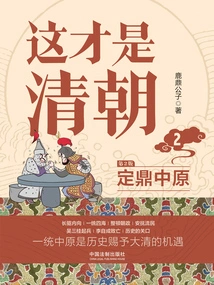
Li Zicheng invaded Beijing, Emperor Chongzhen committed suicide, and the Ming Dynasty fell. Although Li Zicheng occupied Beijing, he obviously had no idea how to run such a large country. At this time, Wu Sangui, who was far away in Shanhaiguan, "turned his crown into a beauty in anger" and lured the Qing army into the pass. Dorgon led the Qing army into the pass and became the regent of the emperor's father, holding the military and political power of the country in his hands. Mother and son Xiaozhuang and Shunzhi lived under the threat of Dorgon, and their lives were threatened at any time. Thanks to Xiaozhuang's observation of words and expressions, dangers were resolved time and time again while talking and laughing. It's a pity that Shunzhi was still too young. After taking office, he had trouble with his mother, and both he and his beloved Concubine Dong E died early.
Li Zicheng invaded Beijing, Emperor Chongzhen committed suicide, and the Ming Dynasty fell. Although Li Zicheng occupied Beijing, he obviously had no idea how to run such a large country. At this time, Wu Sangui, who was far away in Shanhaiguan, "turned his crown into a beauty in anger" and lured the Qing army into the pass. Dorgon led the Qing army into the pass and became the regent of the emperor's father, holding the military and political power of the country in his hands. Mother and son Xiaozhuang and Shunzhi lived under the threat of Dorgon, and their lives were threatened at any time. Thanks to Xiaozhuang's observation of words and expressions, dangers were resolved time and time again while talking and laughing. It's a pity that Shunzhi was still too young. After taking office, he had trouble with his mother, and both he and his beloved Concubine Dong E died early.
这才是清朝7:太平军兴
Mr. Lu Ding
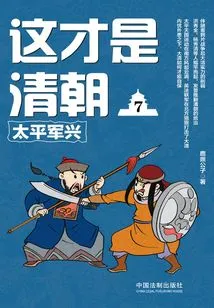
Emperor Xianfeng took over the power of the Qing Dynasty in the turmoil, and he wanted to make a difference. But unfortunately, on one side, the Taiping Rebellion gained momentum in the south, and on the other side, the British and French forces entered Beijing. This time, the invaders burned the Old Summer Palace, which was regarded as a treasure by Xianfeng. Facing the situation of internal and external troubles, Emperor Xianfeng wanted to cheer up, but he found that the harder he tried, the less effective he was, and he gradually indulged.
Emperor Xianfeng took over the power of the Qing Dynasty in the turmoil, and he wanted to make a difference. But unfortunately, on one side, the Taiping Rebellion gained momentum in the south, and on the other side, the British and French forces entered Beijing. This time, the invaders burned the Old Summer Palace, which was regarded as a treasure by Xianfeng. Facing the situation of internal and external troubles, Emperor Xianfeng wanted to cheer up, but he found that the harder he tried, the less effective he was, and he gradually indulged.
这才是清朝2:定鼎中原
Mr. Lu Ding
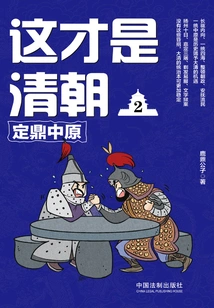
Li Zicheng invaded Beijing, Emperor Chongzhen committed suicide, and the Ming Dynasty fell. Although Li Zicheng occupied Beijing, he obviously had no idea how to run such a large country. At this time, Wu Sangui, who was far away in Shanhaiguan, "turned his crown into a beauty in anger" and lured the Qing army into the pass. Dorgon led the Qing army into the pass and became the regent of the emperor's father, holding the military and political power of the country in his hands. Mother and son Xiaozhuang and Shunzhi lived under the threat of Dorgon, and their lives were threatened at any time. Thanks to Xiaozhuang's observation of words and expressions, dangers were resolved time and time again while talking and laughing. It's a pity that Shunzhi was still too young. After taking office, he had trouble with his mother Xiaozhuang. In the end, both himself and his beloved Concubine Dong E died early.
Li Zicheng invaded Beijing, Emperor Chongzhen committed suicide, and the Ming Dynasty fell. Although Li Zicheng occupied Beijing, he obviously had no idea how to run such a large country. At this time, Wu Sangui, who was far away in Shanhaiguan, "turned his crown into a beauty in anger" and lured the Qing army into the pass. Dorgon led the Qing army into the pass and became the regent of the emperor's father, holding the military and political power of the country in his hands. Mother and son Xiaozhuang and Shunzhi lived under the threat of Dorgon, and their lives were threatened at any time. Thanks to Xiaozhuang's observation of words and expressions, dangers were resolved time and time again while talking and laughing. It's a pity that Shunzhi was still too young. After taking office, he had trouble with his mother Xiaozhuang. In the end, both himself and his beloved Concubine Dong E died early.
大清风云5:风流天子
Mr. Lu Ding
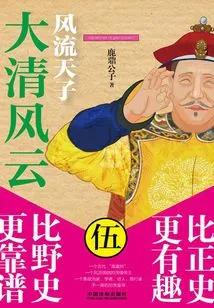
Qianlong was such an emperor, in whom good and evil, righteousness and evil were brought to the extreme. Everyone knows that Qianlong was a romantic emperor, which may have something to do with his six romantic encounters in the south of the Yangtze River. However, Qianlong's true face was not a romantic emperor, but a ruthless emperor who was arbitrary and ruthless. Qianlong's cruelty and fierce methods were also among the best among the emperors of the Qing Dynasty, and this was particularly evident in the Literary Prison.
Qianlong was such an emperor, in whom good and evil, righteousness and evil were brought to the extreme. Everyone knows that Qianlong was a romantic emperor, which may have something to do with his six romantic encounters in the south of the Yangtze River. However, Qianlong's true face was not a romantic emperor, but a ruthless emperor who was arbitrary and ruthless. Qianlong's cruelty and fierce methods were also among the best among the emperors of the Qing Dynasty, and this was particularly evident in the Literary Prison.
这才是清朝8:西后垂帘
Mr. Lu Ding
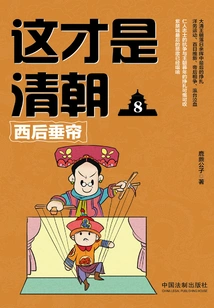
The last gasp of the Eastern dynasty under the great changes in the world, and the struggle of the declining empire in the midst of devastation are lamentable. The emperors who desperately seek change, the people with lofty ideals who are not afraid of bloodshed, and the people who no longer bow to the invaders jointly compose the last magnificent elegiac song in the afterglow of the feudal empire. Guangxu, who sought change alone, the "Six Gentlemen of 1898" who died generously, and Sun Yat-sen, who overthrew the imperial system, all used their own methods to save the land of China that was already riddled with holes.
The last gasp of the Eastern dynasty under the great changes in the world, and the struggle of the declining empire in the midst of devastation are lamentable. The emperors who desperately seek change, the people with lofty ideals who are not afraid of bloodshed, and the people who no longer bow to the invaders jointly compose the last magnificent elegiac song in the afterglow of the feudal empire. Guangxu, who sought change alone, the "Six Gentlemen of 1898" who died generously, and Sun Yat-sen, who overthrew the imperial system, all used their own methods to save the land of China that was already riddled with holes.
这才是清朝4:雍正王朝(第2版)
Mr. Lu Ding
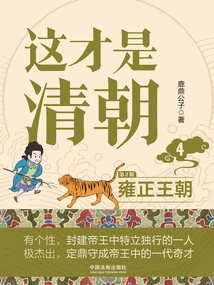
In Yongzheng, the duality is very obvious. In terms of governing the country, he was a wise emperor, especially in terms of government administration. Among the two thousand years of Chinese feudal dynasty, Yongzheng was one of the best experts. Many of his reforms pushed the rule of the Qing Dynasty to its peak, such as the establishment of the military aircraft office, the implementation of the system of sharing the land with the land, and the implementation of the system of returning waste to the public and raising honest silver... The decline in the late Kangxi period was reversed in the hands of Yongzheng, and the "vital energy" of the Qing Dynasty also continued to rise in the hands of Yongzheng. But when it came to dealing with the opposition, Yongzheng was very cruel and had absolutely no room for mercy. The endings of his younger brother Yinqi, the Eight Kings Party, and the two great heroes Nian Gengyao and Longkodo fully prove this point.
In Yongzheng, the duality is very obvious. In terms of governing the country, he was a wise emperor, especially in terms of government administration. Among the two thousand years of Chinese feudal dynasty, Yongzheng was one of the best experts. Many of his reforms pushed the rule of the Qing Dynasty to its peak, such as the establishment of the military aircraft office, the implementation of the system of sharing the land with the land, and the implementation of the system of returning waste to the public and raising honest silver... The decline in the late Kangxi period was reversed in the hands of Yongzheng, and the "vital energy" of the Qing Dynasty also continued to rise in the hands of Yongzheng. But when it came to dealing with the opposition, Yongzheng was very cruel and had absolutely no room for mercy. The endings of his younger brother Yinqi, the Eight Kings Party, and the two great heroes Nian Gengyao and Longkodo fully prove this point.
大清风云4:雍正王朝
Mr. Lu Ding
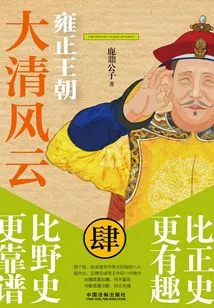
This book introduces the story of how the fourth elder brother Yinzhen became the emperor, and how he governed the country after becoming the emperor. In Yongzheng, the duality is very obvious. In terms of governing the country, he was a wise emperor, especially in the area of official administration. Among the two thousand years of feudal dynasties in China, Yongzheng was one of the best. Many of his reforms pushed the rule of the Qing Dynasty to its peak, such as the establishment of the military aircraft office, the implementation of the system of sharing the land with the land, and the implementation of the system of returning waste to the public and raising honest silver... The decline of the late Kangxi period was reversed in the hands of Yongzheng, and the vitality of the Qing Dynasty also continued to rise in the hands of Yongzheng. But when it came to dealing with the opposition, Yongzheng was very cruel and had absolutely no room for mercy. His younger brother Yinyin was one of the Eight Kings' Party, and the two great heroes were Nian Gengyao and Long Keduo.
This book introduces the story of how the fourth elder brother Yinzhen became the emperor, and how he governed the country after becoming the emperor. In Yongzheng, the duality is very obvious. In terms of governing the country, he was a wise emperor, especially in the area of official administration. Among the two thousand years of feudal dynasties in China, Yongzheng was one of the best. Many of his reforms pushed the rule of the Qing Dynasty to its peak, such as the establishment of the military aircraft office, the implementation of the system of sharing the land with the land, and the implementation of the system of returning waste to the public and raising honest silver... The decline of the late Kangxi period was reversed in the hands of Yongzheng, and the vitality of the Qing Dynasty also continued to rise in the hands of Yongzheng. But when it came to dealing with the opposition, Yongzheng was very cruel and had absolutely no room for mercy. His younger brother Yinyin was one of the Eight Kings' Party, and the two great heroes were Nian Gengyao and Long Keduo.
这才是清朝3:康熙大帝(第2版)
Mr. Lu Ding
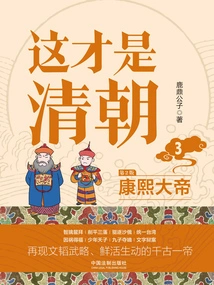
In terms of governance and diplomatic strategies, Kangxi used Confucianism externally and Huang Lao internally. He was able to get rid of Obai without anyone noticing, put down the rebellion of the Three Feudatories, unify Taiwan and set up prefectures and counties, and repel the invasion of Tsarist Russia. He selected good ministers, punished corrupt officials, focused on agriculture and corruption, and built water conservancy projects. As an emperor, Kangxi was very successful, but as a father and husband, he had too many tragedies, and there was much inner loneliness and sadness hidden behind the sixty-one years of prosperity.
In terms of governance and diplomatic strategies, Kangxi used Confucianism externally and Huang Lao internally. He was able to get rid of Obai without anyone noticing, put down the rebellion of the Three Feudatories, unify Taiwan and set up prefectures and counties, and repel the invasion of Tsarist Russia. He selected good ministers, punished corrupt officials, focused on agriculture and corruption, and built water conservancy projects. As an emperor, Kangxi was very successful, but as a father and husband, he had too many tragedies, and there was much inner loneliness and sadness hidden behind the sixty-one years of prosperity.
这才是清朝6:盛世危机(第2版)
Mr. Lu Ding
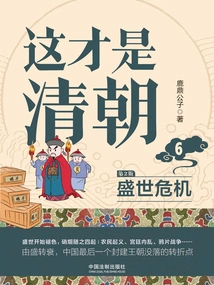
The political code of the Qing Dynasty's transition from prosperity to decline, the turning point of the decline of China's last feudal dynasty, uprisings and quelling chaos. The heyday of Kangxi and Qianlong lasted only a hundred years, and the peasant uprising and Zhanger's rebellion had gradually emptied the Qing Dynasty's treasury. The members of the Tianli Sect colluded with the eunuchs and launched a rebellion in the Forbidden City. This was a huge blow to Jiaqing. Since ancient times, rebellions have always occurred outside the palace, but this time the rebellion actually took place in the Forbidden City. Repeated assassinations made Jiaqing reflect and feel helpless. Starting from Jiaqing, the emperors of the Qing Dynasty became more and more mediocre, with each generation becoming worse than the last. After the outbreak of the First Opium War, Daoguang suffered the humiliation of defeat, and the domestic situation became increasingly chaotic. What was worse was that the empire did not have a suitable successor. The worst thing was that Daoguang chose Xianfeng, who was even more mediocre and incompetent... The Qing Empire, which was in the stage of disintegration from its prosperity, was doomed to be unable to recover.
The political code of the Qing Dynasty's transition from prosperity to decline, the turning point of the decline of China's last feudal dynasty, uprisings and quelling chaos. The heyday of Kangxi and Qianlong lasted only a hundred years, and the peasant uprising and Zhanger's rebellion had gradually emptied the Qing Dynasty's treasury. The members of the Tianli Sect colluded with the eunuchs and launched a rebellion in the Forbidden City. This was a huge blow to Jiaqing. Since ancient times, rebellions have always occurred outside the palace, but this time the rebellion actually took place in the Forbidden City. Repeated assassinations made Jiaqing reflect and feel helpless. Starting from Jiaqing, the emperors of the Qing Dynasty became more and more mediocre, with each generation becoming worse than the last. After the outbreak of the First Opium War, Daoguang suffered the humiliation of defeat, and the domestic situation became increasingly chaotic. What was worse was that the empire did not have a suitable successor. The worst thing was that Daoguang chose Xianfeng, who was even more mediocre and incompetent... The Qing Empire, which was in the stage of disintegration from its prosperity, was doomed to be unable to recover.
这才是清朝3:康熙大帝
Mr. Lu Ding
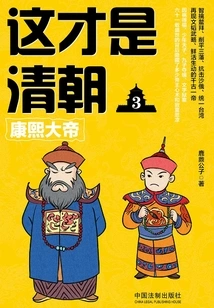
Kangxi's governance and diplomacy were nothing more than applying Confucianism externally and Huang Lao internally, so he was able to get rid of Obai without anyone noticing, put down the rebellion of the Three Feudatories, pacify Junggar, and repel the invasion of Tsarist Russia... Throughout the Qing Dynasty, the art of emperors reached its peak in the hands of Kangxi. As an emperor, Kangxi was very successful, but as a father and husband, he had too many tragedies. In the end, until Kangxi's death, no heir was established. This is indeed a great tragedy for a talented and strategic emperor. However, no one is perfect, so how can we be harsh on Kangxi?
Kangxi's governance and diplomacy were nothing more than applying Confucianism externally and Huang Lao internally, so he was able to get rid of Obai without anyone noticing, put down the rebellion of the Three Feudatories, pacify Junggar, and repel the invasion of Tsarist Russia... Throughout the Qing Dynasty, the art of emperors reached its peak in the hands of Kangxi. As an emperor, Kangxi was very successful, but as a father and husband, he had too many tragedies. In the end, until Kangxi's death, no heir was established. This is indeed a great tragedy for a talented and strategic emperor. However, no one is perfect, so how can we be harsh on Kangxi?
这才是清朝5:十全天子(第2版)
Mr. Lu Ding
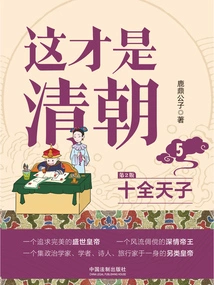
Qianlong succeeded to the throne in his prime years, and there was no storm or rain. No one competed with Qianlong for the throne. When Qianlong succeeded to the throne, Yongzheng had laid a good foundation for him, and Yongzheng had basically done everything he should do. Qianlong lived to be eighty-eight years old and was actually in power longer than Kangxi. Qianlong's life never left power, and power was his method of controlling the entire empire. During his more than sixty years in power, Qianlong conquered the south and the north, demonstrating the empire's military power and expanding the territory of the Qing Dynasty. As for women and elegance, they were both indispensable sentiments for Qianlong. In his later years, Qianlong called himself "Shiquan Old Man", referring to his ten major achievements. In Qianlong's body, the bloody spirit of his ancestors flowing in the war and conquering the country flows.
Qianlong succeeded to the throne in his prime years, and there was no storm or rain. No one competed with Qianlong for the throne. When Qianlong succeeded to the throne, Yongzheng had laid a good foundation for him, and Yongzheng had basically done everything he should do. Qianlong lived to be eighty-eight years old and was actually in power longer than Kangxi. Qianlong's life never left power, and power was his method of controlling the entire empire. During his more than sixty years in power, Qianlong conquered the south and the north, demonstrating the empire's military power and expanding the territory of the Qing Dynasty. As for women and elegance, they were both indispensable sentiments for Qianlong. In his later years, Qianlong called himself "Shiquan Old Man", referring to his ten major achievements. In Qianlong's body, the bloody spirit of his ancestors flowing in the war and conquering the country flows.
这才是清朝5:十全天子
Mr. Lu Ding
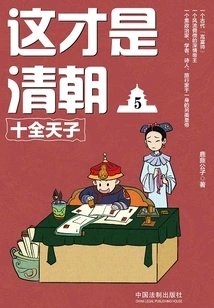
When he succeeded to the throne in his prime years, there was no wind or rain, and no one competed with Qianlong for the throne. When Qianlong succeeded to the throne, Yongzheng had laid a good foundation for him, and Yongzheng had basically done everything he should do. Qianlong lived to be eighty-eight years old and was actually in power longer than Kangxi. Qianlong's life never left power, and power was his method of controlling the entire empire. During his more than sixty years in power, Qianlong conquered the south and the north, demonstrating the empire's military power and expanding the territory of the Qing Dynasty. As for women and elegance, they were both indispensable sentiments for Qianlong. In his later years, Qianlong called himself "Shiquan Old Man", referring to his ten major achievements. In Qianlong's body, the bloody spirit of his ancestors flowing in the war and conquering the country flows.
When he succeeded to the throne in his prime years, there was no wind or rain, and no one competed with Qianlong for the throne. When Qianlong succeeded to the throne, Yongzheng had laid a good foundation for him, and Yongzheng had basically done everything he should do. Qianlong lived to be eighty-eight years old and was actually in power longer than Kangxi. Qianlong's life never left power, and power was his method of controlling the entire empire. During his more than sixty years in power, Qianlong conquered the south and the north, demonstrating the empire's military power and expanding the territory of the Qing Dynasty. As for women and elegance, they were both indispensable sentiments for Qianlong. In his later years, Qianlong called himself "Shiquan Old Man", referring to his ten major achievements. In Qianlong's body, the bloody spirit of his ancestors flowing in the war and conquering the country flows.
这才是清朝1:帝国崛起
Mr. Lu Ding
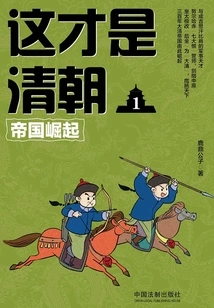
Nurhachi raised an army with thirteen suits of armor, unified the Jurchens in Jianzhou, defeated Hada, destroyed Huifa, Faulla, and swallowed Yehe, conquered various Jurchen tribes, created the Eight Banners system and the Manchu language, founded the country of Hetuala and proclaimed himself Khan, and the "Seven Hatreds" swore to conquer the Ming Dynasty. He finally fell under the city of Ningyuan and fell into the hands of an unknown scholar Yuan Chonghuan, and died in depression. After Nurhachi's death, a fierce battle for the throne began, and Huang Taiji finally took the throne. In the hands of Huang Taiji, "Houjin" became "Qing", and the country prospered. Huang Taiji advocated governing the country with benevolence but suddenly died suddenly; Huang Taiji's love with Hai Lanzhu and Dayu'er was talked about... And the endless turmoil of the Qing Dynasty began.
Nurhachi raised an army with thirteen suits of armor, unified the Jurchens in Jianzhou, defeated Hada, destroyed Huifa, Faulla, and swallowed Yehe, conquered various Jurchen tribes, created the Eight Banners system and the Manchu language, founded the country of Hetuala and proclaimed himself Khan, and the "Seven Hatreds" swore to conquer the Ming Dynasty. He finally fell under the city of Ningyuan and fell into the hands of an unknown scholar Yuan Chonghuan, and died in depression. After Nurhachi's death, a fierce battle for the throne began, and Huang Taiji finally took the throne. In the hands of Huang Taiji, "Houjin" became "Qing", and the country prospered. Huang Taiji advocated governing the country with benevolence but suddenly died suddenly; Huang Taiji's love with Hai Lanzhu and Dayu'er was talked about... And the endless turmoil of the Qing Dynasty began.
这才是清朝1:帝国崛起(第2版)
Mr. Lu Ding
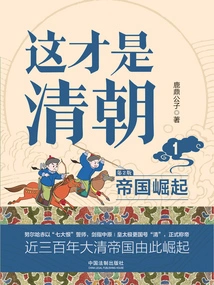
Nurhaci raised an army with thirteen sets of armor, unified the Jurchens in Jianzhou, defeated Hada, destroyed Huifa, Faulla, and swallowed Yehe, conquered various Jurchen tribes, created the Eight Banners system and the Manchu language, established the country of Hetuala and proclaimed himself Khan, and the "Seven Hatreds" swore to conquer the Ming Dynasty. He finally fell under the city of Ningyuan and fell into the hands of Yuan Chonghuan, and died in depression. After Nurhachi's death, a fierce battle for the throne began, and Huang Taiji finally won the throne. In the hands of Huang Taiji, the country's name changed from "Jin" to "Qing", and the country's power flourished. Huang Taiji advocated governing the country with benevolence but suddenly died suddenly; Huang Taiji's love with Hai Lanzhu and Dayu'er was talked about... The endless storm of the Qing Dynasty began...
Nurhaci raised an army with thirteen sets of armor, unified the Jurchens in Jianzhou, defeated Hada, destroyed Huifa, Faulla, and swallowed Yehe, conquered various Jurchen tribes, created the Eight Banners system and the Manchu language, established the country of Hetuala and proclaimed himself Khan, and the "Seven Hatreds" swore to conquer the Ming Dynasty. He finally fell under the city of Ningyuan and fell into the hands of Yuan Chonghuan, and died in depression. After Nurhachi's death, a fierce battle for the throne began, and Huang Taiji finally won the throne. In the hands of Huang Taiji, the country's name changed from "Jin" to "Qing", and the country's power flourished. Huang Taiji advocated governing the country with benevolence but suddenly died suddenly; Huang Taiji's love with Hai Lanzhu and Dayu'er was talked about... The endless storm of the Qing Dynasty began...
这才是清朝6:盛世危机
Mr. Lu Ding
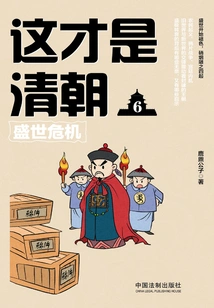
The political code of the Qing Dynasty's transition from prosperity to decline, the turning point of the decline of China's last feudal dynasty, uprisings and quelling chaos. The heyday of Kangxi and Qianlong was only a hundred years old. Peasant uprisings, Yao people uprisings, and Zhanggeer's Xinjiang rebellion had gradually emptied the Qing Dynasty's treasury; repeated assassinations made Jiaqing feel helpless after reflection; how could Daoguang, who had experienced the loss of power and humiliating the country's alliance, be regarded as a relatively blessed emperor... The Qing Empire, which was in the stage of disintegration from its prosperous age, was doomed.
The political code of the Qing Dynasty's transition from prosperity to decline, the turning point of the decline of China's last feudal dynasty, uprisings and quelling chaos. The heyday of Kangxi and Qianlong was only a hundred years old. Peasant uprisings, Yao people uprisings, and Zhanggeer's Xinjiang rebellion had gradually emptied the Qing Dynasty's treasury; repeated assassinations made Jiaqing feel helpless after reflection; how could Daoguang, who had experienced the loss of power and humiliating the country's alliance, be regarded as a relatively blessed emperor... The Qing Empire, which was in the stage of disintegration from its prosperous age, was doomed.
这才是清朝8:西后垂帘(第2版)
Mr. Lu Ding
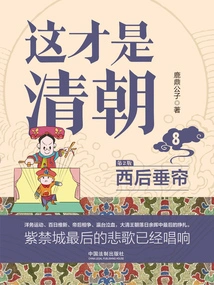
The last gasp of the Eastern dynasty under the great changes in the world, the struggle of the declining empire in the midst of devastation is lamentable. The emperor who desperately sought change, the people with lofty ideals who were not afraid of bloodshed, and the people who did not bow to the invaders jointly composed the last magnificent elegiac song in the afterglow of the feudal empire. Guangxu, who sought change alone, the "Six Gentlemen of 1898" who died generously, and Sun Yat-sen, who overthrew the imperial system, all used their own methods to save the land of China that was already riddled with holes.
The last gasp of the Eastern dynasty under the great changes in the world, the struggle of the declining empire in the midst of devastation is lamentable. The emperor who desperately sought change, the people with lofty ideals who were not afraid of bloodshed, and the people who did not bow to the invaders jointly composed the last magnificent elegiac song in the afterglow of the feudal empire. Guangxu, who sought change alone, the "Six Gentlemen of 1898" who died generously, and Sun Yat-sen, who overthrew the imperial system, all used their own methods to save the land of China that was already riddled with holes.
这才是清朝7:太平军兴(第2版)
Mr. Lu Ding
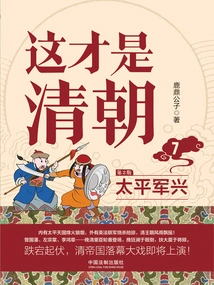
Emperor Xianfeng took over the power of the Qing Dynasty in the turmoil, and he wanted to make a difference. But unfortunately, on one side, the Taiping Rebellion gained momentum in the south, and on the other side, the British and French forces entered Beijing. This time, the invaders burned the Old Summer Palace, which was regarded as a treasure by Xianfeng. Facing the situation of internal and external troubles, Emperor Xianfeng wanted to cheer up, but he found that the harder he tried, the less effective he was, and he gradually indulged. A vigorous Taiping Rebellion pushed the Qing Empire into a precarious situation. The Taiping Rebellion swept across the Qing Dynasty with the force of a raging fire. Unfortunately, internal strife within the leadership took a turn for the worse for the Taiping Rebellion. While the Qing dynasty was not yet exhausted, important officials of the late Qing Dynasty such as Zeng Guofan, Zuo Zongtang, and Li Hongzhang took turns to appear on the scene to turn the tide before it fell and to support the building from collapse. The Qing Empire staged a splendid and ups and downs drama before it came to an end.
Emperor Xianfeng took over the power of the Qing Dynasty in the turmoil, and he wanted to make a difference. But unfortunately, on one side, the Taiping Rebellion gained momentum in the south, and on the other side, the British and French forces entered Beijing. This time, the invaders burned the Old Summer Palace, which was regarded as a treasure by Xianfeng. Facing the situation of internal and external troubles, Emperor Xianfeng wanted to cheer up, but he found that the harder he tried, the less effective he was, and he gradually indulged. A vigorous Taiping Rebellion pushed the Qing Empire into a precarious situation. The Taiping Rebellion swept across the Qing Dynasty with the force of a raging fire. Unfortunately, internal strife within the leadership took a turn for the worse for the Taiping Rebellion. While the Qing dynasty was not yet exhausted, important officials of the late Qing Dynasty such as Zeng Guofan, Zuo Zongtang, and Li Hongzhang took turns to appear on the scene to turn the tide before it fell and to support the building from collapse. The Qing Empire staged a splendid and ups and downs drama before it came to an end.
这才是清朝4:雍正王朝
Mr. Lu Ding
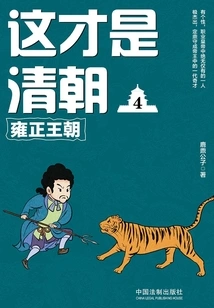
In Yongzheng, the duality is very obvious. In terms of governing the country, he was a wise emperor, especially in the area of official administration. Among the two thousand years of feudal dynasties in China, Yongzheng was one of the best. Many of his reforms pushed the rule of the Qing Dynasty to its peak, such as the establishment of the military aircraft office, the implementation of the system of sharing the land with the land, and the implementation of the system of returning waste to the public and raising honest silver... The decline of the late Kangxi period was reversed in the hands of Yongzheng, and the vitality of the Qing Dynasty also continued to rise in the hands of Yongzheng. But when it came to dealing with the opposition, Yongzheng was very cruel and had no room for mercy. His younger brother Yinqi, the Eight Kings Party, the two great heroes Nian Gengyao and Longkoduo... All fully proved this point.
In Yongzheng, the duality is very obvious. In terms of governing the country, he was a wise emperor, especially in the area of official administration. Among the two thousand years of feudal dynasties in China, Yongzheng was one of the best. Many of his reforms pushed the rule of the Qing Dynasty to its peak, such as the establishment of the military aircraft office, the implementation of the system of sharing the land with the land, and the implementation of the system of returning waste to the public and raising honest silver... The decline of the late Kangxi period was reversed in the hands of Yongzheng, and the vitality of the Qing Dynasty also continued to rise in the hands of Yongzheng. But when it came to dealing with the opposition, Yongzheng was very cruel and had no room for mercy. His younger brother Yinqi, the Eight Kings Party, the two great heroes Nian Gengyao and Longkoduo... All fully proved this point.