Library
Browse and search books
18 novels found
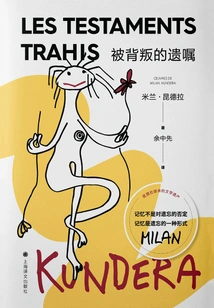
被背叛的遗嘱:米兰·昆德拉作品系列(2022版)
Milan Kundera
Kundera's literary legacy and the world beyond Kundera's novels. What the novel discovers is what is hidden in each of us. Memory is not the denial of forgetting, but a form of forgetting. "The Testament Betrayed" is divided into nine independent parts, and some of the same characters appear again and again: including Stravinsky and Kafka and their intriguing friends, Janacek and Hemingway, Rabelais and his descendants-those great novelists. This book focuses on the humorous spirit on which the novel is based, its mysterious origins with music, its three-stage historical development process, the aesthetics of modern novels, and the life intelligence of the novel. _X000b__x000b_
Kundera's literary legacy and the world beyond Kundera's novels. What the novel discovers is what is hidden in each of us. Memory is not the denial of forgetting, but a form of forgetting. "The Testament Betrayed" is divided into nine independent parts, and some of the same characters appear again and again: including Stravinsky and Kafka and their intriguing friends, Janacek and Hemingway, Rabelais and his descendants-those great novelists. This book focuses on the humorous spirit on which the novel is based, its mysterious origins with music, its three-stage historical development process, the aesthetics of modern novels, and the life intelligence of the novel. _X000b__x000b_
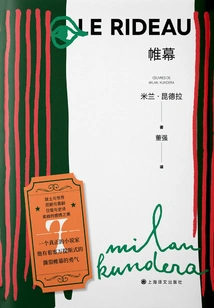
帷幕:米兰·昆德拉作品系列(2022版)
Milan Kundera
Milan Kundera's literary essays, the third of Kundera's novel theory trilogy, are the continuation of "The Testament Betrayed" and "The Art of the Novel". "Curtain" is Kundera's rectification of many concepts on novels, literature and even art. "Curtain" outlines Kundera's previous thoughts on the art of fiction, and explores the world of fiction art that is intertwined with history and life reality in a freer way. Cervantes sent Don Quixote to travel around the world, tearing apart the "curtain" woven by legends and pre-interpretations that concealed the nature of reality... Kundera summarily integrated his own life experiences, mentioning Cervantes, Rabelais, Stern, Flaubert, Musil, Joyce, and Carstens. Fka and many other his favorite novelists, interspersed with multiple texts such as "Emotional Education", "1993", "Idiot" and "As I Lay Dying", divided into "awareness of continuity", "world literature", "entering the soul of things", "what is a novelist", "aesthetics and existence" and "torn" "Curtain", "Novel, Memory, Forgetting", in seven parts, with numerous subtitles, unfolds the analysis of multiple concepts such as time, kitsch, comedy, forgetfulness, etc., Announcing that "once used in art, the concept of history has nothing to do with progress; it does not mean a kind of perfection. An improvement, an improvement; it is like a journey to explore unknown lands and mark them on the map." "The novelist is not the servant of the historian." "The novelist is not someone who only wants to please the reader." This proves the need to introduce "the non-poetic nature of life" in novels.
Milan Kundera's literary essays, the third of Kundera's novel theory trilogy, are the continuation of "The Testament Betrayed" and "The Art of the Novel". "Curtain" is Kundera's rectification of many concepts on novels, literature and even art. "Curtain" outlines Kundera's previous thoughts on the art of fiction, and explores the world of fiction art that is intertwined with history and life reality in a freer way. Cervantes sent Don Quixote to travel around the world, tearing apart the "curtain" woven by legends and pre-interpretations that concealed the nature of reality... Kundera summarily integrated his own life experiences, mentioning Cervantes, Rabelais, Stern, Flaubert, Musil, Joyce, and Carstens. Fka and many other his favorite novelists, interspersed with multiple texts such as "Emotional Education", "1993", "Idiot" and "As I Lay Dying", divided into "awareness of continuity", "world literature", "entering the soul of things", "what is a novelist", "aesthetics and existence" and "torn" "Curtain", "Novel, Memory, Forgetting", in seven parts, with numerous subtitles, unfolds the analysis of multiple concepts such as time, kitsch, comedy, forgetfulness, etc., Announcing that "once used in art, the concept of history has nothing to do with progress; it does not mean a kind of perfection. An improvement, an improvement; it is like a journey to explore unknown lands and mark them on the map." "The novelist is not the servant of the historian." "The novelist is not someone who only wants to please the reader." This proves the need to introduce "the non-poetic nature of life" in novels.
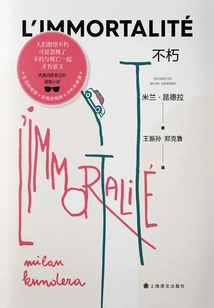
不朽:米兰·昆德拉作品系列(2022版)
Milan Kundera
"Immortality is an unworthy fantasy, an empty word, a trace of wind that people chase with butterfly nets..." A novel about road and betrayal, accident and necessity, it is a model of Kundera's musical novel. "Immortality" is Milan Kundera's masterpiece novel and a model of Kundera's musical novel art. The novel alternately tells three stories: the first story is about Agnès, a middle-aged woman living in Paris and her hometown in Switzerland, who decides to withdraw from her trivial daily life and entanglement with the past, and prepares to live alone; the second story is about the relationship between the elderly poet Goethe and his young lover Bettina; the third story is about the dissolute life of a man nicknamed Rubens. The three stories proceed alternately and connect one proposition after another: self, hometown, happiness, freedom, inevitability and contingency, big immortality and small immortality, romance and debauchery, image, youth, eternal female worship, etc.
"Immortality is an unworthy fantasy, an empty word, a trace of wind that people chase with butterfly nets..." A novel about road and betrayal, accident and necessity, it is a model of Kundera's musical novel. "Immortality" is Milan Kundera's masterpiece novel and a model of Kundera's musical novel art. The novel alternately tells three stories: the first story is about Agnès, a middle-aged woman living in Paris and her hometown in Switzerland, who decides to withdraw from her trivial daily life and entanglement with the past, and prepares to live alone; the second story is about the relationship between the elderly poet Goethe and his young lover Bettina; the third story is about the dissolute life of a man nicknamed Rubens. The three stories proceed alternately and connect one proposition after another: self, hometown, happiness, freedom, inevitability and contingency, big immortality and small immortality, romance and debauchery, image, youth, eternal female worship, etc.
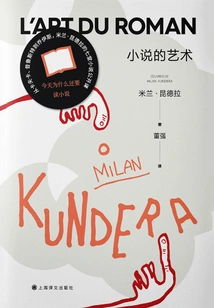
小说的艺术(米兰·昆德拉作品系列·2022版)
Milan Kundera
Where did the novel come from? Why do people like novels? How does reading novels help our lives? In this book, Milan Kundera starts from when Don Quixote leaves home, describes the changes in the novel and the spiritual comfort it brings to mankind, and then expresses the wisdom of the novel. "When humans think, God laughs." Kundera said, inspired by this motto, he likes to imagine that Rabelais heard God's laughter one day, and Europe's first great novel was born. The art of fiction came into the world as an echo of God's laughter. The wisdom of novels is different from the wisdom of philosophy. It does not come from the spirit of theory, but from the spirit of humor. "The Art of the Novel" is also a concentrated expression of the aesthetics of Kundera's novels. Through this book, we can understand the writer's artistic views, style, techniques, his attitude towards writing, his understanding of literary tradition, and his thoughts on people and the world behind this attitude. It is the best answer to the existence value of novels.
Where did the novel come from? Why do people like novels? How does reading novels help our lives? In this book, Milan Kundera starts from when Don Quixote leaves home, describes the changes in the novel and the spiritual comfort it brings to mankind, and then expresses the wisdom of the novel. "When humans think, God laughs." Kundera said, inspired by this motto, he likes to imagine that Rabelais heard God's laughter one day, and Europe's first great novel was born. The art of fiction came into the world as an echo of God's laughter. The wisdom of novels is different from the wisdom of philosophy. It does not come from the spirit of theory, but from the spirit of humor. "The Art of the Novel" is also a concentrated expression of the aesthetics of Kundera's novels. Through this book, we can understand the writer's artistic views, style, techniques, his attitude towards writing, his understanding of literary tradition, and his thoughts on people and the world behind this attitude. It is the best answer to the existence value of novels.
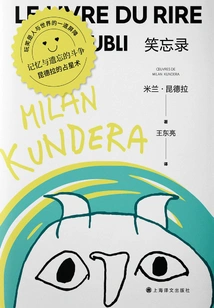
The Record of Laughter and Forgetting: a Series of Works by Milan Kundera (2022 Edition)
General Fiction笑忘录:米兰·昆德拉作品系列(2022版)
Milan Kundera
Kundera's must-read masterpiece, Kundera's masterpiece of regaining his novel ambitions, a new era of novel art, and the winner of the Lu Xun Literary Award for Literary Translation. "The Record of Laughter and Forgetting" is Milan Kundera's masterpiece novel. It is Kundera's first novel after leaving the Czech Republic and settling in France. "This is a novel about Tamina, and when Tamina is not present, it is a novel for Tamina. She is the main character and the main audience, and all other stories are variations on her own story, and they coalesce into her life as if they were present. It's the same in a mirror." Tamina is from Prague and works as a waiter in a small cafe in a city in western Europe. After her husband's death, she lives alone, quiet and peaceful, but she mobilizes her friends and devotes herself to others, trying every means to get back the eleven notepads and letters she left at her mother-in-law's house in Prague. Husband, mother, homeland... The past has become Tamina's salvation. "If the rickety building of memories collapses like an unstable tent, Tamina will only be left with the present, this invisible point, this nothingness that slowly marches towards death." Tamina wants to get back eleven notepads, Mirek wants to return the love letter from twenty-five years ago... Starting from his own situation, Kundera writes about those who try to resist forgetting and stubbornly retain memories. The content that people hope to preserve or forget is the corresponding eternal theme, just like laughter with joy and irony. "This is a novel about laughter and forgetting."
Kundera's must-read masterpiece, Kundera's masterpiece of regaining his novel ambitions, a new era of novel art, and the winner of the Lu Xun Literary Award for Literary Translation. "The Record of Laughter and Forgetting" is Milan Kundera's masterpiece novel. It is Kundera's first novel after leaving the Czech Republic and settling in France. "This is a novel about Tamina, and when Tamina is not present, it is a novel for Tamina. She is the main character and the main audience, and all other stories are variations on her own story, and they coalesce into her life as if they were present. It's the same in a mirror." Tamina is from Prague and works as a waiter in a small cafe in a city in western Europe. After her husband's death, she lives alone, quiet and peaceful, but she mobilizes her friends and devotes herself to others, trying every means to get back the eleven notepads and letters she left at her mother-in-law's house in Prague. Husband, mother, homeland... The past has become Tamina's salvation. "If the rickety building of memories collapses like an unstable tent, Tamina will only be left with the present, this invisible point, this nothingness that slowly marches towards death." Tamina wants to get back eleven notepads, Mirek wants to return the love letter from twenty-five years ago... Starting from his own situation, Kundera writes about those who try to resist forgetting and stubbornly retain memories. The content that people hope to preserve or forget is the corresponding eternal theme, just like laughter with joy and irony. "This is a novel about laughter and forgetting."
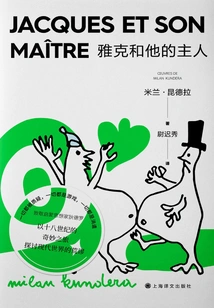
雅克和他的主人:米兰·昆德拉作品系列(2022版)
Milan Kundera
Everything is questioned, everything is a game, everything is a pastime. Kundera's masterpiece of drama pays homage to the Enlightenment thinker Diderot, exploring the absurdity of the modern world through a fantastic journey through the eighteenth century. "Jacques and His Master" is Kundera's masterpiece. The script was completed in 1971 and has been staged in Czechoslovakia, France, the United States and Australia. It is recognized as one of the masterpieces of contemporary drama. This play is adapted from the novel "Jacques the Fatalist and His Master" by French Enlightenment thinker Diderot. The story begins with the wandering experience of Jacques and his master. During the journey, the master and servant not only constantly reflected and debated on the popular social topics at the time, from religion, class to male-female relations, and moral ethics, but also told various interesting stories in a joking tone. These overwhelming themes, endless episodes, and a large number of digressions make the plot of the entire script intricate and constitute the greatest pleasure in reading the script.
Everything is questioned, everything is a game, everything is a pastime. Kundera's masterpiece of drama pays homage to the Enlightenment thinker Diderot, exploring the absurdity of the modern world through a fantastic journey through the eighteenth century. "Jacques and His Master" is Kundera's masterpiece. The script was completed in 1971 and has been staged in Czechoslovakia, France, the United States and Australia. It is recognized as one of the masterpieces of contemporary drama. This play is adapted from the novel "Jacques the Fatalist and His Master" by French Enlightenment thinker Diderot. The story begins with the wandering experience of Jacques and his master. During the journey, the master and servant not only constantly reflected and debated on the popular social topics at the time, from religion, class to male-female relations, and moral ethics, but also told various interesting stories in a joking tone. These overwhelming themes, endless episodes, and a large number of digressions make the plot of the entire script intricate and constitute the greatest pleasure in reading the script.
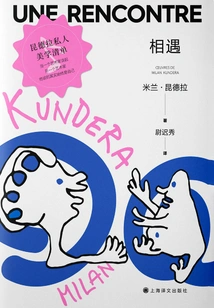
相遇:米兰·昆德拉作品系列(2022版)
Milan Kundera
When an artist talks about another artist, he is always talking about himself. Kundera's private aesthetic inventory, a map of modern literature, music, and painting. "Encounter" is Milan Kundera's fourth collection of essays after "The Art of the Novel", "The Testament Betrayed" and "Curtain". It is divided into nine parts, covering various fields such as painting, literature, music and so on. Kundera, as always, "enters and exits the realm of art", and in the book recalls the "encounter" with Francis Bacon, Fuentes, Schoenberg, Anatole France and others. It is not only an "encounter" of aesthetics, but also an "encounter" of several eras, and it is also an "encounter" of the author with his old themes and old loves.
When an artist talks about another artist, he is always talking about himself. Kundera's private aesthetic inventory, a map of modern literature, music, and painting. "Encounter" is Milan Kundera's fourth collection of essays after "The Art of the Novel", "The Testament Betrayed" and "Curtain". It is divided into nine parts, covering various fields such as painting, literature, music and so on. Kundera, as always, "enters and exits the realm of art", and in the book recalls the "encounter" with Francis Bacon, Fuentes, Schoenberg, Anatole France and others. It is not only an "encounter" of aesthetics, but also an "encounter" of several eras, and it is also an "encounter" of the author with his old themes and old loves.
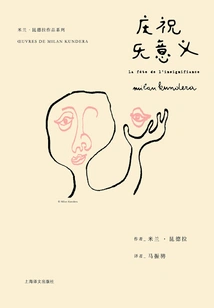
庆祝无意义:米兰·昆德拉作品系列(2013版)
Milan Kundera
"Meaninglessness, my friend, this is the essence of survival." Face meaninglessness, embrace a good mood; ask about the meaning of life, and reap the beauty of daily life. Kundera's final novel. "Celebrating Meaninglessness" is Milan Kundera's latest novel after a ten-year gap in novel writing. It is an "unexpected summary of the writer's entire work. A strange summary. A strange ending." The whole novel is like a comedy, a farce, and the Luxembourg Garden in the Latin Quarter of Paris is the stage. Four good friends, Alain, Ramon, Charles and Caliban, took turns to appear on the stage. Following their footsteps, their life stories, and their conversations in twos and threes, it led to the young girls on the streets of Paris, the Chagall painting exhibition popular among the citizens, the jokes of the twenty-four partridges, the warm characters in urgent need of urination, the mother who attempted suicide and turned to murder, the noisy cocktail party, and the fallen angels in heaven... Scenes of crazy human comedies were staged on the stage. "Celebrating the Meaningless" is short but precise, fragmented and philosophical. It is a condensed version of Kundera's novels. It satirizes various aspects of the world in a relaxed and subtle way: glamor and dirt, big people and small roles, reality and dreams, seriousness and absurdity, greatness and smallness, history and forgetfulness, life and death... Questioning of personal growth history, joking about love affairs, and exploring cultural conflicts.
"Meaninglessness, my friend, this is the essence of survival." Face meaninglessness, embrace a good mood; ask about the meaning of life, and reap the beauty of daily life. Kundera's final novel. "Celebrating Meaninglessness" is Milan Kundera's latest novel after a ten-year gap in novel writing. It is an "unexpected summary of the writer's entire work. A strange summary. A strange ending." The whole novel is like a comedy, a farce, and the Luxembourg Garden in the Latin Quarter of Paris is the stage. Four good friends, Alain, Ramon, Charles and Caliban, took turns to appear on the stage. Following their footsteps, their life stories, and their conversations in twos and threes, it led to the young girls on the streets of Paris, the Chagall painting exhibition popular among the citizens, the jokes of the twenty-four partridges, the warm characters in urgent need of urination, the mother who attempted suicide and turned to murder, the noisy cocktail party, and the fallen angels in heaven... Scenes of crazy human comedies were staged on the stage. "Celebrating the Meaningless" is short but precise, fragmented and philosophical. It is a condensed version of Kundera's novels. It satirizes various aspects of the world in a relaxed and subtle way: glamor and dirt, big people and small roles, reality and dreams, seriousness and absurdity, greatness and smallness, history and forgetfulness, life and death... Questioning of personal growth history, joking about love affairs, and exploring cultural conflicts.

Funny Love: Milan Kundera's Works Series (2022 Edition)
General Fiction好笑的爱:米兰·昆德拉作品系列(2022版)
Milan Kundera
Milan Kundera's only short story collection, welcome to this world without humor, only laughter! If love ceases to be serious, if its meaning disappears and becomes a game, will it turn into the laughter of the devil? "Funny Love" is a collection of short stories by Milan Kundera, which is known as "the starting point of Kundera's entire novel creation". In an irreverent and frivolous way, this book raises the most painful questions about the nature of life. In chapters such as "Hitchhiking Game", "No One Can Laugh", and "Edward and God", the jokes that he was willing to think about seriously began with whimsy and ended in disaster, and games and power are often the most critical central themes.
Milan Kundera's only short story collection, welcome to this world without humor, only laughter! If love ceases to be serious, if its meaning disappears and becomes a game, will it turn into the laughter of the devil? "Funny Love" is a collection of short stories by Milan Kundera, which is known as "the starting point of Kundera's entire novel creation". In an irreverent and frivolous way, this book raises the most painful questions about the nature of life. In chapters such as "Hitchhiking Game", "No One Can Laugh", and "Edward and God", the jokes that he was willing to think about seriously began with whimsy and ended in disaster, and games and power are often the most critical central themes.

Joke (milan Kundera Works Series·2022 Edition)
General Fiction玩笑(米兰·昆德拉作品系列·2022版)
Milan Kundera
Ludwik, a young student, was expelled from the party and sent to do hard labor in the mines because he wrote a few jokes on a postcard sent to a friend. While serving, he fell in love with Lucy, an honest and steady girl, and regarded her as the guide to his dark life. However, Lucy showed strong rejection and resistance to the further development of the relationship between the two, which angered Ludwick, who did not know the inside story. In the end, Ludwick slapped Lucy completely out of his life. Fifteen years later, Ludvik, who was free, returned to his hometown and met Lucy, who had become a hairdresser, but Lucy no longer recognized him. In order to retaliate against Zemanek who insisted on expelling him from the party, Ludvik designed to seduce his wife Elena, but then learned that Elena's marriage to her husband had long been in name only, which made Zemanek glad that he could divorce Elena. After knowing that Ludvik did not love her, Elena decided to commit suicide by taking poison, but accidentally took laxatives, and the story ended in a farce.
Ludwik, a young student, was expelled from the party and sent to do hard labor in the mines because he wrote a few jokes on a postcard sent to a friend. While serving, he fell in love with Lucy, an honest and steady girl, and regarded her as the guide to his dark life. However, Lucy showed strong rejection and resistance to the further development of the relationship between the two, which angered Ludwick, who did not know the inside story. In the end, Ludwick slapped Lucy completely out of his life. Fifteen years later, Ludvik, who was free, returned to his hometown and met Lucy, who had become a hairdresser, but Lucy no longer recognized him. In order to retaliate against Zemanek who insisted on expelling him from the party, Ludvik designed to seduce his wife Elena, but then learned that Elena's marriage to her husband had long been in name only, which made Zemanek glad that he could divorce Elena. After knowing that Ludvik did not love her, Elena decided to commit suicide by taking poison, but accidentally took laxatives, and the story ended in a farce.
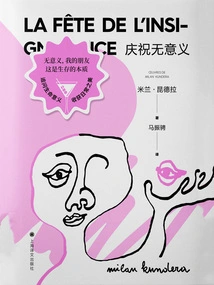
庆祝无意义:米兰·昆德拉作品系列(2022版)
Milan Kundera
"Celebrating Meaninglessness" is Milan Kundera's latest novel after a ten-year gap in novel writing. It is an "unexpected summary of the writer's entire work. A strange summary. A strange ending." The whole novel is like a comedy, a farce, and the Luxembourg Garden in the Latin Quarter of Paris is the stage. Four good friends, Alain, Ramon, Charles and Caliban, took turns to appear on the stage. Following their footsteps, their life stories, and their conversations in twos and threes, it led to the young girls on the streets of Paris, the Chagall painting exhibition popular among the citizens, the jokes of the twenty-four partridges, the warm characters in urgent need of urination, the mother who attempted suicide and turned to murder, the noisy cocktail party, and the fallen angels in heaven... Scenes of crazy human comedies were staged on the stage.
"Celebrating Meaninglessness" is Milan Kundera's latest novel after a ten-year gap in novel writing. It is an "unexpected summary of the writer's entire work. A strange summary. A strange ending." The whole novel is like a comedy, a farce, and the Luxembourg Garden in the Latin Quarter of Paris is the stage. Four good friends, Alain, Ramon, Charles and Caliban, took turns to appear on the stage. Following their footsteps, their life stories, and their conversations in twos and threes, it led to the young girls on the streets of Paris, the Chagall painting exhibition popular among the citizens, the jokes of the twenty-four partridges, the warm characters in urgent need of urination, the mother who attempted suicide and turned to murder, the noisy cocktail party, and the fallen angels in heaven... Scenes of crazy human comedies were staged on the stage.
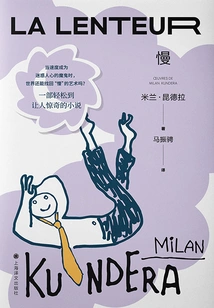
Slow (milan Kundera Works Series·2022 Edition)
General Fiction慢(米兰·昆德拉作品系列·2022版)
Milan Kundera
"Slow" is Milan Kundera's first novel written in French after immigrating to France. It perfectly integrates fiction and reality, past and present. In the novel, the author and his wife Vera go to a castle that has been converted into a hotel for the weekend. While driving on the road, a motorcycle speeds past, which arouses the author's thoughts on speed. From this, he recalled the story of the noble lady and the young knight in the novel "Tomorrow Never Comes" by the 18th century French writer Vivant Denon. Intertwined with it is the absurd night of a group of modern people: One day in the 20th century, a group of entomologists gathered at the Castle Hotel for a seminar, and staged one ridiculous farce after another. "Slowness is a sign of happiness." Compared with the heavy topics discussed in "The Unbearable Lightness of Life" and "Immortality", the theme of "Slowness" seems surprising. It is obviously the most light-hearted novel among all Kundera's works, with "not a single serious word" throughout the novel. The author himself once said: "There is not a single serious word in the work."
"Slow" is Milan Kundera's first novel written in French after immigrating to France. It perfectly integrates fiction and reality, past and present. In the novel, the author and his wife Vera go to a castle that has been converted into a hotel for the weekend. While driving on the road, a motorcycle speeds past, which arouses the author's thoughts on speed. From this, he recalled the story of the noble lady and the young knight in the novel "Tomorrow Never Comes" by the 18th century French writer Vivant Denon. Intertwined with it is the absurd night of a group of modern people: One day in the 20th century, a group of entomologists gathered at the Castle Hotel for a seminar, and staged one ridiculous farce after another. "Slowness is a sign of happiness." Compared with the heavy topics discussed in "The Unbearable Lightness of Life" and "Immortality", the theme of "Slowness" seems surprising. It is obviously the most light-hearted novel among all Kundera's works, with "not a single serious word" throughout the novel. The author himself once said: "There is not a single serious word in the work."
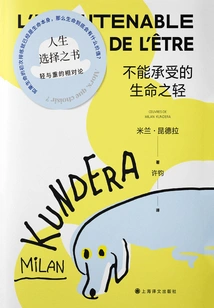
不能承受的生命之轻(米兰·昆德拉作品系列·2022版)
Milan Kundera
"The Unbearable Lightness of Being" is Milan Kundera's masterpiece novel and a world-renowned super best-seller. The novel relies on the historical changes in Czechoslovakia in the 1960s and uses the accidental and fateful love of Thomas and Theresa as the main line to unfold the story. It not only describes the emotional entanglements of several couples, but also not only writes about personal lives. The ups and downs of fate in the changing circumstances and the choices of individuals in moments of change are a philosophical novel with rich layers and complex images. It starts with the mysterious question of the weight of human life under the delirium of eternal reincarnation. As the characters' life trends and thoughts in the book are constantly interspersed, the theory of relativity between the lightness and weight of life, and the soul and body is put forward.
"The Unbearable Lightness of Being" is Milan Kundera's masterpiece novel and a world-renowned super best-seller. The novel relies on the historical changes in Czechoslovakia in the 1960s and uses the accidental and fateful love of Thomas and Theresa as the main line to unfold the story. It not only describes the emotional entanglements of several couples, but also not only writes about personal lives. The ups and downs of fate in the changing circumstances and the choices of individuals in moments of change are a philosophical novel with rich layers and complex images. It starts with the mysterious question of the weight of human life under the delirium of eternal reincarnation. As the characters' life trends and thoughts in the book are constantly interspersed, the theory of relativity between the lightness and weight of life, and the soul and body is put forward.
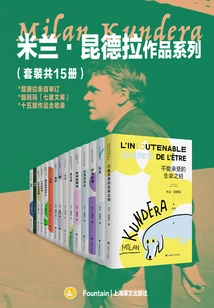
米兰·昆德拉作品系列(套装共15册)
Milan Kundera
Become a God While You're Alive, it includes all fifteen works of Kundera selected into Gallimard's "Seven Star Library", all articles were personally reviewed by the writer himself, a world-class literary icon who broke through the political blockade, and a timeless black period drama. A summary of Kundera's life-long creative career, including nine novels, a collection of short stories, four collections of essays and a play, jointly recommended by celebrities such as Mo Yan, Chen Zhongshi, Wang Xiaobo, Yu Qiuyu, Liang Wendao, Liang Yong'an, Zhou Guoping, Li Dan and others! "Collection of Milan Kundera's Works (set of 15 volumes in total)" includes nine novels ("Joke", "Living Elsewhere", "Farewell Waltz", "The Record of Laughter and Forgetting", "The Unbearable Lightness of Being", "Immortality", "Slow", "Identity" and "Ignorance"), one short story ("Funny Love"), With four collections of essays ("The Art of the Novel", "The Betrayed Testament", "Curtain" and "Encounter") and one play ("Jacques and His Master"), as the only living great writer selected into the "Seven Star Library", Milan Kundera has entered the "Panthéon" of world literary history in an absolutely classic manner.
Become a God While You're Alive, it includes all fifteen works of Kundera selected into Gallimard's "Seven Star Library", all articles were personally reviewed by the writer himself, a world-class literary icon who broke through the political blockade, and a timeless black period drama. A summary of Kundera's life-long creative career, including nine novels, a collection of short stories, four collections of essays and a play, jointly recommended by celebrities such as Mo Yan, Chen Zhongshi, Wang Xiaobo, Yu Qiuyu, Liang Wendao, Liang Yong'an, Zhou Guoping, Li Dan and others! "Collection of Milan Kundera's Works (set of 15 volumes in total)" includes nine novels ("Joke", "Living Elsewhere", "Farewell Waltz", "The Record of Laughter and Forgetting", "The Unbearable Lightness of Being", "Immortality", "Slow", "Identity" and "Ignorance"), one short story ("Funny Love"), With four collections of essays ("The Art of the Novel", "The Betrayed Testament", "Curtain" and "Encounter") and one play ("Jacques and His Master"), as the only living great writer selected into the "Seven Star Library", Milan Kundera has entered the "Panthéon" of world literary history in an absolutely classic manner.

Living Elsewhere: the Works of Milan Kundera (2022 Edition)
General Fiction生活在别处:米兰·昆德拉作品系列(2022版)
Milan Kundera
Milan Kundera's masterpiece novel, read Milan Kundera's Book of Youth. A book about pursuing dreams, written for every young person who yearns for beauty and sublimity in mediocrity; a journey of self-pursuit: If we cannot change the world, at least we should change our own lives and live freely. "Living Elsewhere" is Milan Kundera's masterpiece novel and won the Medici Award. "Life is elsewhere" is a famous saying by the French poet Rimbaud. In the eyes of a young man full of longing, the real life is not around him, but always somewhere else. The protagonist of this book, Jaromil, is one of them. He grew up in the meticulous care of his mother. He is sensitive, weak, and shy. His mother takes care of everything about him and always treats him as a child. For him, only by breaking away from his mother's control can he truly have his own life. "Living somewhere else" became his creed growing up.
Milan Kundera's masterpiece novel, read Milan Kundera's Book of Youth. A book about pursuing dreams, written for every young person who yearns for beauty and sublimity in mediocrity; a journey of self-pursuit: If we cannot change the world, at least we should change our own lives and live freely. "Living Elsewhere" is Milan Kundera's masterpiece novel and won the Medici Award. "Life is elsewhere" is a famous saying by the French poet Rimbaud. In the eyes of a young man full of longing, the real life is not around him, but always somewhere else. The protagonist of this book, Jaromil, is one of them. He grew up in the meticulous care of his mother. He is sensitive, weak, and shy. His mother takes care of everything about him and always treats him as a child. For him, only by breaking away from his mother's control can he truly have his own life. "Living somewhere else" became his creed growing up.
Farewell Waltz: Milan Kundera Works Series (2022 Edition)
General Fiction告别圆舞曲:米兰·昆德拉作品系列(2022版)
Milan Kundera
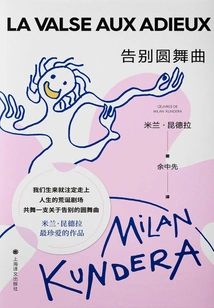
Milan Kundera's most cherished novel, Five Days, Eight People, is a variation on a black love game, the ultimate questioning about the value of human existence, and an endless exploration of the value of human existence. "Farewell Waltz" is Milan Kundera's important novel masterpiece. It was completed in Bohemia between 1969 and 1970. It won the Italian Best Foreign Literature Award. This work is cleverly conceived and full of black humor, and is recognized as a masterpiece of contemporary literature. The novel takes the Soviet Union's invasion of Prague as the political background. Through the twists and turns of eight characters, including a cheating trumpeter, an American businessman, a doctor, a sanatorium nurse, and a released prisoner, the novel deeply explores many complex and contradictory dilemmas and problems in life at a philosophical level, and provides insight into the lives and moods of Czech intellectuals at a specific historical stage. The work adopts the "montage" technique of the movie, and the psychological description of the characters is meticulous, and sometimes reveals "Kundera-style" irony, revealing a rich tragic atmosphere in the seemingly relaxed atmosphere.
Milan Kundera's most cherished novel, Five Days, Eight People, is a variation on a black love game, the ultimate questioning about the value of human existence, and an endless exploration of the value of human existence. "Farewell Waltz" is Milan Kundera's important novel masterpiece. It was completed in Bohemia between 1969 and 1970. It won the Italian Best Foreign Literature Award. This work is cleverly conceived and full of black humor, and is recognized as a masterpiece of contemporary literature. The novel takes the Soviet Union's invasion of Prague as the political background. Through the twists and turns of eight characters, including a cheating trumpeter, an American businessman, a doctor, a sanatorium nurse, and a released prisoner, the novel deeply explores many complex and contradictory dilemmas and problems in life at a philosophical level, and provides insight into the lives and moods of Czech intellectuals at a specific historical stage. The work adopts the "montage" technique of the movie, and the psychological description of the characters is meticulous, and sometimes reveals "Kundera-style" irony, revealing a rich tragic atmosphere in the seemingly relaxed atmosphere.
Ignorance (milan Kundera Works Series·2022 Edition)
General Fiction无知(米兰·昆德拉作品系列·2022版)
Milan Kundera
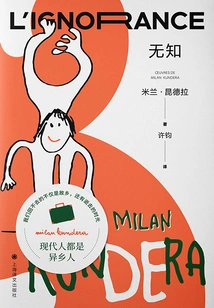
"Ignorance" is the last book in what is called the "Forgetting Trilogy" in the French reading circle (the first two are "Slowness" and "Identity"). The themes of Milan Kundera's early works were often inseparable from the two themes of politics and sex. However, in his later works, the political themes gradually faded and the philosophical tendency became more obvious. "Ignorance" tells the story of a Czech exiled in the West who returned to his hometown to find his roots, but experienced confusion, disappointment and the process of finding himself amidst the huge gap in reality. The novel tells the story of a heroine who has been in exile for twenty years and returns to her native Czech Republic. On her way back, she encounters an old acquaintance at the Paris airport. However, things are different now. It is always difficult to continue the interrupted story and it is always difficult to make a solid return. This is a Ulysses-like story: many themes such as motherland, nostalgia, love, self, aging, reality, etc. Are intertwined. Kundera once again demonstrates his calm and melancholy narrative ability between light and heavy.
"Ignorance" is the last book in what is called the "Forgetting Trilogy" in the French reading circle (the first two are "Slowness" and "Identity"). The themes of Milan Kundera's early works were often inseparable from the two themes of politics and sex. However, in his later works, the political themes gradually faded and the philosophical tendency became more obvious. "Ignorance" tells the story of a Czech exiled in the West who returned to his hometown to find his roots, but experienced confusion, disappointment and the process of finding himself amidst the huge gap in reality. The novel tells the story of a heroine who has been in exile for twenty years and returns to her native Czech Republic. On her way back, she encounters an old acquaintance at the Paris airport. However, things are different now. It is always difficult to continue the interrupted story and it is always difficult to make a solid return. This is a Ulysses-like story: many themes such as motherland, nostalgia, love, self, aging, reality, etc. Are intertwined. Kundera once again demonstrates his calm and melancholy narrative ability between light and heavy.
Identity: Milan Kundera Works Series (2022 Edition)
General Fiction身份:米兰·昆德拉作品系列(2022版)
Milan Kundera
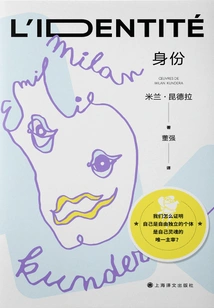
One of Kundera's "Forgetting Trilogy" and the official opening work of "The French Cycle". Identity is fragile, and love is even more unbearably fragile, but this is also the infinite power of love. How can we prove that we are a free and independent individual and the sole master of our soul? In a small seaside town in Normandy, France, Chantal found that men no longer looked back at her, and she told her boyfriend Jean-Marc gloomily. When Jean-Marc was looking for Chantal on the beach, he thought he had found her, but found that the person who turned around was a strange, aging face. After that, Chantal frequently received anonymous love letters, which she hid secretly and secretly observed who wrote these letters. This matter became a knot in her heart... Milan Kundera launched a series of discussions around the issue of "identity" in this book, exploring the issue of the unfamiliar self. Along the path of self-doubt, he carefully reached the depths of consciousness, conducted self-observation and questioning, and gradually extended in the meditative rhythm of the melody, gradually approaching the core of the question - "love" and "who".
One of Kundera's "Forgetting Trilogy" and the official opening work of "The French Cycle". Identity is fragile, and love is even more unbearably fragile, but this is also the infinite power of love. How can we prove that we are a free and independent individual and the sole master of our soul? In a small seaside town in Normandy, France, Chantal found that men no longer looked back at her, and she told her boyfriend Jean-Marc gloomily. When Jean-Marc was looking for Chantal on the beach, he thought he had found her, but found that the person who turned around was a strange, aging face. After that, Chantal frequently received anonymous love letters, which she hid secretly and secretly observed who wrote these letters. This matter became a knot in her heart... Milan Kundera launched a series of discussions around the issue of "identity" in this book, exploring the issue of the unfamiliar self. Along the path of self-doubt, he carefully reached the depths of consciousness, conducted self-observation and questioning, and gradually extended in the meditative rhythm of the melody, gradually approaching the core of the question - "love" and "who".