Library
Browse and search books
3 novels found
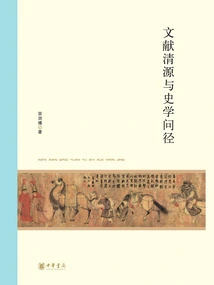
文献清源与史学问径
Miao Runbo
There is a natural blood connection between the authenticity of documents and the pioneering and innovative history. Each document system and the origin and context of different text levels may involve the complex evolution of historical narratives, revealing a diverse and rich historical picture; the through-view and in-depth thinking contained in philology are also an important basis for historical research to transcend epochal barriers and achieve overall care. The author of this book carefully studied the historical records of the Song and Yuan Dynasties and the Siku documents, starting from historical philology, based on empirical evidence, and striving for new knowledge. This collection of 24 recent works uses solid case studies and broad interpretations to consistently explore the paths and methods from literature to history, and explore new paradigms of historical research. This book can also be regarded as a development history for young scholars. The "Preface" and the last five chapters of the book ("Supplementary Notes on the History of Liao" and the Tradition of Historical Notes" to "Digression on "Exploring the Sources of Liao History")" systematically elaborate on the method of "from documents to historiography" based on the author's personal practice, which will surely inspire and resonate with the introductory study of history, philology and other fields.
There is a natural blood connection between the authenticity of documents and the pioneering and innovative history. Each document system and the origin and context of different text levels may involve the complex evolution of historical narratives, revealing a diverse and rich historical picture; the through-view and in-depth thinking contained in philology are also an important basis for historical research to transcend epochal barriers and achieve overall care. The author of this book carefully studied the historical records of the Song and Yuan Dynasties and the Siku documents, starting from historical philology, based on empirical evidence, and striving for new knowledge. This collection of 24 recent works uses solid case studies and broad interpretations to consistently explore the paths and methods from literature to history, and explore new paradigms of historical research. This book can also be regarded as a development history for young scholars. The "Preface" and the last five chapters of the book ("Supplementary Notes on the History of Liao" and the Tradition of Historical Notes" to "Digression on "Exploring the Sources of Liao History")" systematically elaborate on the method of "from documents to historiography" based on the author's personal practice, which will surely inspire and resonate with the introductory study of history, philology and other fields.
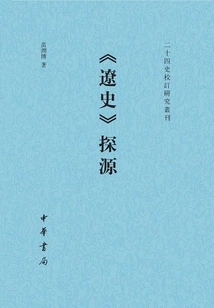
《辽史》探源:二十四史校订研究丛刊
Miao Runbo
Yuanxiu's "History of Liao" is the most basic and important document for studying the history of the Liao Dynasty. It alone formed the main cognitive framework of the history of the Khitan Dynasty in today's academic circles. However, the academic circles' discussion of the source of historical materials and the compilation process of Yuanxiu's "History of Liao" is quite weak. In order to thoroughly clarify the historical origin of the "History of Liao" revised by the Yuan Dynasty, this book first makes an overall discussion of the textual sources of each part of the "History of Liao", and then divides special chapters to examine the parts of "History of Liao" that have more factors compiled by historians in the Yuan Dynasty, including "Emperor Tianzuo Chronicle", "Yingwei Zhi", "Bingwei Zhi", "Geography", "Rites", "Le Zhi", "Yiwei Zhi", "Food and Goods" and "Deeds of the Western Liao". This book systematically studies the text sources, generation process, existing problems and historical material value of each part of the "History of Liao" revised by Yuan Dynasty, presents the life course of "History of Liao" itself, and isolates the narrative framework compiled and constructed by Yuan Dynasty historians. At the same time, this book places "History of Liao" in the context of the generation and evolution of ancient Chinese official history texts, highlights its universal and particular significance, makes methodological reflections on traditional historical source studies, and explores possible paths of text criticism from the perspective of history.
Yuanxiu's "History of Liao" is the most basic and important document for studying the history of the Liao Dynasty. It alone formed the main cognitive framework of the history of the Khitan Dynasty in today's academic circles. However, the academic circles' discussion of the source of historical materials and the compilation process of Yuanxiu's "History of Liao" is quite weak. In order to thoroughly clarify the historical origin of the "History of Liao" revised by the Yuan Dynasty, this book first makes an overall discussion of the textual sources of each part of the "History of Liao", and then divides special chapters to examine the parts of "History of Liao" that have more factors compiled by historians in the Yuan Dynasty, including "Emperor Tianzuo Chronicle", "Yingwei Zhi", "Bingwei Zhi", "Geography", "Rites", "Le Zhi", "Yiwei Zhi", "Food and Goods" and "Deeds of the Western Liao". This book systematically studies the text sources, generation process, existing problems and historical material value of each part of the "History of Liao" revised by Yuan Dynasty, presents the life course of "History of Liao" itself, and isolates the narrative framework compiled and constructed by Yuan Dynasty historians. At the same time, this book places "History of Liao" in the context of the generation and evolution of ancient Chinese official history texts, highlights its universal and particular significance, makes methodological reflections on traditional historical source studies, and explores possible paths of text criticism from the perspective of history.
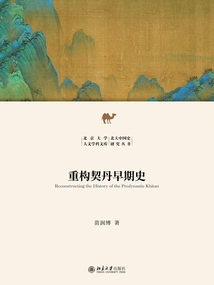
重构契丹早期史
Miao Runbo
This book aims to re-understand the early Khitan historical materials through review and criticism of the early Khitan historical materials from three levels: micro (historical factual research), meso (research methods), and macro (overall understanding); and based on this and starting point, it goes deep into the Khitan\u002F Liao itself, especially the shaping of Khitan historical memory by its ruling group, the Abaoji family, and then attempts to restore and explore the pre-history of the founding of the Khitan to a certain extent. The book is divided into two parts. The first part is textual criticism, and the second part is reconstruction of historical facts. The conclusion part takes the early history of Khitan as an example to discuss its typical significance in historical research. The appendix at the end of the book summarizes the updated issues and paradigm shifts in the study of early Khitan history over the past century.
This book aims to re-understand the early Khitan historical materials through review and criticism of the early Khitan historical materials from three levels: micro (historical factual research), meso (research methods), and macro (overall understanding); and based on this and starting point, it goes deep into the Khitan\u002F Liao itself, especially the shaping of Khitan historical memory by its ruling group, the Abaoji family, and then attempts to restore and explore the pre-history of the founding of the Khitan to a certain extent. The book is divided into two parts. The first part is textual criticism, and the second part is reconstruction of historical facts. The conclusion part takes the early history of Khitan as an example to discuss its typical significance in historical research. The appendix at the end of the book summarizes the updated issues and paradigm shifts in the study of early Khitan history over the past century.