Library
Browse and search books
2 novels found
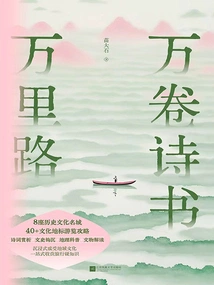
万卷诗书万里路
Miao Dashi
Say no to ineffective and superficial tourism! 8 Famous historical and cultural cities, 40+ cultural landmark tour guides, 100+ exquisite illustrations, poetry appreciation + literary and historical hooks + geographical science popularization + interpretation of cultural relics. Immerse yourself in regional culture and gain hard travel knowledge in one stop.
Say no to ineffective and superficial tourism! 8 Famous historical and cultural cities, 40+ cultural landmark tour guides, 100+ exquisite illustrations, poetry appreciation + literary and historical hooks + geographical science popularization + interpretation of cultural relics. Immerse yourself in regional culture and gain hard travel knowledge in one stop.
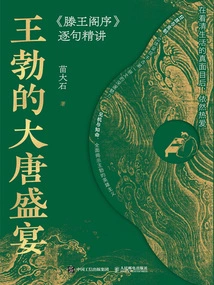
王勃的大唐盛宴:《滕王阁序》逐句精讲
Miao Dashi
Wang Bo's "Preface to Prince Teng's Pavilion" is known as "the first parallel prose of all time" and has a profound influence on later literary creation. The author conducts a detailed interpretation of "Preface to Prince Teng's Pavilion" at three levels. The first level is the interpretation of the literal meaning; the second level is the discussion of the historical background and the textual research of various allusions; the third level is the interpretation of the ancient cultural common sense and classical Chinese knowledge involved in the article. From this, readers can not only understand the multi-layered meanings of "Preface to Prince Teng's Pavilion" three-dimensionally, but also draw inferences from one instance and master the general methods and principles of classical Chinese reading. Wang Bo's outlook on life and philosophy expressed in the article will also bring profound inspiration to readers. This book is an appreciation reading for traditional culture lovers learning classical Chinese. It can also help primary and middle school students master the common sense and reading methods of classical Chinese.
Wang Bo's "Preface to Prince Teng's Pavilion" is known as "the first parallel prose of all time" and has a profound influence on later literary creation. The author conducts a detailed interpretation of "Preface to Prince Teng's Pavilion" at three levels. The first level is the interpretation of the literal meaning; the second level is the discussion of the historical background and the textual research of various allusions; the third level is the interpretation of the ancient cultural common sense and classical Chinese knowledge involved in the article. From this, readers can not only understand the multi-layered meanings of "Preface to Prince Teng's Pavilion" three-dimensionally, but also draw inferences from one instance and master the general methods and principles of classical Chinese reading. Wang Bo's outlook on life and philosophy expressed in the article will also bring profound inspiration to readers. This book is an appreciation reading for traditional culture lovers learning classical Chinese. It can also help primary and middle school students master the common sense and reading methods of classical Chinese.