Library
Browse and search books
8 novels found
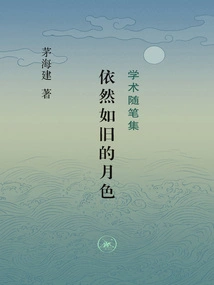
依然如旧的月色(学术随笔集)
Mao Haijian
This book was first published in 2014. It is compiled from several types of articles, of any length, and is relatively easy to read. Some chapters of the updated edition have been adjusted, with some additions and some deletions. As one of the few collections of academic essays by Professor Mao Haijian, we can see a true portrayal of his inner activities and an expression of the historian's temperament. "The moonlight is still the same as before" is the author's determination and persistence in the academic path he established back then. Among them is a group of articles focusing on the cultural life history of the late Qing Dynasty, which can be regarded as small topics created by the author using leftover materials from reading massive archives. For example, on "Huxiang Culture"; on Gong Zizhen; on the Empress Dowager Cixi, Emperor Guangxu, Regent Zaifeng and other late Qing emperors' textbooks; on reading the gift lists and tributes found in the archives of Zhang Zhidong, Prince Chun's Mansion, Li Hongzao, etc., And sorting out the changes in the upper class society in the late Qing Dynasty from the gift-giving activities of high-ranking officials, which is solid, detailed and interesting.
This book was first published in 2014. It is compiled from several types of articles, of any length, and is relatively easy to read. Some chapters of the updated edition have been adjusted, with some additions and some deletions. As one of the few collections of academic essays by Professor Mao Haijian, we can see a true portrayal of his inner activities and an expression of the historian's temperament. "The moonlight is still the same as before" is the author's determination and persistence in the academic path he established back then. Among them is a group of articles focusing on the cultural life history of the late Qing Dynasty, which can be regarded as small topics created by the author using leftover materials from reading massive archives. For example, on "Huxiang Culture"; on Gong Zizhen; on the Empress Dowager Cixi, Emperor Guangxu, Regent Zaifeng and other late Qing emperors' textbooks; on reading the gift lists and tributes found in the archives of Zhang Zhidong, Prince Chun's Mansion, Li Hongzao, etc., And sorting out the changes in the upper class society in the late Qing Dynasty from the gift-giving activities of high-ranking officials, which is solid, detailed and interesting.
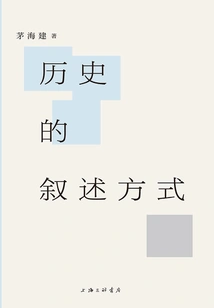
Historical Narration
History历史的叙述方式
Mao Haijian
This book is a collection of Professor Mao Haijian's academic essays and speeches in recent years. It is roughly divided into four parts, including travel notes (Siberian Railway, Zhangku Avenue, Lake Baikal, Manzhouli, Vietnam) combined with historical observation and thinking, modern Sino-foreign exchanges and relations The key moments and changes in the relationship (the Macartney Mission, the Sino-Japanese game after the Sino-Japanese War, the role of Macau during the Qianlong period), the ambiguity of Kang Youwei's thoughts, reflections on the ideological revolution of the late Qing Dynasty and the Revolution of 1911, reflections on historical research and recalling old friends and stories, etc. Accompanying the camel bells from Zhangjiakou to Kulun, traveling along the Trans-Siberian Railway, on-site exploration makes the charm of history more full. From Macartney and Xie Qinggao to Liu Xuexun and Qingkuan, the Qing envoys to Japan, why has time not smoothed the gap between knowledge and cognition? From the Sino-Japanese War to the Russo-Japanese War, China, Japan, and Russia competed for interests and power in Northeast Asia without interruption. What was the main line of the subsequent World War II and the Korean War? History is not far behind. The ideological revolution and changes in the late Qing Dynasty did not happen overnight. In addition to the radical reformers and the opposition new scholars, there were other promoters. One hundred years after the Revolution of 1911, we must put aside historical stereotypes and understand the causes and consequences of the Revolution of 1911, the rise and fall of various forces in the revolution, the differences between ideas and reality, and the wanderings of history. What kind of reflection should be done? The memory of teachers, the expectations for students, the memories of life-long friendships, and the support of fellow students are all about thinking that lasts longer than life.
This book is a collection of Professor Mao Haijian's academic essays and speeches in recent years. It is roughly divided into four parts, including travel notes (Siberian Railway, Zhangku Avenue, Lake Baikal, Manzhouli, Vietnam) combined with historical observation and thinking, modern Sino-foreign exchanges and relations The key moments and changes in the relationship (the Macartney Mission, the Sino-Japanese game after the Sino-Japanese War, the role of Macau during the Qianlong period), the ambiguity of Kang Youwei's thoughts, reflections on the ideological revolution of the late Qing Dynasty and the Revolution of 1911, reflections on historical research and recalling old friends and stories, etc. Accompanying the camel bells from Zhangjiakou to Kulun, traveling along the Trans-Siberian Railway, on-site exploration makes the charm of history more full. From Macartney and Xie Qinggao to Liu Xuexun and Qingkuan, the Qing envoys to Japan, why has time not smoothed the gap between knowledge and cognition? From the Sino-Japanese War to the Russo-Japanese War, China, Japan, and Russia competed for interests and power in Northeast Asia without interruption. What was the main line of the subsequent World War II and the Korean War? History is not far behind. The ideological revolution and changes in the late Qing Dynasty did not happen overnight. In addition to the radical reformers and the opposition new scholars, there were other promoters. One hundred years after the Revolution of 1911, we must put aside historical stereotypes and understand the causes and consequences of the Revolution of 1911, the rise and fall of various forces in the revolution, the differences between ideas and reality, and the wanderings of history. What kind of reflection should be done? The memory of teachers, the expectations for students, the memories of life-long friendships, and the support of fellow students are all about thinking that lasts longer than life.
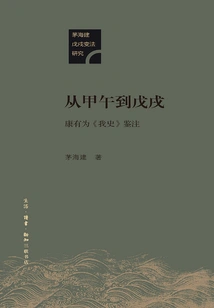
从甲午到戊戌:康有为《我史》鉴注
Mao Haijian
To study the Reform Movement of 1898, Kang Youwei's autobiography "My History" is a must-read book. Kang Youwei's "My History" was not published during his lifetime. In the 1950s, it was renamed "Kang Nanhai's Self-Compiled Chronicle" and published. As a first-hand material, it has a high citation rate; however, it has been pointed out that many lies have been made since the 1970s. As a result, today's academic community is trapped in a situation where those who know it dare not use it, and those who don't know it still use it casually. This book is the author's in-depth compilation and research of "My History"; the ultimate goal is to determine historical facts and lies, so that readers can use this most important and commonly used document with confidence.
To study the Reform Movement of 1898, Kang Youwei's autobiography "My History" is a must-read book. Kang Youwei's "My History" was not published during his lifetime. In the 1950s, it was renamed "Kang Nanhai's Self-Compiled Chronicle" and published. As a first-hand material, it has a high citation rate; however, it has been pointed out that many lies have been made since the 1970s. As a result, today's academic community is trapped in a situation where those who know it dare not use it, and those who don't know it still use it casually. This book is the author's in-depth compilation and research of "My History"; the ultimate goal is to determine historical facts and lies, so that readers can use this most important and commonly used document with confidence.
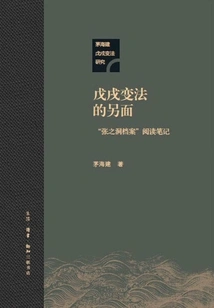
戊戌变法的另面:“张之洞档案”阅读笔记
Mao Haijian
From the systematic reading of the "Zhang Zhidong Archives", the author has prominently felt that this batch of historical materials provides modern people with a new perspective on observing the Reform Movement of 1898: Zhang Zhidong and Chen Baozhen's group were one of the political factions within the Qing government at that time, and they were also groups advocating reform. From the "archives", it can be seen that Zhang Zhidong's group and major political figures held a repulsive and even hostile attitude towards Kang and Liang. It seems that we can understand many aspects of the whole process of the reform in a multi-dimensional way, and can roughly speculate on the political prospects of Kang and Liang's faction. Previous research on the Reform Movement of 1898 often centered on the claims of Kang and Liang, but the materials in the "Archives" from outside Kang and Liang allow researchers to view this reform movement from a standpoint other than Kang and Liang. This batch of "archival" materials is large in quantity and highly accurate. Many of them were high-level secrets at the time. They can refine historical details that were vague in the past, especially some key content at critical moments in history.
From the systematic reading of the "Zhang Zhidong Archives", the author has prominently felt that this batch of historical materials provides modern people with a new perspective on observing the Reform Movement of 1898: Zhang Zhidong and Chen Baozhen's group were one of the political factions within the Qing government at that time, and they were also groups advocating reform. From the "archives", it can be seen that Zhang Zhidong's group and major political figures held a repulsive and even hostile attitude towards Kang and Liang. It seems that we can understand many aspects of the whole process of the reform in a multi-dimensional way, and can roughly speculate on the political prospects of Kang and Liang's faction. Previous research on the Reform Movement of 1898 often centered on the claims of Kang and Liang, but the materials in the "Archives" from outside Kang and Liang allow researchers to view this reform movement from a standpoint other than Kang and Liang. This batch of "archival" materials is large in quantity and highly accurate. Many of them were high-level secrets at the time. They can refine historical details that were vague in the past, especially some key content at critical moments in history.
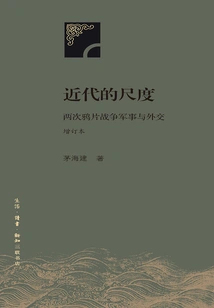
近代的尺度:两次鸦片战争军事与外交
Mao Haijian
The two Opium Wars were actually a turning point in Chinese history, as a traditional country entered the modern world. The author thus examines the military aspects of the two Opium Wars: the Qing Dynasty's military expenditure, troop strength, equipment, and training levels, in order to reveal the old appearance of the "Chinese Dynasty" in front of the new enemies in the West; the author examines the diplomacy in the two Opium Wars: the entry into the city of Guangzhou, Xili's audience, the ambassador's stationing in Beijing, and Ye Mingchen's diplomatic thoughts, to illustrate " Diplomatic misconduct under the concept of "Chinese Dynasty"; examines several important battle cases in the two Opium Wars: the Battle of Humen, the Battle of Wusong, the Battle of Eastern Zhejiang, and the Three Battles of Dagu, to calculate the actual distance measured by modern standards, and to illustrate the various pains of inconsistency in traditional countries in the process of adapting to the international society. This book and "The Collapse of the Celestial Empire" form a companion volume. They were first published in the mid-to-late 1990s. They are also the author's representative works in modern history research.
The two Opium Wars were actually a turning point in Chinese history, as a traditional country entered the modern world. The author thus examines the military aspects of the two Opium Wars: the Qing Dynasty's military expenditure, troop strength, equipment, and training levels, in order to reveal the old appearance of the "Chinese Dynasty" in front of the new enemies in the West; the author examines the diplomacy in the two Opium Wars: the entry into the city of Guangzhou, Xili's audience, the ambassador's stationing in Beijing, and Ye Mingchen's diplomatic thoughts, to illustrate " Diplomatic misconduct under the concept of "Chinese Dynasty"; examines several important battle cases in the two Opium Wars: the Battle of Humen, the Battle of Wusong, the Battle of Eastern Zhejiang, and the Three Battles of Dagu, to calculate the actual distance measured by modern standards, and to illustrate the various pains of inconsistency in traditional countries in the process of adapting to the international society. This book and "The Collapse of the Celestial Empire" form a companion volume. They were first published in the mid-to-late 1990s. They are also the author's representative works in modern history research.
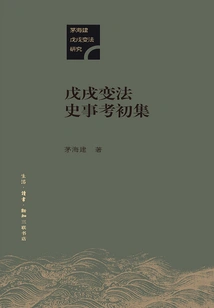
戊戌变法史事考初集
Mao Haijian
The Reform Movement of 1898 is a major event in Chinese history, and there have been many related studies. The research in this book is still refreshing: the disclosure of a large number of archival materials. The sources include the First Historical Archives of China in Beijing, the Diplomatic Archives of the Ministry of Foreign Affairs of Japan in Tokyo, the Archives of the Institute of Modern History of Academia Sinica in Taipei, and the Documentation Department of the National Palace Museum. Careful research on major historical facts and detailed descriptions of important scenes: the time, process and original story of the 1898 Coup; the suggestions of middle- and lower-level officials and the public on the reform; Zhang Zhidong's transfer to the capital to preside over the government and the missed opportunities; Emperor Guangxu's foreign concepts; the Japanese government's observations and reactions. The author devoted five and a half years to the recognition, correction and revision of the old theory, and the development, demonstration and establishment of the new theory.
The Reform Movement of 1898 is a major event in Chinese history, and there have been many related studies. The research in this book is still refreshing: the disclosure of a large number of archival materials. The sources include the First Historical Archives of China in Beijing, the Diplomatic Archives of the Ministry of Foreign Affairs of Japan in Tokyo, the Archives of the Institute of Modern History of Academia Sinica in Taipei, and the Documentation Department of the National Palace Museum. Careful research on major historical facts and detailed descriptions of important scenes: the time, process and original story of the 1898 Coup; the suggestions of middle- and lower-level officials and the public on the reform; Zhang Zhidong's transfer to the capital to preside over the government and the missed opportunities; Emperor Guangxu's foreign concepts; the Japanese government's observations and reactions. The author devoted five and a half years to the recognition, correction and revision of the old theory, and the development, demonstration and establishment of the new theory.
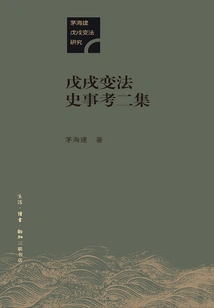
戊戌变法史事考二集
Mao Haijian
The Reform Movement of 1898 is a major event in Chinese history, and there have been many related studies. The research in this book is still refreshing: the disclosure of a large number of archival materials. The sources include the First Historical Archives of China in Beijing, the Diplomatic Archives of the Ministry of Foreign Affairs of Japan in Tokyo, the Archives of the Institute of Modern History of Academia Sinica in Taipei, and the Documentation Department of the National Palace Museum. Careful research on major historical facts and detailed descriptions of important scenes: the time, process and original story of the 1898 Coup; the suggestions of middle- and lower-level officials and the public on the reform; Zhang Zhidong's transfer to the capital to preside over the government and the missed opportunities; Emperor Guangxu's foreign concepts; the Japanese government's observations and reactions. The author devoted five and a half years to the recognition, correction and revision of the old theory, and the development, demonstration and establishment of the new theory.
The Reform Movement of 1898 is a major event in Chinese history, and there have been many related studies. The research in this book is still refreshing: the disclosure of a large number of archival materials. The sources include the First Historical Archives of China in Beijing, the Diplomatic Archives of the Ministry of Foreign Affairs of Japan in Tokyo, the Archives of the Institute of Modern History of Academia Sinica in Taipei, and the Documentation Department of the National Palace Museum. Careful research on major historical facts and detailed descriptions of important scenes: the time, process and original story of the 1898 Coup; the suggestions of middle- and lower-level officials and the public on the reform; Zhang Zhidong's transfer to the capital to preside over the government and the missed opportunities; Emperor Guangxu's foreign concepts; the Japanese government's observations and reactions. The author devoted five and a half years to the recognition, correction and revision of the old theory, and the development, demonstration and establishment of the new theory.
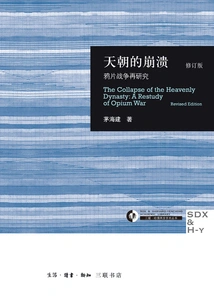
天朝的崩溃:鸦片战争再研究(修订版)
Mao Haijian
This book reviews the history of my country's Opium War and attempts to analyze this catastrophe that overturned the Qing Dynasty from a new perspective. As a truth-seeking historian, the author recounts the military power of the Qing Dynasty, the sudden war, the "war situation" in Guangzhou, the resurgence of the "Fu" discussion, etc., Which reflects the fatal blow of the Opium War to the rule of the Qing Dynasty from one aspect. It is a rare historical treatise. The author examines a series of important historical facts related to the war in detail, trying to understand history based on the moral concepts, thinking methods and behavioral norms of the time, so that many phenomena that may seem absurd to today's people can be shown to be "reasonable" in the environment at that time.
This book reviews the history of my country's Opium War and attempts to analyze this catastrophe that overturned the Qing Dynasty from a new perspective. As a truth-seeking historian, the author recounts the military power of the Qing Dynasty, the sudden war, the "war situation" in Guangzhou, the resurgence of the "Fu" discussion, etc., Which reflects the fatal blow of the Opium War to the rule of the Qing Dynasty from one aspect. It is a rare historical treatise. The author examines a series of important historical facts related to the war in detail, trying to understand history based on the moral concepts, thinking methods and behavioral norms of the time, so that many phenomena that may seem absurd to today's people can be shown to be "reasonable" in the environment at that time.