Library
Browse and search books
1 novel found
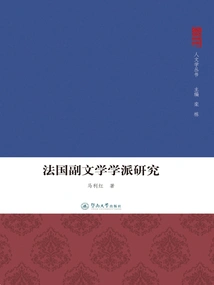
法国副文学学派研究
Malihong
In France, its emergence is almost contemporaneous with the poststructuralism or deconstruction movement, and it has been more than half a century since it was formally proposed. "The waves behind the Yangtze River push the waves ahead." One academic trend surged one after another, leading to today's so-called post-theoretical era where literature and its theory are in "crisis." Therefore, the debate over the life and death of literature and literary theory in France, where everyone can become a writer, is self-evident. In his new book "The Crisis of Literature" published in 2008, the senior French literary theorist Todorov strongly advocated a return to classical aesthetic education in order to save the endangered French literature. However, "literary crisis" itself is a questionable proposition or a false proposition. As everyone knows, France's annual Goncourt Literary Prize and other various large and small literary awards are still being awarded as lively as ever; French writer Le Clézio also received a Nobel Prize for Literature in 2008. Therefore, the real literary fact is not a literary "crisis." Rather, literature is "transforming." The "transformation" of literature is not only an explicit change in many aspects such as the content, form, and carrier of literature, but also a fundamental and subtle change in literature. It is a change in the "nature" or "literary nature" of literature. This phenomenon, which is promoted by both internal and external forces in literature, is described in the terminology of industry expert Luan Dong as "literary othering." "Literary othering" is not a recent phenomenon. As early as the mid-to-late 1960s, scholars such as Jean Totel were already sensitive to this change in the process of research on paraliterature. When they throw out the term "paraliterature" as a critical discourse, what they want to convey is not the desire to maintain the field of paraliterature and cultivate it in depth, but the desire to try to tear down the visible barriers between pure and paraliterature. If the ascendant deconstruction of that period aimed to criticize logocentrism, then the study of the paraliterary school sought to eliminate (pure) literary centrism. In short, paraliterary discourse appears in a subversive manner.
In France, its emergence is almost contemporaneous with the poststructuralism or deconstruction movement, and it has been more than half a century since it was formally proposed. "The waves behind the Yangtze River push the waves ahead." One academic trend surged one after another, leading to today's so-called post-theoretical era where literature and its theory are in "crisis." Therefore, the debate over the life and death of literature and literary theory in France, where everyone can become a writer, is self-evident. In his new book "The Crisis of Literature" published in 2008, the senior French literary theorist Todorov strongly advocated a return to classical aesthetic education in order to save the endangered French literature. However, "literary crisis" itself is a questionable proposition or a false proposition. As everyone knows, France's annual Goncourt Literary Prize and other various large and small literary awards are still being awarded as lively as ever; French writer Le Clézio also received a Nobel Prize for Literature in 2008. Therefore, the real literary fact is not a literary "crisis." Rather, literature is "transforming." The "transformation" of literature is not only an explicit change in many aspects such as the content, form, and carrier of literature, but also a fundamental and subtle change in literature. It is a change in the "nature" or "literary nature" of literature. This phenomenon, which is promoted by both internal and external forces in literature, is described in the terminology of industry expert Luan Dong as "literary othering." "Literary othering" is not a recent phenomenon. As early as the mid-to-late 1960s, scholars such as Jean Totel were already sensitive to this change in the process of research on paraliterature. When they throw out the term "paraliterature" as a critical discourse, what they want to convey is not the desire to maintain the field of paraliterature and cultivate it in depth, but the desire to try to tear down the visible barriers between pure and paraliterature. If the ascendant deconstruction of that period aimed to criticize logocentrism, then the study of the paraliterary school sought to eliminate (pure) literary centrism. In short, paraliterary discourse appears in a subversive manner.