Library
Browse and search books
2 novels found
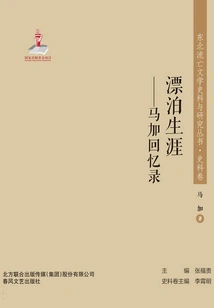
东北流亡文学史料与研究丛书?漂泊生涯:马加回忆录
Maga
"A Wandering Life - Memoirs of Ma Jia" is one of the historical volumes of the "Historical Materials and Research Series on Northeastern Exile Literature" edited by Zhang Fugui. "Historical Materials and Research Series on Northeastern Exile Literature" is China's first large-scale book that comprehensively and systematically organizes the Northeastern exile literature and research results in modern China. It is divided into research volumes, historical materials volumes, and works volumes, with a total of 36 volumes. "The Wandering Life - Memoirs of Ma Jia" is divided into thirty-three chapters, including "Crossing the Guandong", "Northeastern University", "September 18th Incident", "The Motherland Cannot Look Back in the Bright Moon", "Green Mountains Are Everlasting", etc. This memoir records many of Ma Jia's personal life experiences and stories of his interactions with friends such as Xiao Jun, Luo Feng, and Bai Lang. The book also records some precious fragments of historical life, which is of great historical value for studying the life steps, social environment and ideological growth of Maka and even Northeastern exile literature.
"A Wandering Life - Memoirs of Ma Jia" is one of the historical volumes of the "Historical Materials and Research Series on Northeastern Exile Literature" edited by Zhang Fugui. "Historical Materials and Research Series on Northeastern Exile Literature" is China's first large-scale book that comprehensively and systematically organizes the Northeastern exile literature and research results in modern China. It is divided into research volumes, historical materials volumes, and works volumes, with a total of 36 volumes. "The Wandering Life - Memoirs of Ma Jia" is divided into thirty-three chapters, including "Crossing the Guandong", "Northeastern University", "September 18th Incident", "The Motherland Cannot Look Back in the Bright Moon", "Green Mountains Are Everlasting", etc. This memoir records many of Ma Jia's personal life experiences and stories of his interactions with friends such as Xiao Jun, Luo Feng, and Bai Lang. The book also records some precious fragments of historical life, which is of great historical value for studying the life steps, social environment and ideological growth of Maka and even Northeastern exile literature.
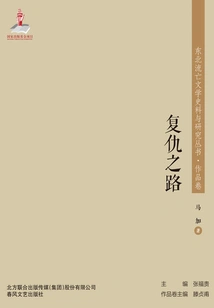
东北流亡文学史料与研究丛书·复仇之路
Maga
Ma Jia's "Road to Revenge" is one of the volumes of the "History and Research Series on Northeastern Exile Literature" edited by Zhang Fugui. "Historical Materials and Research Series on Northeastern Exile Literature" is China's first large-scale book that comprehensively and systematically organizes the Northeastern exile literature and research results in modern China. It is divided into research volumes, historical materials volumes, and works volumes, with a total of 36 volumes. "Road to Revenge" contains a total of 17 short stories, including "Road to Revenge", "Little Room", "Day and Night", "Crossing the Dianziliang", etc. "The Road to Revenge" tells the story that the war not only destroyed Da Wu's home, but also caused his wife to be raped and murdered by the Japanese army, and his son was stabbed to death by a bayonet. In the end, Da Wu, who had nothing left, resolutely embarked on the road of revenge and joined the ranks of the volunteers.
Ma Jia's "Road to Revenge" is one of the volumes of the "History and Research Series on Northeastern Exile Literature" edited by Zhang Fugui. "Historical Materials and Research Series on Northeastern Exile Literature" is China's first large-scale book that comprehensively and systematically organizes the Northeastern exile literature and research results in modern China. It is divided into research volumes, historical materials volumes, and works volumes, with a total of 36 volumes. "Road to Revenge" contains a total of 17 short stories, including "Road to Revenge", "Little Room", "Day and Night", "Crossing the Dianziliang", etc. "The Road to Revenge" tells the story that the war not only destroyed Da Wu's home, but also caused his wife to be raped and murdered by the Japanese army, and his son was stabbed to death by a bayonet. In the end, Da Wu, who had nothing left, resolutely embarked on the road of revenge and joined the ranks of the volunteers.