Library
Browse and search books
25 novels found
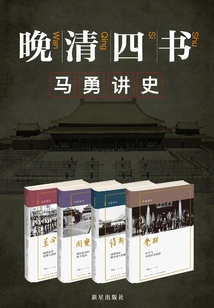
马勇讲史:晚清四书
Ma Yong
The "Four Books of the Late Qing Dynasty" includes "Awakening", "Restoration", "National Change" and "Revolution". It describes the major historical events from 1894 to 1911, including the Sino-Japanese War of 1894-1911, the signing of the Treaty of Shimonoseki, the Reform of 1898, the Boxer Rebellion, the invasion of China by the Eight-Power Allied Forces, and the Revolution of 1911. It records the entire process of the Qing Dynasty from awakening to self-rescue, failure of self-rescue to overthrow. It involves many important historical figures, such as Cixi, Guangxu, Yixin, Li Hongzhang, Kang Youwei, Yuan Shikai, Sun Yat-sen, etc. The author Ma Yong provides us with new ideas for re-understanding and thinking about these historical events and characters.
The "Four Books of the Late Qing Dynasty" includes "Awakening", "Restoration", "National Change" and "Revolution". It describes the major historical events from 1894 to 1911, including the Sino-Japanese War of 1894-1911, the signing of the Treaty of Shimonoseki, the Reform of 1898, the Boxer Rebellion, the invasion of China by the Eight-Power Allied Forces, and the Revolution of 1911. It records the entire process of the Qing Dynasty from awakening to self-rescue, failure of self-rescue to overthrow. It involves many important historical figures, such as Cixi, Guangxu, Yixin, Li Hongzhang, Kang Youwei, Yuan Shikai, Sun Yat-sen, etc. The author Ma Yong provides us with new ideas for re-understanding and thinking about these historical events and characters.
Reform
History维新
Ma Yong
This book describes the whole process of the reform movement initiated by the reformists and led by Emperor Guangxu, which was in full swing, but was killed by the Empress Dowager Cixi overnight. Did Cixi kill the Kang Party to protect herself, or did she seize power to capture Guangxu? Was Kang Youwei the leading figure in the Hundred Days Reform, or the chief culprit in the failure of the reform? Did Yuan Shikai take the lead in promoting the New Deal, or did he betray the reform and become a whistleblower? This book will reveal the answer for you. The 1898 Coup completely cut off the road to reform and reform, and the late Qing government, which had just seen a glimmer of hope, once again fell into the abyss of darkness.
This book describes the whole process of the reform movement initiated by the reformists and led by Emperor Guangxu, which was in full swing, but was killed by the Empress Dowager Cixi overnight. Did Cixi kill the Kang Party to protect herself, or did she seize power to capture Guangxu? Was Kang Youwei the leading figure in the Hundred Days Reform, or the chief culprit in the failure of the reform? Did Yuan Shikai take the lead in promoting the New Deal, or did he betray the reform and become a whistleblower? This book will reveal the answer for you. The 1898 Coup completely cut off the road to reform and reform, and the late Qing government, which had just seen a glimmer of hope, once again fell into the abyss of darkness.
Awakening
History觉醒
Ma Yong
Content introduction: After the disastrous defeat in the Yellow Sea Battle in the Sino-Japanese War of 1991, peace became more difficult. Li Hongzhang was ordered to negotiate peace and signed the Treaty of Shimonoseki despite humiliation. Is Li Hongzhang a paper decorator of dilapidated houses in the late Qing Dynasty, or a trend-setter at the forefront of the times? Is the Shimonoseki negotiation a loss of power and humiliation to the country and letting others slaughter it, or is it a matter of painstaking efforts to seize food from the tiger's mouth? Was the defeat of the Sino-Japanese War the end of the Westernization Movement, or was it the dawn of modern times? After that, Yan Fu and others began to think about the reform of China's system, which also gave rise to the transformation from self-reliance through law to self-reliance through legislation.
Content introduction: After the disastrous defeat in the Yellow Sea Battle in the Sino-Japanese War of 1991, peace became more difficult. Li Hongzhang was ordered to negotiate peace and signed the Treaty of Shimonoseki despite humiliation. Is Li Hongzhang a paper decorator of dilapidated houses in the late Qing Dynasty, or a trend-setter at the forefront of the times? Is the Shimonoseki negotiation a loss of power and humiliation to the country and letting others slaughter it, or is it a matter of painstaking efforts to seize food from the tiger's mouth? Was the defeat of the Sino-Japanese War the end of the Westernization Movement, or was it the dawn of modern times? After that, Yan Fu and others began to think about the reform of China's system, which also gave rise to the transformation from self-reliance through law to self-reliance through legislation.
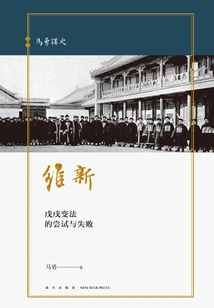
维新:戊戌变法的尝试与失败
Ma Yong
This book describes the whole process of the reform movement initiated by the reformists and led by Emperor Guangxu, which was in full swing, but was killed by the Empress Dowager Cixi overnight. The 1898 Coup completely cut off the road to reform and reform, and the late Qing government, which had just seen a glimmer of hope, once again fell into the abyss of darkness.
This book describes the whole process of the reform movement initiated by the reformists and led by Emperor Guangxu, which was in full swing, but was killed by the Empress Dowager Cixi overnight. The 1898 Coup completely cut off the road to reform and reform, and the late Qing government, which had just seen a glimmer of hope, once again fell into the abyss of darkness.
Soul's Eyes
Literature灵魂的眼睛
Ma Yong
This collection of poems represents the poet's rational consideration and reflection on life and nature. The intensity of emotion and the depth of thought complement each other, the vision is broad, and the imagery is vivid and vivid. The writing is smooth and concise, natural, the rhythm is relaxed, and there is no lack of sharp wit, humor, euphemism and implicitness. It has a highly infectious effect and gives people a hearty aesthetic reading pleasure.
This collection of poems represents the poet's rational consideration and reflection on life and nature. The intensity of emotion and the depth of thought complement each other, the vision is broad, and the imagery is vivid and vivid. The writing is smooth and concise, natural, the rhythm is relaxed, and there is no lack of sharp wit, humor, euphemism and implicitness. It has a highly infectious effect and gives people a hearty aesthetic reading pleasure.
中国近代通史(第四卷):从戊戌维新到义和团(1895-1900)
Ma Yong
For the study of modern Chinese history, the 20th century is a century of beginnings, a century of transformation, a century of innovation, and a century of gains. The study of modern Chinese history is an important branch of Chinese history in the 20th century. In the 20th century, Chinese history transformed from a semi-colonial and semi-feudal society to a socialist society, which has undergone earth-shaking changes. The study of modern Chinese history also underwent earth-shaking changes in the 20th century. It separated from traditional Chinese history. In the 1940s, the study of modern Chinese history with bourgeois tendencies that served semi-colonial and semi-feudal society and represented the interests of the ruling class dominated. The study of modern Chinese history guided by Marxism emerged during the New Democratic Revolution. After the founding of New China, Marxist research on modern Chinese history gradually took the dominant position.
For the study of modern Chinese history, the 20th century is a century of beginnings, a century of transformation, a century of innovation, and a century of gains. The study of modern Chinese history is an important branch of Chinese history in the 20th century. In the 20th century, Chinese history transformed from a semi-colonial and semi-feudal society to a socialist society, which has undergone earth-shaking changes. The study of modern Chinese history also underwent earth-shaking changes in the 20th century. It separated from traditional Chinese history. In the 1940s, the study of modern Chinese history with bourgeois tendencies that served semi-colonial and semi-feudal society and represented the interests of the ruling class dominated. The study of modern Chinese history guided by Marxism emerged during the New Democratic Revolution. After the founding of New China, Marxist research on modern Chinese history gradually took the dominant position.
Awakening and Sinking
History觉醒与沉沦
Ma Yong
Through this short book, we explore the awakening of Chinese intellectuals after the Sino-Japanese War of 1884-1899 and their promotion of reform ideas and practices. Because the modern knowledge system had not yet been truly formed at this time, the 1898 literati still had a strong sense of undifferentiated scholar-bureaucrat sentiments. Therefore, on the one hand, they promoted the development and progress of Chinese society, but on the other hand, they had many problems, triggering a series of unnecessary conflicts and accidents, which in turn brought a revolution that changed the direction of Chinese history to an abrupt end.
Through this short book, we explore the awakening of Chinese intellectuals after the Sino-Japanese War of 1884-1899 and their promotion of reform ideas and practices. Because the modern knowledge system had not yet been truly formed at this time, the 1898 literati still had a strong sense of undifferentiated scholar-bureaucrat sentiments. Therefore, on the one hand, they promoted the development and progress of Chinese society, but on the other hand, they had many problems, triggering a series of unnecessary conflicts and accidents, which in turn brought a revolution that changed the direction of Chinese history to an abrupt end.
明夷:新史学的重建与开新
Ma Yong
This book is a collection of articles on historical experience by Teacher Ma Yong sorting out historical research, and is divided into two parts: "Experiences of Older Historians" and "My Historical Research". "Experiences of Older Historians" introduces the experiences of Zhang Taiyan, Jiang Tingfu, Zhang Yinlin, Fan Wenlan, Hu Sheng and other seniors in historical research, the influence of general social trends of thought when they conducted historical research, the historical concepts and methods they upheld, etc., And analyzes the value of famous historical works such as "Book of Readings" and "Introduction to Qing Dynasty Academics" and their status in the history of Chinese history. "My Historical Research" introduces some of Ma Yong's own methods and experiences in historical research, which can be learned and used by readers in related majors. With an academic attitude of broad opening and closing, this book dispels the charm and preserves the truth, and reconstructs the overall context of the transformations in modern history.
This book is a collection of articles on historical experience by Teacher Ma Yong sorting out historical research, and is divided into two parts: "Experiences of Older Historians" and "My Historical Research". "Experiences of Older Historians" introduces the experiences of Zhang Taiyan, Jiang Tingfu, Zhang Yinlin, Fan Wenlan, Hu Sheng and other seniors in historical research, the influence of general social trends of thought when they conducted historical research, the historical concepts and methods they upheld, etc., And analyzes the value of famous historical works such as "Book of Readings" and "Introduction to Qing Dynasty Academics" and their status in the history of Chinese history. "My Historical Research" introduces some of Ma Yong's own methods and experiences in historical research, which can be learned and used by readers in related majors. With an academic attitude of broad opening and closing, this book dispels the charm and preserves the truth, and reconstructs the overall context of the transformations in modern history.
Elegant
History风雅
Ma Yong
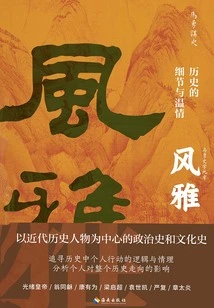
In this book, teacher Ma Yong uses more than ten important figures as clues to record the modern history of China and puts forward many new theories. For example, based on Weng Tonghe's specific actions, words and articles before and after the Reform Movement of 1898, he connected the process from the initiation to the failure of the Reform Movement; another example is that Kang Youwei went into exile after the failure of the Reform Movement of 1898 and claimed that he had received the "Belt Order" from Emperor Guangxu. Nowadays, academic circles generally believe that Kang Youwei was lying, but the author has come to a new view through analysis; and so on. In this book, the author shows readers how people in history affect historical events, thereby affecting the direction of the entire history. These articles are rigorously written and written with subtle insights. They are different from emotional historical essays and grand and professional historical papers. They must be well-founded and easy to understand and read. This book brings together the author's discussions on the main figures and important events in modern China in the past ten years. The author believes that big men make history. They make decisions with more power than the average person. However, the people are the ultimate creators of history. Many major breakthroughs in history, which changed the direction of the historical process, were often little people who attracted no attention. Little people leverage big history. The valuable thing about the author is that he can always provide readers with an idea for discussing history in his character descriptions, striving to find the logic of history and open up the history of ancient and modern civilizations.
In this book, teacher Ma Yong uses more than ten important figures as clues to record the modern history of China and puts forward many new theories. For example, based on Weng Tonghe's specific actions, words and articles before and after the Reform Movement of 1898, he connected the process from the initiation to the failure of the Reform Movement; another example is that Kang Youwei went into exile after the failure of the Reform Movement of 1898 and claimed that he had received the "Belt Order" from Emperor Guangxu. Nowadays, academic circles generally believe that Kang Youwei was lying, but the author has come to a new view through analysis; and so on. In this book, the author shows readers how people in history affect historical events, thereby affecting the direction of the entire history. These articles are rigorously written and written with subtle insights. They are different from emotional historical essays and grand and professional historical papers. They must be well-founded and easy to understand and read. This book brings together the author's discussions on the main figures and important events in modern China in the past ten years. The author believes that big men make history. They make decisions with more power than the average person. However, the people are the ultimate creators of history. Many major breakthroughs in history, which changed the direction of the historical process, were often little people who attracted no attention. Little people leverage big history. The valuable thing about the author is that he can always provide readers with an idea for discussing history in his character descriptions, striving to find the logic of history and open up the history of ancient and modern civilizations.
中国历史大师课:马勇作品精选集(共7册)
Ma Yong
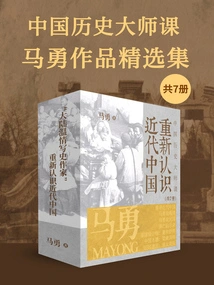
A collection of works by the famous modern historian Ma Yong, totaling 7 volumes. They are "Ma Yong on the Late Qing Dynasty", "Ma Yong on the Republic of China", "Rediscovering Modern China", "Apocalypse of the Fall of the Qing Dynasty: A Dynasty Enters History in a Hundred Days of Crisis", "Chinese Holy Heroes: The Biography of Liang Shuming", "Residents of the Republic of China: The Biography of Zhang Taiyan" and "The Imperial Architect: The Biography of Dong Zhongshu".
A collection of works by the famous modern historian Ma Yong, totaling 7 volumes. They are "Ma Yong on the Late Qing Dynasty", "Ma Yong on the Republic of China", "Rediscovering Modern China", "Apocalypse of the Fall of the Qing Dynasty: A Dynasty Enters History in a Hundred Days of Crisis", "Chinese Holy Heroes: The Biography of Liang Shuming", "Residents of the Republic of China: The Biography of Zhang Taiyan" and "The Imperial Architect: The Biography of Dong Zhongshu".
伦理道德史话
Ma Yong
Ethics in traditional Chinese society are based on Confucianism, which is Confucian ethics. Confucian ethics has occupied a dominant position in Chinese history for a long time. It not only influenced the thoughts and words and deeds of the Chinese, but also successfully influenced the people of many Southeast Asian countries and became part of their national culture, thus forming the Confucian cultural circle. With the development of our country's society, Confucian ethics has begun to be integrated with modernization. It is no longer synonymous with obsolescence and backwardness. The essence of its thoughts has begun to be accepted, promoted, and learned by people. It is an indispensable and important part of our country's traditional culture. This book starts from the mutual growth, decline and conflict between foreign culture and traditional Chinese moral and ethical culture, and comprehensively displays to readers the development trend of traditional Chinese ethics and morality in today's society. It also proposes that traditional Confucian ethics is also constantly developing and changing. It will continue to enrich and transform itself with the process of modernization, making it gradually become one of the power resources for the further development and prosperity of our nation.
Ethics in traditional Chinese society are based on Confucianism, which is Confucian ethics. Confucian ethics has occupied a dominant position in Chinese history for a long time. It not only influenced the thoughts and words and deeds of the Chinese, but also successfully influenced the people of many Southeast Asian countries and became part of their national culture, thus forming the Confucian cultural circle. With the development of our country's society, Confucian ethics has begun to be integrated with modernization. It is no longer synonymous with obsolescence and backwardness. The essence of its thoughts has begun to be accepted, promoted, and learned by people. It is an indispensable and important part of our country's traditional culture. This book starts from the mutual growth, decline and conflict between foreign culture and traditional Chinese moral and ethical culture, and comprehensively displays to readers the development trend of traditional Chinese ethics and morality in today's society. It also proposes that traditional Confucian ethics is also constantly developing and changing. It will continue to enrich and transform itself with the process of modernization, making it gradually become one of the power resources for the further development and prosperity of our nation.
觉醒:甲午与中国历史转折
Ma Yong
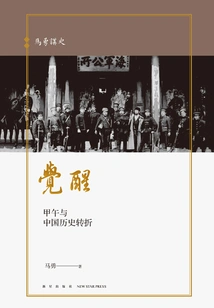
After the disastrous defeat in the Battle of the Yellow Sea in the Sino-Japanese War of 1991, peace became more difficult. Li Hongzhang was ordered to negotiate peace and signed the Treaty of Shimonoseki despite humiliation. After that, Yan Fu and others began to think about the reform of China's system, which also gave rise to the transformation from self-reliance through law to self-reliance through legislation.
After the disastrous defeat in the Battle of the Yellow Sea in the Sino-Japanese War of 1991, peace became more difficult. Li Hongzhang was ordered to negotiate peace and signed the Treaty of Shimonoseki despite humiliation. After that, Yan Fu and others began to think about the reform of China's system, which also gave rise to the transformation from self-reliance through law to self-reliance through legislation.
1911 Chinese Revolution
History1911年中国大革命
Ma Yong
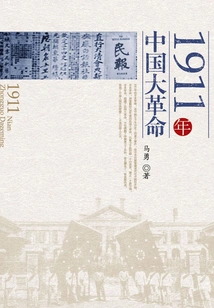
The 1911 Revolution of 1911 was a major event in China's five thousand years of history and the beginning of the Chinese nation's reconstruction of a modern China. The Revolution of 1911 deliberately imitated the French Revolution 120 years ago, using violent means to shatter an old world and establish a new China. The Revolution of 1911 surpassed the French Revolution. It not only overthrew the monarchy and established a republic, but also avoided a bloody civil war. It reflected the unique wisdom of the Chinese people - to conquer the enemy without fighting.
The 1911 Revolution of 1911 was a major event in China's five thousand years of history and the beginning of the Chinese nation's reconstruction of a modern China. The Revolution of 1911 deliberately imitated the French Revolution 120 years ago, using violent means to shatter an old world and establish a new China. The Revolution of 1911 surpassed the French Revolution. It not only overthrew the monarchy and established a republic, but also avoided a bloody civil war. It reflected the unique wisdom of the Chinese people - to conquer the enemy without fighting.
马勇说民国
Ma Yong
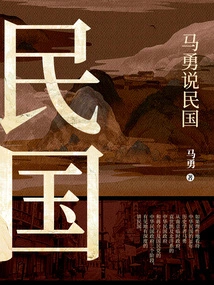
"Ma Yong Talks about the Republic of China" is the work of Ma Yong, a famous modern historian. The book contains Mr. Ma Yong's decades of research results, spanning the time from the "Revolution of 1911" to the "Victory of the Anti-Japanese War", and is insightful and in-depth. The chapters in the book are divided into four parts: the first part, National History, focuses on the historical facts studied, including "Where is the starting line of the politics of the Republic of China", "Rumors and Crisis before the May Fourth Movement", etc.; The second part, Hearing, focuses on the re-examination of historical mysteries, including "Who let Kang Youwei escape from Beijing" and "The Eyes of Chief Correspondent in China Mo Lixun" "The Revolution of 1911" in "The Revolution of 1911", etc.; The third collection is mainly character commentary, including "Liang Qichao: An Atypical Exile", "Neither Storm nor Sunny - Liang Shuming's Two Marriages", etc.; The fourth collection is mainly historical commentary and political commentary, including "The Gains and Loss of Emperor Hongxian", "Should the "Twenty-One Countermeasures" be signed", etc.
"Ma Yong Talks about the Republic of China" is the work of Ma Yong, a famous modern historian. The book contains Mr. Ma Yong's decades of research results, spanning the time from the "Revolution of 1911" to the "Victory of the Anti-Japanese War", and is insightful and in-depth. The chapters in the book are divided into four parts: the first part, National History, focuses on the historical facts studied, including "Where is the starting line of the politics of the Republic of China", "Rumors and Crisis before the May Fourth Movement", etc.; The second part, Hearing, focuses on the re-examination of historical mysteries, including "Who let Kang Youwei escape from Beijing" and "The Eyes of Chief Correspondent in China Mo Lixun" "The Revolution of 1911" in "The Revolution of 1911", etc.; The third collection is mainly character commentary, including "Liang Qichao: An Atypical Exile", "Neither Storm nor Sunny - Liang Shuming's Two Marriages", etc.; The fourth collection is mainly historical commentary and political commentary, including "The Gains and Loss of Emperor Hongxian", "Should the "Twenty-One Countermeasures" be signed", etc.
晚清的历史:马勇讲清史系列(全5册)
Ma Yong
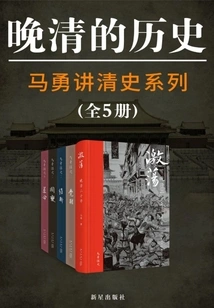
"Awakening: The Sino-Japanese War of Sino-Japanese War and the Turning Point in Chinese History" After the disastrous defeat in the Battle of the Yellow Sea in the Sino-Japanese War of Sino-Japanese War, peace became more difficult. "National Change: The Complicated Gengzi Chaos" describes in detail the ins and outs of the Boxer Rebellion and the Gengzi National Disaster, and analyzes the reasons why the Eight-Power Allied Forces entered Beijing. The Qing government led the wolf into the house, and eventually the ruling power declined significantly and China fell into chaos. "Revolution: Reform Trends and Failures in the Late Qing Dynasty" describes the historical process in which the late Qing government tried to save itself from danger through constitutional monarchy, but missed the last opportunity again and again and was eventually overthrown by the revolutionaries. "Agitation: Twenty Years of the Late Qing Dynasty" is a comprehensive study of the last two decades of the collapse of the Qing Dynasty. It briefly narrates and reinterprets a series of major events, including the Sino-Japanese War of 1898, the Reform Movement of 1898, the Boxer Rebellion, the New Deal Reform, the overthrow of the imperial system, and the move toward republic.
"Awakening: The Sino-Japanese War of Sino-Japanese War and the Turning Point in Chinese History" After the disastrous defeat in the Battle of the Yellow Sea in the Sino-Japanese War of Sino-Japanese War, peace became more difficult. "National Change: The Complicated Gengzi Chaos" describes in detail the ins and outs of the Boxer Rebellion and the Gengzi National Disaster, and analyzes the reasons why the Eight-Power Allied Forces entered Beijing. The Qing government led the wolf into the house, and eventually the ruling power declined significantly and China fell into chaos. "Revolution: Reform Trends and Failures in the Late Qing Dynasty" describes the historical process in which the late Qing government tried to save itself from danger through constitutional monarchy, but missed the last opportunity again and again and was eventually overthrown by the revolutionaries. "Agitation: Twenty Years of the Late Qing Dynasty" is a comprehensive study of the last two decades of the collapse of the Qing Dynasty. It briefly narrates and reinterprets a series of major events, including the Sino-Japanese War of 1898, the Reform Movement of 1898, the Boxer Rebellion, the New Deal Reform, the overthrow of the imperial system, and the move toward republic.
马勇说晚清
Ma Yong
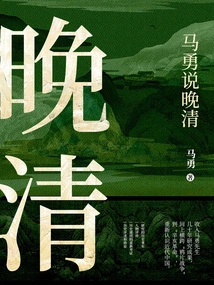
If the preparatory constitution was successfully completed, if the Qing government did not launch a royal cabinet, if Emperor Guangxu lived ten more years... Let Professor Ma Yong help you see through these assumptions! "Ma Yong Talks about the Late Qing Dynasty" is the work of modern historian Ma Yong. The book contains Mr. Ma Yong's decades of research results, spanning the period from the "Opium War" to the "Revolution of 1911", and is insightful and in-depth. The chapters in the book are divided into four parts: the first part, National History, is mainly based on the historical facts studied, including "The Return of Cixi", "Zi Zhengyuan: Chinese Tragedy", etc.; The second part, "Hearing", is mainly about the re-examination of historical mysteries, including "Who Killed Guangxu's Life", "Is Yuan Shikai... "There are secrets that have not been revealed"" and so on; the third collection is mainly about character reviews and biographies, including "Infamy of the Regent", "Li Hongzhang and Ito Hirobumi", etc.; The fourth collection is mainly about historical commentary and political commentary, including "Whose Cheese Has the Constitutional Monarchy Touched", "The Gravedigger of the Qing Dynasty", etc.
If the preparatory constitution was successfully completed, if the Qing government did not launch a royal cabinet, if Emperor Guangxu lived ten more years... Let Professor Ma Yong help you see through these assumptions! "Ma Yong Talks about the Late Qing Dynasty" is the work of modern historian Ma Yong. The book contains Mr. Ma Yong's decades of research results, spanning the period from the "Opium War" to the "Revolution of 1911", and is insightful and in-depth. The chapters in the book are divided into four parts: the first part, National History, is mainly based on the historical facts studied, including "The Return of Cixi", "Zi Zhengyuan: Chinese Tragedy", etc.; The second part, "Hearing", is mainly about the re-examination of historical mysteries, including "Who Killed Guangxu's Life", "Is Yuan Shikai... "There are secrets that have not been revealed"" and so on; the third collection is mainly about character reviews and biographies, including "Infamy of the Regent", "Li Hongzhang and Ito Hirobumi", etc.; The fourth collection is mainly about historical commentary and political commentary, including "Whose Cheese Has the Constitutional Monarchy Touched", "The Gravedigger of the Qing Dynasty", etc.
Minimalist Chinese History
History极简中国史
Ma Yong
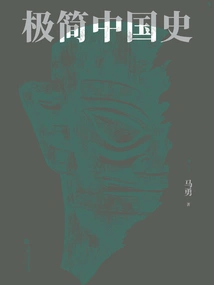
China has a long history. In traditional historical research, we are accustomed to "putting ourselves first" and putting the "Central Plains" culture at the center of historical research. We lack a perspective of historical comparison with the surrounding and even world-wide history at the same time, and ignore the influence of "external" culture on the "internal" dynasties. In this book, Professor Ma Yong from the Chinese Academy of Social Sciences takes a high position to reconstruct the Chinese historical narrative with a global historical perspective, observes the evolution of Chinese history from a "horizontal synchronic" perspective, and tells Chinese history from ancient times to the late Qing Dynasty in a concise and in-depth way, helping us understand the long-term evolution of politics, economy, society and culture across dynasty changes and its internal logic.
China has a long history. In traditional historical research, we are accustomed to "putting ourselves first" and putting the "Central Plains" culture at the center of historical research. We lack a perspective of historical comparison with the surrounding and even world-wide history at the same time, and ignore the influence of "external" culture on the "internal" dynasties. In this book, Professor Ma Yong from the Chinese Academy of Social Sciences takes a high position to reconstruct the Chinese historical narrative with a global historical perspective, observes the evolution of Chinese history from a "horizontal synchronic" perspective, and tells Chinese history from ancient times to the late Qing Dynasty in a concise and in-depth way, helping us understand the long-term evolution of politics, economy, society and culture across dynasty changes and its internal logic.
革命:晚清改革趋势与溃败
Ma Yong
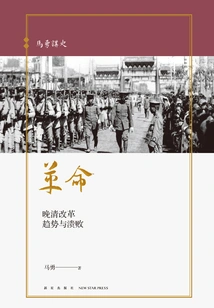
This book describes the historical process in which the late Qing government tried to save itself from danger through the establishment of a constitutional monarchy, but repeatedly missed the last opportunity and was eventually overthrown by the revolutionaries. This book provides a new way of thinking about the Qing Dynasty.
This book describes the historical process in which the late Qing government tried to save itself from danger through the establishment of a constitutional monarchy, but repeatedly missed the last opportunity and was eventually overthrown by the revolutionaries. This book provides a new way of thinking about the Qing Dynasty.
国变:错综复杂的庚子乱局
Ma Yong
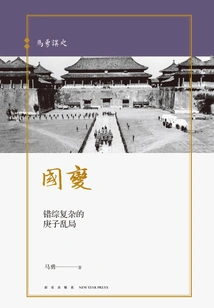
This book describes in detail the ins and outs of the Boxer Rebellion and the Gengzi National Disaster, and analyzes the reasons why the Eight-Power Allied Forces entered Beijing. The Qing government led the wolf into the house, and eventually the ruling power declined significantly and China fell into chaos.
This book describes in detail the ins and outs of the Boxer Rebellion and the Gengzi National Disaster, and analyzes the reasons why the Eight-Power Allied Forces entered Beijing. The Qing government led the wolf into the house, and eventually the ruling power declined significantly and China fell into chaos.
Revolution
History革命
Ma Yong
This book describes the historical process in which the late Qing government tried to save itself from danger through constitutional monarchy, but was eventually overthrown by the revolutionaries. Is Zaifeng a new political figure advocating for constitutionalism, or is he a clown digging his own grave? Did Sun Yat-sen persevere to build a republic, or did he become president by chance? Was Yuan Shikai committed to constitutionalism and loyal to the Qing Dynasty, or was he coveting power and stealing the country? This book reveals the answer for you. This book also provides a new way of thinking about the Qing Dynasty.
This book describes the historical process in which the late Qing government tried to save itself from danger through constitutional monarchy, but was eventually overthrown by the revolutionaries. Is Zaifeng a new political figure advocating for constitutionalism, or is he a clown digging his own grave? Did Sun Yat-sen persevere to build a republic, or did he become president by chance? Was Yuan Shikai committed to constitutionalism and loyal to the Qing Dynasty, or was he coveting power and stealing the country? This book reveals the answer for you. This book also provides a new way of thinking about the Qing Dynasty.
National Change
History国变
Ma Yong
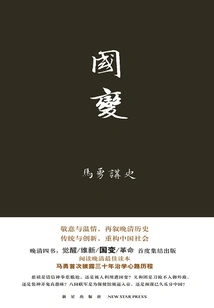
Introduction: This book describes in detail the ins and outs of the Boxer Rebellion and the Gengzi National Disaster, and analyzes the reasons why the Eight-Power Allied Forces entered Beijing. Did Cixi mistakenly believe in the divine fist and cause embarrassment, or was she used by others to bring about national upheaval? Are the Boxers invulnerable to foreign enemies, or are they just being foolish? Were the Eight-Power Allied Forces forced into Beijing to protect the embassy, or were they premeditated to carve up China? This book will reveal the answer for you. The Qing government led the wolf into the house, and eventually the ruling power declined significantly and China fell into chaos.
Introduction: This book describes in detail the ins and outs of the Boxer Rebellion and the Gengzi National Disaster, and analyzes the reasons why the Eight-Power Allied Forces entered Beijing. Did Cixi mistakenly believe in the divine fist and cause embarrassment, or was she used by others to bring about national upheaval? Are the Boxers invulnerable to foreign enemies, or are they just being foolish? Were the Eight-Power Allied Forces forced into Beijing to protect the embassy, or were they premeditated to carve up China? This book will reveal the answer for you. The Qing government led the wolf into the house, and eventually the ruling power declined significantly and China fell into chaos.
激荡:晚清二十年
Ma Yong
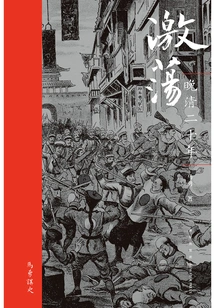
"Agitation: Twenty Years of the Late Qing Dynasty" is a comprehensive study of the last two decades of the collapse of the Qing Dynasty. It briefly narrates and reinterprets a series of major events, including the Sino-Japanese War of 1898, the Reform Movement of 1898, the Boxer Rebellion, the New Deal Reform, the overthrow of the imperial system, and the move toward republic. This book analyzes the particularity and positive significance of the last two decades of the late Qing Dynasty in the entire process of China's modernization; it also allows us to realize the possible other side of familiar historical figures and events.
"Agitation: Twenty Years of the Late Qing Dynasty" is a comprehensive study of the last two decades of the collapse of the Qing Dynasty. It briefly narrates and reinterprets a series of major events, including the Sino-Japanese War of 1898, the Reform Movement of 1898, the Boxer Rebellion, the New Deal Reform, the overthrow of the imperial system, and the move toward republic. This book analyzes the particularity and positive significance of the last two decades of the late Qing Dynasty in the entire process of China's modernization; it also allows us to realize the possible other side of familiar historical figures and events.
Rediscovering Modern China
History重寻近代中国
Ma Yong
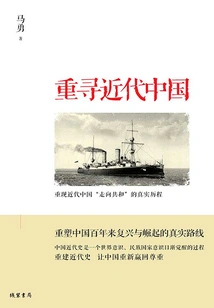
The Chinese political elite used the series of defeats after the Opium War to weave a set of "national narratives" and "historical constructions" that suffered from foreign exploitation and bullying. However, in the context of China's economic rise, the continued strengthening of the "tragic narrative" is isolating China from the world environment. Ma Yong reshapes China's modern history from the perspective of modernization. On the one hand, he re-evaluates the merits and demerits of foreign capital in modern China, and clarifies the path and objective effects of the world's entry into China. On the other hand, he analyzes the difficult process of China's entry into the world under the impact of modernization.
The Chinese political elite used the series of defeats after the Opium War to weave a set of "national narratives" and "historical constructions" that suffered from foreign exploitation and bullying. However, in the context of China's economic rise, the continued strengthening of the "tragic narrative" is isolating China from the world environment. Ma Yong reshapes China's modern history from the perspective of modernization. On the one hand, he re-evaluates the merits and demerits of foreign capital in modern China, and clarifies the path and objective effects of the world's entry into China. On the other hand, he analyzes the difficult process of China's entry into the world under the impact of modernization.
回望:近代一百年
Ma Yong
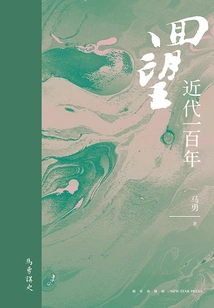
The book "Looking Back: One Hundred Years of Modern Times" is divided into three parts. The first part is "Looking Back A Hundred Years", which reviews the mutual game between reform and change in the political reform of the late Qing Dynasty; the second part is "Reconstructing the Historical Details of the Late Qing Dynasty", which reanalyzes historical events such as the Sino-Japanese War of 1888-88, the Boxer Rebellion, the late Qing Dynasty, the Revolution of 1911, and the establishment of the Republic of China; and the third part is "A Hundred Years of Cultural Enlightenment", which analyzes the gains and losses of the New Culture Movement.
The book "Looking Back: One Hundred Years of Modern Times" is divided into three parts. The first part is "Looking Back A Hundred Years", which reviews the mutual game between reform and change in the political reform of the late Qing Dynasty; the second part is "Reconstructing the Historical Details of the Late Qing Dynasty", which reanalyzes historical events such as the Sino-Japanese War of 1888-88, the Boxer Rebellion, the late Qing Dynasty, the Revolution of 1911, and the establishment of the Republic of China; and the third part is "A Hundred Years of Cultural Enlightenment", which analyzes the gains and losses of the New Culture Movement.
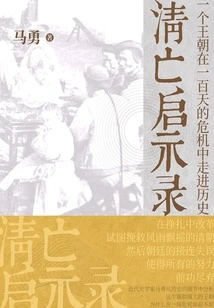
清亡启示录:一个王朝在一百天的危机中走进历史
Ma Yong
"Apocalypse of the Qing Dynasty: A Dynasty Enters History in a Hundred Days of Crisis" tells the story of why a dynasty entered history in a hundred days of crisis. There is no need to regret history, and there is no need to regret it. What has been passed is passed. Just looking back at the Qing Dynasty a hundred years later, especially analyzing why this seemingly powerful dynasty was vulnerable in the face of a crisis, what lessons can be learned from this process? This is the question explored in the book "Apocalypse of the Qing Dynasty: A Dynasty Entering History in One Hundred Days of Crisis". It focuses on describing and analyzing the path that the Qing Dynasty took in the last ten years. From the reform era that began in 1894 to the New Deal in 1901 and the subsequent preparations for the establishment of a constitutional monarchy, the Qing court struggled with reforms in an attempt to save the precarious Qing Empire. Then several mistakes by the Qing court made all efforts in vain, and the Qing Dynasty finally entered history.
"Apocalypse of the Qing Dynasty: A Dynasty Enters History in a Hundred Days of Crisis" tells the story of why a dynasty entered history in a hundred days of crisis. There is no need to regret history, and there is no need to regret it. What has been passed is passed. Just looking back at the Qing Dynasty a hundred years later, especially analyzing why this seemingly powerful dynasty was vulnerable in the face of a crisis, what lessons can be learned from this process? This is the question explored in the book "Apocalypse of the Qing Dynasty: A Dynasty Entering History in One Hundred Days of Crisis". It focuses on describing and analyzing the path that the Qing Dynasty took in the last ten years. From the reform era that began in 1894 to the New Deal in 1901 and the subsequent preparations for the establishment of a constitutional monarchy, the Qing court struggled with reforms in an attempt to save the precarious Qing Empire. Then several mistakes by the Qing court made all efforts in vain, and the Qing Dynasty finally entered history.