Library
Browse and search books
2 novels found
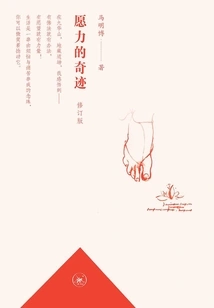
愿力的奇迹(修订版)
Ma Mingbo
"The Miracle of the Power of Willing" is a record of a visit to Jiuhua Mountain (Ksitigarbha Dojo), one of the four famous Buddhist mountains. It has nine chapters in total: "Wake up at Dajue Temple", "Lingshan Jiuhua", "Predecessor of the Bright Moon", "Happy Place", "The Miracle of the Power of Willing", "Walking with the Clouds", "Ksitigarbha's Original Wish", "Silent Flowing Water", "Meeting Under the Forest, Keeping Company in the Mountains". In the form of a travel note, the author not only introduces the history, humanity, and natural scenery of Jiuhua Mountain, but also uses the scenery to express emotions and events to illustrate the truth through what he saw and heard while living in the mountains for several days. Along the way, he understands life and philosophy of life. The book combines thought-provoking and enlightening Zen stories to systematically introduce "the wisdom and compassion of Buddhism", "giving people confidence, courage, joy and strength". It provides a useful reference for readers to solve various problems they face in real life, and can help people purify their souls, get rid of worries and achieve bodhicitta. The author believes that "where there is desire, there is power." This book also released a traditional Chinese version of "Where in the World Is Not a Spiritual Mountain", which has received widespread attention from readers at home and abroad.
"The Miracle of the Power of Willing" is a record of a visit to Jiuhua Mountain (Ksitigarbha Dojo), one of the four famous Buddhist mountains. It has nine chapters in total: "Wake up at Dajue Temple", "Lingshan Jiuhua", "Predecessor of the Bright Moon", "Happy Place", "The Miracle of the Power of Willing", "Walking with the Clouds", "Ksitigarbha's Original Wish", "Silent Flowing Water", "Meeting Under the Forest, Keeping Company in the Mountains". In the form of a travel note, the author not only introduces the history, humanity, and natural scenery of Jiuhua Mountain, but also uses the scenery to express emotions and events to illustrate the truth through what he saw and heard while living in the mountains for several days. Along the way, he understands life and philosophy of life. The book combines thought-provoking and enlightening Zen stories to systematically introduce "the wisdom and compassion of Buddhism", "giving people confidence, courage, joy and strength". It provides a useful reference for readers to solve various problems they face in real life, and can help people purify their souls, get rid of worries and achieve bodhicitta. The author believes that "where there is desire, there is power." This book also released a traditional Chinese version of "Where in the World Is Not a Spiritual Mountain", which has received widespread attention from readers at home and abroad.
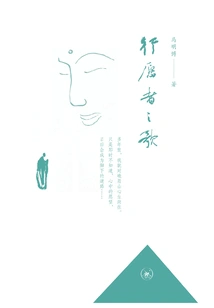
Song of the One Who Makes a Wish
Literature行愿者之歌
Ma Mingbo
"Song of the One Who Makes a Wish" is a new work written by the writer Ma Mingbo after visiting the famous Buddhist mountain Mount Emei. The author took the opportunity of his visit to Mount Emei to describe what he experienced, saw and heard during the journey in popular and beautiful prose, supplemented by Buddhist stories and folklore related to the scenery, objects and people, as well as enlightening philosophical stories, showing the wisdom and philosophy of life. The starting point of the mountain climbing is Jinding, and then you go down step by step, and finally you come to the lower bridge of Mount Emei, and the mountain climbing ends. The author uses the places where his footsteps have been as narrative clues. He walks, reads, writes, and understands while walking. As a traveler, witness, and recorder, there are all kinds of incredible causes and conditions that cannot be described in words.
"Song of the One Who Makes a Wish" is a new work written by the writer Ma Mingbo after visiting the famous Buddhist mountain Mount Emei. The author took the opportunity of his visit to Mount Emei to describe what he experienced, saw and heard during the journey in popular and beautiful prose, supplemented by Buddhist stories and folklore related to the scenery, objects and people, as well as enlightening philosophical stories, showing the wisdom and philosophy of life. The starting point of the mountain climbing is Jinding, and then you go down step by step, and finally you come to the lower bridge of Mount Emei, and the mountain climbing ends. The author uses the places where his footsteps have been as narrative clues. He walks, reads, writes, and understands while walking. As a traveler, witness, and recorder, there are all kinds of incredible causes and conditions that cannot be described in words.