Library
Browse and search books
2 novels found
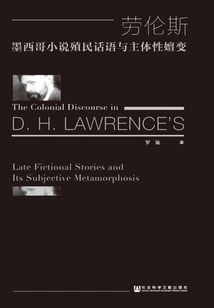
劳伦斯墨西哥小说殖民话语主体性嬗变
Luoxuan
Since the rise of postcolonial theory, academic circles have been using the master-slave relationship to interpret the subject construction in the postcolonial context. More recent research has realized that subjectivity is a spectrum of continuous change. Scholars no longer use keywords such as "hegemony" and "invasion" to interpret the historical impact of colonialism, but use "contradiction" and "ambiguity" to illustrate the two-way effect of power. Lawrence's four novels set in Mexico describe the inner psychological conflicts of the protagonists, and the narrative clues are also relatively complex, which exactly reflects the changes in subjectivity in the border state. This is also the important value of these novels that was ignored earlier. This book discusses the body, space, religion and social organization respectively, explaining the profound impact of the confrontation and dialogue between the subject and the other on identity.
Since the rise of postcolonial theory, academic circles have been using the master-slave relationship to interpret the subject construction in the postcolonial context. More recent research has realized that subjectivity is a spectrum of continuous change. Scholars no longer use keywords such as "hegemony" and "invasion" to interpret the historical impact of colonialism, but use "contradiction" and "ambiguity" to illustrate the two-way effect of power. Lawrence's four novels set in Mexico describe the inner psychological conflicts of the protagonists, and the narrative clues are also relatively complex, which exactly reflects the changes in subjectivity in the border state. This is also the important value of these novels that was ignored earlier. This book discusses the body, space, religion and social organization respectively, explaining the profound impact of the confrontation and dialogue between the subject and the other on identity.

Chiang Ching-kuo's Extramarital Affair
General Fiction蒋经国婚外恋
Luoxuan
The ancient city of Ganzhou, whose real name is Qianzhou. According to legend, there was a school clerk in the Song Dynasty who wrote to the emperor that the word "qian" with a tiger head was an evil name. The world was peaceful, but this county was restless. So it was renamed Ganzhou. Because Zhangshui Gongshui flows through the area, it merges into Ganjiang River here. This place was isolated and backward, but it was the only way to enter Guangdong in ancient times; the people were simple and hardworking, but it was a barbaric place; the mountains and rivers were beautiful, but miasma was prevalent; the resources were rich, but it was extremely poor. There are few talented and famous people here, but it is a place where talented people and celebrities of all ages have admired. Su Dongpo praised "the mountains are green with surging waves, and the water is like jade rainbows". Wen Tianxiang described "the sound of spring in the city is loud, and the shadows on the towers are late";
The ancient city of Ganzhou, whose real name is Qianzhou. According to legend, there was a school clerk in the Song Dynasty who wrote to the emperor that the word "qian" with a tiger head was an evil name. The world was peaceful, but this county was restless. So it was renamed Ganzhou. Because Zhangshui Gongshui flows through the area, it merges into Ganjiang River here. This place was isolated and backward, but it was the only way to enter Guangdong in ancient times; the people were simple and hardworking, but it was a barbaric place; the mountains and rivers were beautiful, but miasma was prevalent; the resources were rich, but it was extremely poor. There are few talented and famous people here, but it is a place where talented people and celebrities of all ages have admired. Su Dongpo praised "the mountains are green with surging waves, and the water is like jade rainbows". Wen Tianxiang described "the sound of spring in the city is loud, and the shadows on the towers are late";