Library
Browse and search books
5 novels found
Spiritual Watch
Literature精神守望
Lu Shuyuan
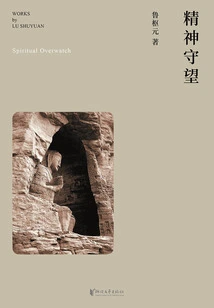
Lu Shuyuan has been engaged in research on spiritual ecological issues for a long time, and believes that there is a level of "spiritual ecology" on top of "natural ecology" and "social ecology". "Spiritual Watch" is a collection of essays and notes written by the author after an in-depth investigation of the issue of "spiritual ecology". Lu Shuyuan starts from his own rich life experience, using the "classic of the human spirit" and "Faust in the ideological world" as the banner, looking for spiritual resources from those real individual lives, using the conflict and reconciliation between man and nature, man and man, and man and himself as the cause of problems, using vivid brushwork to dissect specific people and events, deeply reflecting on the current spiritual dilemma of human existence, and looking forward to reviving the gradually distant humanistic spirit and cosmic spirit for contemporary people. Mr. Qian Gurong once recommended it to readers: this is not only an academic work with profound thoughts, but also a beautiful prose that expresses one's soul.
Lu Shuyuan has been engaged in research on spiritual ecological issues for a long time, and believes that there is a level of "spiritual ecology" on top of "natural ecology" and "social ecology". "Spiritual Watch" is a collection of essays and notes written by the author after an in-depth investigation of the issue of "spiritual ecology". Lu Shuyuan starts from his own rich life experience, using the "classic of the human spirit" and "Faust in the ideological world" as the banner, looking for spiritual resources from those real individual lives, using the conflict and reconciliation between man and nature, man and man, and man and himself as the cause of problems, using vivid brushwork to dissect specific people and events, deeply reflecting on the current spiritual dilemma of human existence, and looking forward to reviving the gradually distant humanistic spirit and cosmic spirit for contemporary people. Mr. Qian Gurong once recommended it to readers: this is not only an academic work with profound thoughts, but also a beautiful prose that expresses one's soul.
文艺心理阐释
Lu Shuyuan
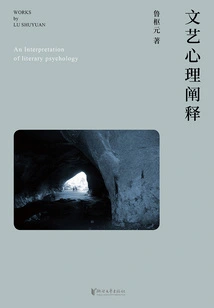
In 1879, Wundt founded the world's first psychology laboratory in Leipzig, marking the birth of the modern discipline of psychology; in 1908, Freud published "Writers and Daydreams", kicking off the emergence of literary psychology; in 1924 In 1936, Lu Xun translated "The Symbol of Depression" by the Japanese scholar Kukawa Hakumura and taught it in university classes, becoming the first person in China to introduce the systematic theory of literary psychology; in 1936, Zhu Guangqian published the first monograph on "Literary Psychology" by a Chinese scholar. Since then, this subject has been silent in China for nearly half a century. In the 1980s, literary psychology was rebuilt in China. As one of the representatives of this stage, Lu Shuyuan made great contributions to the rich accumulation of Western psychological resources. He scanned and sorted out constructivist psychology, functionalist psychology, behaviorist psychology, psychoanalytic psychology, and the "Vileru" school one by one with great interest, and compiled it into "Psychological Interpretation of Literature and Art", which provided a solid theoretical foundation for psychological criticism of contemporary literature and art.
In 1879, Wundt founded the world's first psychology laboratory in Leipzig, marking the birth of the modern discipline of psychology; in 1908, Freud published "Writers and Daydreams", kicking off the emergence of literary psychology; in 1924 In 1936, Lu Xun translated "The Symbol of Depression" by the Japanese scholar Kukawa Hakumura and taught it in university classes, becoming the first person in China to introduce the systematic theory of literary psychology; in 1936, Zhu Guangqian published the first monograph on "Literary Psychology" by a Chinese scholar. Since then, this subject has been silent in China for nearly half a century. In the 1980s, literary psychology was rebuilt in China. As one of the representatives of this stage, Lu Shuyuan made great contributions to the rich accumulation of Western psychological resources. He scanned and sorted out constructivist psychology, functionalist psychology, behaviorist psychology, psychoanalytic psychology, and the "Vileru" school one by one with great interest, and compiled it into "Psychological Interpretation of Literature and Art", which provided a solid theoretical foundation for psychological criticism of contemporary literature and art.
A Space for Ecocriticism
Literature生态批评的空间
Lu Shuyuan
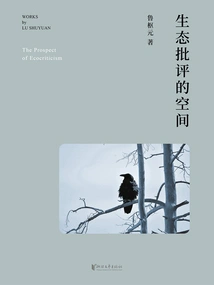
"The Space of Ecocriticism" is a treatise on ecological cultural criticism by Lu Shuyuan. The time span is from the 1990s to the present. These more than thirty years are also the period when ecocriticism began to flourish worldwide. Lu Shuyuan attaches great importance to the combination of theory and practice, and has participated in the field investigation of Jinggang Mountains, Fanjing Mountains, Xiaoqinling Mountains, Daqing Mountains and the middle and lower reaches of the Yellow River by the Chinese Committee of UNESCO's "Man and the Biosphere Program". While exploring theory, he paid special attention to case studies, and made unique interpretations of the great ancient Chinese writers Tao Yuanming and Pu Songling from the perspective of ecocriticism. The two published monographs aroused strong repercussions in the reading circle.
"The Space of Ecocriticism" is a treatise on ecological cultural criticism by Lu Shuyuan. The time span is from the 1990s to the present. These more than thirty years are also the period when ecocriticism began to flourish worldwide. Lu Shuyuan attaches great importance to the combination of theory and practice, and has participated in the field investigation of Jinggang Mountains, Fanjing Mountains, Xiaoqinling Mountains, Daqing Mountains and the middle and lower reaches of the Yellow River by the Chinese Committee of UNESCO's "Man and the Biosphere Program". While exploring theory, he paid special attention to case studies, and made unique interpretations of the great ancient Chinese writers Tao Yuanming and Pu Songling from the perspective of ecocriticism. The two published monographs aroused strong repercussions in the reading circle.
Wilderness in Heart
Literature心中的旷野
Lu Shuyuan
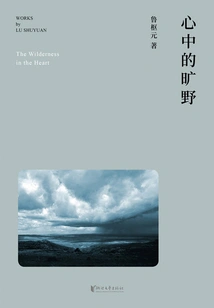
"The Wilderness in the Heart" is a collection of prose essays by Lu Shuyuan. Compared with the earlier version, Lu Shuyuan has made large-scale additions and revisions to the manuscript, collecting his feelings and reveries about nature and humanities, wilderness and cities, faith and cognition, emotion and technology, life and money at different times and in different spaces in the past 40 years. It has included more than 100 articles, nearly doubling the capacity. The book is divided into six parts: "Wilderness Revelation", "Life Poems", "One Planet", "Ebb and Flow", "Under Bodhidharma's Cave" and "Speaking of Fish Climbing Trees". The author inherits the traditional wisdom of ancient Chinese sages such as Laozi, Zhuangzi, and Tao Yuanming, and draws nutrients from the ecological thoughts of Western scholars such as Leopold and Ralston. At the same time, he combines his own "innate wilderness complex" to express his concerns and expectations for the current development of ecological civilization. The text in the book blends Lu Shuyuan's personal experience and insights, memories and longings, and at the same time reflects his observation and reflection on social and historical phenomena, combining academic discussion and practical concern. More than a hundred essays with the author's warmth and soul pulse provide a rich mirror for the era we live in now.
"The Wilderness in the Heart" is a collection of prose essays by Lu Shuyuan. Compared with the earlier version, Lu Shuyuan has made large-scale additions and revisions to the manuscript, collecting his feelings and reveries about nature and humanities, wilderness and cities, faith and cognition, emotion and technology, life and money at different times and in different spaces in the past 40 years. It has included more than 100 articles, nearly doubling the capacity. The book is divided into six parts: "Wilderness Revelation", "Life Poems", "One Planet", "Ebb and Flow", "Under Bodhidharma's Cave" and "Speaking of Fish Climbing Trees". The author inherits the traditional wisdom of ancient Chinese sages such as Laozi, Zhuangzi, and Tao Yuanming, and draws nutrients from the ecological thoughts of Western scholars such as Leopold and Ralston. At the same time, he combines his own "innate wilderness complex" to express his concerns and expectations for the current development of ecological civilization. The text in the book blends Lu Shuyuan's personal experience and insights, memories and longings, and at the same time reflects his observation and reflection on social and historical phenomena, combining academic discussion and practical concern. More than a hundred essays with the author's warmth and soul pulse provide a rich mirror for the era we live in now.
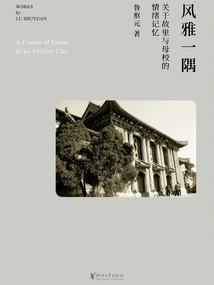
A Corner of Elegance
Literature风雅一隅
Lu Shuyuan
The northeast corner of Kaifeng, the ancient capital of the Eight Dynasties, is an elegant corner. It is the hometown of the author Lu Shuyuan and the place where he studied. This book is divided into two parts: "Hometown" and "Alma Mater", telling the historical and cultural heritage of Kaifeng Fengyun and the humanistic spirit inherited by Henan University for hundreds of years. The soil, river water, air, and turmoil of the times in his hometown gave birth to the author's nature and soul; the appearance, demeanor, knowledge, and feelings of the teachers at his alma mater set an example for him as a person and as a scholar. The author claims that the growth and changes, the ups and downs, the hesitation and entanglement, the joys and sorrows over the past eighty years have all evolved on the basis of his hometown and alma mater. The more than 200,000 words and more than 200 pictures in the book are the memories of this place, the land, and these years. It is not only a private collection deep in the author's heart, but also reflects the cloud shadows and sky lights of the past era. The words in the book are scattered and casual, such as walking in the fields, listening to birds in the forest, visiting the stream in midsummer, and chatting in the middle of winter. Facing the current ultra-high-speed electronic age, the rich rural sentiments and nostalgia in the lines are like a shadow fluttering under the scorching sun or a hint of coolness blowing in the hot wind. Half a volume of idle books and a pot of tea, quietly watching the flowing water sending away the falling flowers. For friends who are destined to meet each other, this should be a "idle book" to pass the time.
The northeast corner of Kaifeng, the ancient capital of the Eight Dynasties, is an elegant corner. It is the hometown of the author Lu Shuyuan and the place where he studied. This book is divided into two parts: "Hometown" and "Alma Mater", telling the historical and cultural heritage of Kaifeng Fengyun and the humanistic spirit inherited by Henan University for hundreds of years. The soil, river water, air, and turmoil of the times in his hometown gave birth to the author's nature and soul; the appearance, demeanor, knowledge, and feelings of the teachers at his alma mater set an example for him as a person and as a scholar. The author claims that the growth and changes, the ups and downs, the hesitation and entanglement, the joys and sorrows over the past eighty years have all evolved on the basis of his hometown and alma mater. The more than 200,000 words and more than 200 pictures in the book are the memories of this place, the land, and these years. It is not only a private collection deep in the author's heart, but also reflects the cloud shadows and sky lights of the past era. The words in the book are scattered and casual, such as walking in the fields, listening to birds in the forest, visiting the stream in midsummer, and chatting in the middle of winter. Facing the current ultra-high-speed electronic age, the rich rural sentiments and nostalgia in the lines are like a shadow fluttering under the scorching sun or a hint of coolness blowing in the hot wind. Half a volume of idle books and a pot of tea, quietly watching the flowing water sending away the falling flowers. For friends who are destined to meet each other, this should be a "idle book" to pass the time.