Library
Browse and search books
1 novel found
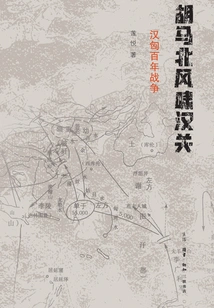
胡马北风啸汉关:汉匈百年战争
Lotus Yue
The Xiongnu, a people on horseback who traveled across the deserts of the north and south with iron hooves, a grassland kingdom known as the "Land of Hundreds of Barbarians", although they did not leave any written records for themselves, they are a race well-known in the Central Plains and even Europe. During the Qin and Han Dynasties, the Xiongnu were the most powerful nomadic people in the north of the Central Plains. They lived in pursuit of water and grass. In order to meet the needs of production and life, they repeatedly invaded the northern border of the Han Dynasty. They were the mortal enemies of the Han Dynasty. Since the siege of Baideng in 200 BC, the Han and Hungarians have been engaged in more than a hundred years of war that included both peace and war. Why did the Han Empire, with a population of more than 30 million, have to pay a huge price of "waste at home and halved household registration" in order to defeat the Xiongnu, a nomadic nation with a population of only 2 million even at its peak? Why was Rome, a small city-state at about the same time, able to expand its power to the three continents of Europe, Africa and Asia? Not only was it not brought down by war, but it became extremely prosperous? Why was it that during the periods of Wei Qing and Huo Qubing, the Han army was invincible? However, in his later years, Emperor Wu of the Han Dynasty launched several campaigns to attack the Huns in the north that were even larger in scale than those during the Wei and Huo periods, but they either returned without success or were severely defeated? This book takes the Hundred Years War between Han and Hungary, which took place between the Han Emperor Liu Bang and Han Xuan Emperor Liu Xun, as an entry point. It focuses on reflecting on the profound impact of the highly centralized political system and the national development model that emphasized agriculture and suppressed commerce on the rise and fall of the Western Han Dynasty. It also makes a horizontal comparison with the ancient Rome that developed at the same time, and strives to restore the era of Emperor Wu of the Han Dynasty and the Han-Hungary War that are closer to historical reality.
The Xiongnu, a people on horseback who traveled across the deserts of the north and south with iron hooves, a grassland kingdom known as the "Land of Hundreds of Barbarians", although they did not leave any written records for themselves, they are a race well-known in the Central Plains and even Europe. During the Qin and Han Dynasties, the Xiongnu were the most powerful nomadic people in the north of the Central Plains. They lived in pursuit of water and grass. In order to meet the needs of production and life, they repeatedly invaded the northern border of the Han Dynasty. They were the mortal enemies of the Han Dynasty. Since the siege of Baideng in 200 BC, the Han and Hungarians have been engaged in more than a hundred years of war that included both peace and war. Why did the Han Empire, with a population of more than 30 million, have to pay a huge price of "waste at home and halved household registration" in order to defeat the Xiongnu, a nomadic nation with a population of only 2 million even at its peak? Why was Rome, a small city-state at about the same time, able to expand its power to the three continents of Europe, Africa and Asia? Not only was it not brought down by war, but it became extremely prosperous? Why was it that during the periods of Wei Qing and Huo Qubing, the Han army was invincible? However, in his later years, Emperor Wu of the Han Dynasty launched several campaigns to attack the Huns in the north that were even larger in scale than those during the Wei and Huo periods, but they either returned without success or were severely defeated? This book takes the Hundred Years War between Han and Hungary, which took place between the Han Emperor Liu Bang and Han Xuan Emperor Liu Xun, as an entry point. It focuses on reflecting on the profound impact of the highly centralized political system and the national development model that emphasized agriculture and suppressed commerce on the rise and fall of the Western Han Dynasty. It also makes a horizontal comparison with the ancient Rome that developed at the same time, and strives to restore the era of Emperor Wu of the Han Dynasty and the Han-Hungary War that are closer to historical reality.