Library
Browse and search books
14 novels found
Ten Lectures on Ci Studies
Literature词学十讲
Long Yusheng
"Ten Lectures on Ci Studies", also known as "Yi Sheng Xue", are the lecture notes that Long Yusheng gave to the opera composition research class at the Shanghai Theater Academy in the 1960s. The whole book is self-contained and unique, based on the author's decades of research experience and lyric writing experience. Ci is an art form that closely combines musical language and literary language. It is a feature of this book to explain the mood and artistic conception of lyrics from the musicality of the lyrics. The whole book not only tells the history of the emergence and development of Ci, but also dissects the internal structure of Ci. It takes representatives of famous writers from past dynasties as examples and introduces the selection of rhymes, sentence length, rhyme arrangement, antithesis, structure, four tones of yin and yang, and Bixing. It opens a door for Ci enthusiasts to appreciate and create Ci as an art form.
"Ten Lectures on Ci Studies", also known as "Yi Sheng Xue", are the lecture notes that Long Yusheng gave to the opera composition research class at the Shanghai Theater Academy in the 1960s. The whole book is self-contained and unique, based on the author's decades of research experience and lyric writing experience. Ci is an art form that closely combines musical language and literary language. It is a feature of this book to explain the mood and artistic conception of lyrics from the musicality of the lyrics. The whole book not only tells the history of the emergence and development of Ci, but also dissects the internal structure of Ci. It takes representatives of famous writers from past dynasties as examples and introduces the selection of rhymes, sentence length, rhyme arrangement, antithesis, structure, four tones of yin and yang, and Bixing. It opens a door for Ci enthusiasts to appreciate and create Ci as an art form.
Ten Lectures on Ci Studies
Literature词学十讲
Long Yusheng
This book is the lecture notes used by Mr. Long Yusheng in the creative research class of Shanghai Theater Academy. There are ten lectures in total. The first two lectures mainly talk about the origin and characteristics of lyrics, the third to eighth lectures are about the musical discussion, and the last two lectures mainly talk about the artistic techniques and appreciation of creation of lyrics. After the main text, this book contains four classic chapters on Ci studies by Mr. Long Yusheng, aiming to enable readers to gain richer and deeper knowledge based on their understanding of Ci.
This book is the lecture notes used by Mr. Long Yusheng in the creative research class of Shanghai Theater Academy. There are ten lectures in total. The first two lectures mainly talk about the origin and characteristics of lyrics, the third to eighth lectures are about the musical discussion, and the last two lectures mainly talk about the artistic techniques and appreciation of creation of lyrics. After the main text, this book contains four classic chapters on Ci studies by Mr. Long Yusheng, aiming to enable readers to gain richer and deeper knowledge based on their understanding of Ci.
Rhythm of Tang and Song Poetry
Literature唐宋词格律
Long Yusheng
This book is a popular and instrumental work on ci written by Long Yusheng, a master of ci studies. The book is divided into five parts: flat rhyme pattern, oblique rhyme pattern, flat and oblique rhyme conversion pattern, flat and oblique rhyme pattern, and plain and oblique rhyme pattern with wrong leaf pattern. It contains a total of 153 word plates. Under each word plate, the plain rhyme pattern, sentence reading and rhyme position are marked. In addition, it also takes into account the declensions, and uses the classic words of poets of the Tang and Song Dynasties as a reference; in addition, the origin and evolution process of the word card are also explained under each word card, and for some necessary explanations, the emotions that are suitable for expression are pointed out, so that readers can accurately grasp the artistic characteristics of the words, and avoid misunderstandings in the appreciation and creation of the words.
This book is a popular and instrumental work on ci written by Long Yusheng, a master of ci studies. The book is divided into five parts: flat rhyme pattern, oblique rhyme pattern, flat and oblique rhyme conversion pattern, flat and oblique rhyme pattern, and plain and oblique rhyme pattern with wrong leaf pattern. It contains a total of 153 word plates. Under each word plate, the plain rhyme pattern, sentence reading and rhyme position are marked. In addition, it also takes into account the declensions, and uses the classic words of poets of the Tang and Song Dynasties as a reference; in addition, the origin and evolution process of the word card are also explained under each word card, and for some necessary explanations, the emotions that are suitable for expression are pointed out, so that readers can accurately grasp the artistic characteristics of the words, and avoid misunderstandings in the appreciation and creation of the words.
Rhythm of Tang and Song Poetry
Literature唐宋词格律
Long Yusheng
Ci arose in the Tang Dynasty. After the development of the Five Dynasties, it reached its peak in the Song Dynasty. It is a kind of Yuefu poetry that can be sung with music. It mainly comes from Yuefu and folk literature, but it is inseparable from the prosperity of music in the Tang Dynasty. In the Tang Dynasty, music from the Western Regions with pipa as the main instrument had been introduced in large quantities, and folk songs were also very developed. Therefore, the "Old Book of Tang Music" says: "Since the Kaiyuan Dynasty, singers have used songs from Hu Yili Lane." This combination of Western music and folk songs created countless beautiful new music, which was very popular from the court to the people. The emergence and creation of lyrics were mainly to coordinate with this emerging music, so the lyrics were called "qu" or "melody lyrics" at that time. Due to the extremely close relationship between words and music, strict rhythm and various formal characteristics have emerged. Each word has its own fixed form: "The tune has a certain tenth day, the tenth day has a certain character, and the character has a certain tone." In order to adapt to the rhythm of the music, most of the sentences are of different lengths, and the rhymes are also different. To match the tone of the music. To enhance the musicality of the music, the characters used in the lyrics are not only divided into equal and oblique tones, but some are also divided into four tones. Since words must be constrained by the rhythm of music, the ancients called song writing "word writing according to sound" or "word writing according to music score".
Ci arose in the Tang Dynasty. After the development of the Five Dynasties, it reached its peak in the Song Dynasty. It is a kind of Yuefu poetry that can be sung with music. It mainly comes from Yuefu and folk literature, but it is inseparable from the prosperity of music in the Tang Dynasty. In the Tang Dynasty, music from the Western Regions with pipa as the main instrument had been introduced in large quantities, and folk songs were also very developed. Therefore, the "Old Book of Tang Music" says: "Since the Kaiyuan Dynasty, singers have used songs from Hu Yili Lane." This combination of Western music and folk songs created countless beautiful new music, which was very popular from the court to the people. The emergence and creation of lyrics were mainly to coordinate with this emerging music, so the lyrics were called "qu" or "melody lyrics" at that time. Due to the extremely close relationship between words and music, strict rhythm and various formal characteristics have emerged. Each word has its own fixed form: "The tune has a certain tenth day, the tenth day has a certain character, and the character has a certain tone." In order to adapt to the rhythm of the music, most of the sentences are of different lengths, and the rhymes are also different. To match the tone of the music. To enhance the musicality of the music, the characters used in the lyrics are not only divided into equal and oblique tones, but some are also divided into four tones. Since words must be constrained by the rhythm of music, the ancients called song writing "word writing according to sound" or "word writing according to music score".
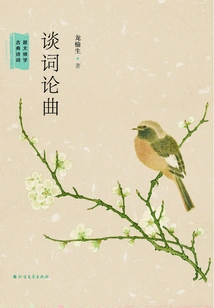
Talk About Lyrics and Music
Literature谈词论曲
Long Yusheng
The author of this book is Long Yusheng, one of the most famous ci masters in the 20th century. This book is divided into two parts, covering everything from the development of lyrics and music to the arrangement and usage of lyrics and music, as well as the expression of thoughts and feelings. This book has reference value and guiding significance for the study of the history of lyrics and music, phonics, and writing of lyrics and music. The examples cited in the book are mostly popular masterpieces. Through introduction and analysis, they can help improve readers' appreciation. As an entry-level book for masters of Chinese studies, readers can be satisfied whether they want to learn and progress or appreciate research. In addition to re-editing and integrating the content, this reprint also boldly re-drafts the title of the classic book, making the classic work closer to life and closer to readers.
The author of this book is Long Yusheng, one of the most famous ci masters in the 20th century. This book is divided into two parts, covering everything from the development of lyrics and music to the arrangement and usage of lyrics and music, as well as the expression of thoughts and feelings. This book has reference value and guiding significance for the study of the history of lyrics and music, phonics, and writing of lyrics and music. The examples cited in the book are mostly popular masterpieces. Through introduction and analysis, they can help improve readers' appreciation. As an entry-level book for masters of Chinese studies, readers can be satisfied whether they want to learn and progress or appreciate research. In addition to re-editing and integrating the content, this reprint also boldly re-drafts the title of the classic book, making the classic work closer to life and closer to readers.
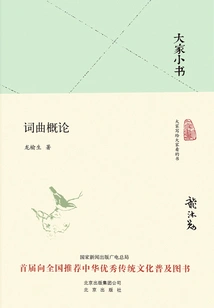
大家小书:词曲概论
Long Yusheng
"Introduction to Ci and Music" is divided into two parts. The first part discusses the origin, mainly discusses the characteristics, origin, development and evolution of Ci and Music, and evaluates the important writers and works of Tang and Song Ci, Yuan Opera, and Ming and Qing legends. The following part discusses French patterns, focusing on the important role of rhyme in lyrics and music, and clarifies the relationship between the arrangement of the four tones in the dictionary, the density of rhyme positions, and the conversion between tones and tones in expressing thoughts and feelings. "Introduction to Ci and Music" has detailed and profound elucidations on many issues and has unique insights. It has reference value and guiding significance for the study of the history of ci and music, phonology, and composition.
"Introduction to Ci and Music" is divided into two parts. The first part discusses the origin, mainly discusses the characteristics, origin, development and evolution of Ci and Music, and evaluates the important writers and works of Tang and Song Ci, Yuan Opera, and Ming and Qing legends. The following part discusses French patterns, focusing on the important role of rhyme in lyrics and music, and clarifies the relationship between the arrangement of the four tones in the dictionary, the density of rhyme positions, and the conversion between tones and tones in expressing thoughts and feelings. "Introduction to Ci and Music" has detailed and profound elucidations on many issues and has unique insights. It has reference value and guiding significance for the study of the history of ci and music, phonology, and composition.
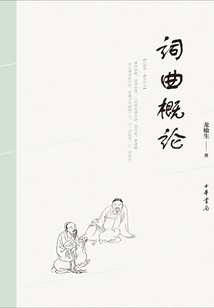
Introduction to Lyrics and Music
Literature词曲概论
Long Yusheng
This book is a companion volume to "Ten Lectures on Poetry" and is also a textbook written by Mr. Long when he was teaching at the university. It is a rare classic work that comprehensively covers poetry and music, discusses its development rules based on the nature of verse, and provides instructions for creation and appreciation methods. This book discusses the origins of poetry, first of all summarizes the characteristics of lyrics and music, and their similarities and differences, and then introduces in turn the representative verse genres from the Tang to the Ming and Qing Dynasties, from small orders to slow tunes, from palace tunes to Sanqu, Zaju, and legends. It combines famous works with famous works to enable readers to gain a comprehensive understanding of the relationship between lyrics and music and its various aspects. The following section discusses French patterns and analyzes the application of flat and oblique tones, rhyme density, etc. In the creation of lyrics and music. This is extremely detailed and practical teaching. Based on his own profound knowledge, the author quotes from many sources, explains the profound things in simple terms, and explains in a fascinating way.
This book is a companion volume to "Ten Lectures on Poetry" and is also a textbook written by Mr. Long when he was teaching at the university. It is a rare classic work that comprehensively covers poetry and music, discusses its development rules based on the nature of verse, and provides instructions for creation and appreciation methods. This book discusses the origins of poetry, first of all summarizes the characteristics of lyrics and music, and their similarities and differences, and then introduces in turn the representative verse genres from the Tang to the Ming and Qing Dynasties, from small orders to slow tunes, from palace tunes to Sanqu, Zaju, and legends. It combines famous works with famous works to enable readers to gain a comprehensive understanding of the relationship between lyrics and music and its various aspects. The following section discusses French patterns and analyzes the application of flat and oblique tones, rhyme density, etc. In the creation of lyrics and music. This is extremely detailed and practical teaching. Based on his own profound knowledge, the author quotes from many sources, explains the profound things in simple terms, and explains in a fascinating way.
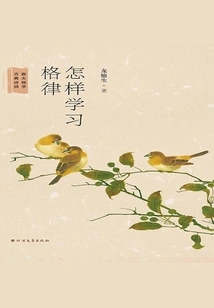
How to Learn Meter
Literature怎样学习格律
Long Yusheng
The author of this book is Long Yusheng, one of the most famous ci masters in the 20th century. This book is a book dedicated to the structure and rhythm of poetry in the Tang and Song Dynasties. This book contains more than a hundred tunes of poetry, most of which are common in poetry in the Tang and Song Dynasties. Each word plate explains its origin and evolution, and occasionally points out what kind of emotions are suitable for expression and some specific syntax and word sounds. As an entry-level book for masters of Chinese studies, readers can be satisfied whether they want to learn and progress or appreciate research. In addition to re-editing and integrating the content, this reprint also boldly re-drafts the title of the classic book, making the classic work closer to life and closer to readers.
The author of this book is Long Yusheng, one of the most famous ci masters in the 20th century. This book is a book dedicated to the structure and rhythm of poetry in the Tang and Song Dynasties. This book contains more than a hundred tunes of poetry, most of which are common in poetry in the Tang and Song Dynasties. Each word plate explains its origin and evolution, and occasionally points out what kind of emotions are suitable for expression and some specific syntax and word sounds. As an entry-level book for masters of Chinese studies, readers can be satisfied whether they want to learn and progress or appreciate research. In addition to re-editing and integrating the content, this reprint also boldly re-drafts the title of the classic book, making the classic work closer to life and closer to readers.
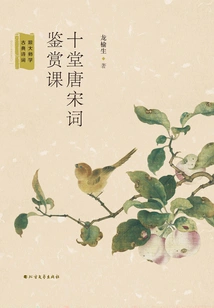
十堂唐宋词鉴赏课
Long Yusheng
The author of this book is Long Yusheng, one of the most famous ci masters in the 20th century. This book is compiled based on the lecture notes of Mr. Long Yusheng's Ci study and creation class. It integrates decades of research experience and lyrics writing experience, and explains the origin of Ci, selection of tunes, practices, etc. In simple and easy-to-understand terms. It is also an excellent book for explaining the appreciation of Song Ci. In fact, many people like to read poetry, write lyrics, and compose music. However, because there are too many versions of the same type on the market, good and bad vary, it is better to read the authoritative works of lyric masters and absorb the cultural essence accumulated by the masters over time. As an entry-level book for masters of Chinese studies, readers can be satisfied whether they want to learn and progress or appreciate research.
The author of this book is Long Yusheng, one of the most famous ci masters in the 20th century. This book is compiled based on the lecture notes of Mr. Long Yusheng's Ci study and creation class. It integrates decades of research experience and lyrics writing experience, and explains the origin of Ci, selection of tunes, practices, etc. In simple and easy-to-understand terms. It is also an excellent book for explaining the appreciation of Song Ci. In fact, many people like to read poetry, write lyrics, and compose music. However, because there are too many versions of the same type on the market, good and bad vary, it is better to read the authoritative works of lyric masters and absorb the cultural essence accumulated by the masters over time. As an entry-level book for masters of Chinese studies, readers can be satisfied whether they want to learn and progress or appreciate research.
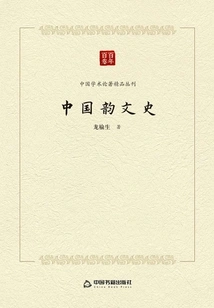
History of Chinese Rhymes
Literature中国韵文史
Long Yusheng
This book is divided into two parts: poetry, lyrics and music. The first part is based on the Book of Songs, Chu Ci, Yuefu poems, five-seven-character ancient and modern poetry, Tang, Song, Yuan, Ming and Qing poems, etc.; The second part is about the rise of lyrics and music due to music, the development of Ling Ci and slow Ci, the establishment of the authentic Ci School, the development of the Bold Ci School in the Jin Dynasty, the rise of Xiaoling Suites in the North and South, the prosperity of the Yuan Dynasty Sanqu writers, the decline of Yuan and Ming Ci, the revival of Qing Ci, the decline of Sanqu, and the ending of Qing Ci.
This book is divided into two parts: poetry, lyrics and music. The first part is based on the Book of Songs, Chu Ci, Yuefu poems, five-seven-character ancient and modern poetry, Tang, Song, Yuan, Ming and Qing poems, etc.; The second part is about the rise of lyrics and music due to music, the development of Ling Ci and slow Ci, the establishment of the authentic Ci School, the development of the Bold Ci School in the Jin Dynasty, the rise of Xiaoling Suites in the North and South, the prosperity of the Yuan Dynasty Sanqu writers, the decline of Yuan and Ming Ci, the revival of Qing Ci, the decline of Sanqu, and the ending of Qing Ci.
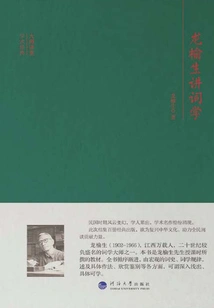
龙榆生讲词学
Long Yusheng
Textbooks written by Long Yusheng, a master of Ci poetry in the Republic of China, including macro history of Ci, rules of Ci, appreciation and identification, etc.
Textbooks written by Long Yusheng, a master of Ci poetry in the Republic of China, including macro history of Ci, rules of Ci, appreciation and identification, etc.
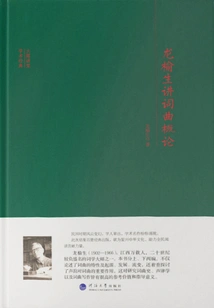
龙榆生讲词曲概论
Long Yusheng
This book is divided into two parts, which not only discusses the characteristics, origin, development, and evolution of lyrics and music, but also focuses on the important role of phonology in lyrics and music, which has high reference value and guiding significance for the study of the history of lyrics and music, phonology, and writing of lyrics and music.
This book is divided into two parts, which not only discusses the characteristics, origin, development, and evolution of lyrics and music, but also focuses on the important role of phonology in lyrics and music, which has high reference value and guiding significance for the study of the history of lyrics and music, phonology, and writing of lyrics and music.
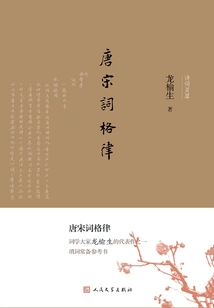
Rhythm of Tang and Song Poetry
Literature唐宋词格律
Long Yusheng
"Rhyme and Rhythm of Ci Poems of Tang and Song Dynasties" is a book dedicated to the rhythm of Ci poetry of Tang and Song Dynasties. This book contains a total of more than 150 Ci Pai tunes, which are first divided into five major categories based on rhyme and rhyme, taking into account the evolution of each tune style. Each word plate explains its origin and evolution. Each word plate is marked with word patterns such as "fixed pattern" and "deflected pattern", as well as sentence pronunciation, level and rhyme. Each word tablet is accompanied by one or several works of poets from the Tang and Song dynasties that have been recited throughout the history as examples.
"Rhyme and Rhythm of Ci Poems of Tang and Song Dynasties" is a book dedicated to the rhythm of Ci poetry of Tang and Song Dynasties. This book contains a total of more than 150 Ci Pai tunes, which are first divided into five major categories based on rhyme and rhyme, taking into account the evolution of each tune style. Each word plate explains its origin and evolution. Each word plate is marked with word patterns such as "fixed pattern" and "deflected pattern", as well as sentence pronunciation, level and rhyme. Each word tablet is accompanied by one or several works of poets from the Tang and Song dynasties that have been recited throughout the history as examples.
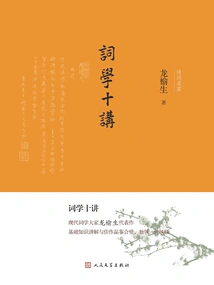
Ten Lectures on Ci Studies
Literature词学十讲
Long Yusheng
Ci is one of the main genres of Chinese classical literature. It rose with the Tang and Five Dynasties, and reached a peak in the Song Dynasty, leaving many classic works. Words have unique institutional characteristics. "Ten Lectures on Ci Studies" is an introductory book about the knowledge of Ci explained by Mr. Long Yusheng, a famous contemporary Ci study expert. This book is revised based on the lecture notes given to students at Shanghai Theater Academy. The content of the book mainly includes the history of the development of Ci in the Tang and Song Dynasties, the relationship between tone and rhyme, length of phrases, rhyme selection, and the impact of literary techniques such as antithesis, bixing, and word generation on emotional expression. The author integrates his decades of research experience and lyrics writing experience, and talks about it in a clear and simple way, which is very helpful for readers to appreciate the lyrics. Since its publication, this book has been very popular among ordinary readers and also highly recognized by professionals. It is a classic introduction to poetry knowledge.
Ci is one of the main genres of Chinese classical literature. It rose with the Tang and Five Dynasties, and reached a peak in the Song Dynasty, leaving many classic works. Words have unique institutional characteristics. "Ten Lectures on Ci Studies" is an introductory book about the knowledge of Ci explained by Mr. Long Yusheng, a famous contemporary Ci study expert. This book is revised based on the lecture notes given to students at Shanghai Theater Academy. The content of the book mainly includes the history of the development of Ci in the Tang and Song Dynasties, the relationship between tone and rhyme, length of phrases, rhyme selection, and the impact of literary techniques such as antithesis, bixing, and word generation on emotional expression. The author integrates his decades of research experience and lyrics writing experience, and talks about it in a clear and simple way, which is very helpful for readers to appreciate the lyrics. Since its publication, this book has been very popular among ordinary readers and also highly recognized by professionals. It is a classic introduction to poetry knowledge.