Library
Browse and search books
4 novels found
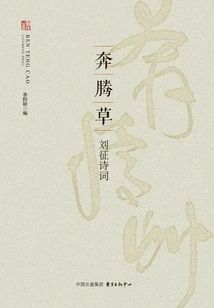
Galloping Grass: Liu Zheng's Poems
Literature奔腾草:刘征诗词
Liu Zheng
This manuscript collects Mr. Liu Zheng's old-style poems from 2014 to 2016, about 110 poems and 200 poems, and Li Shuxi's poems about Jixuan, about 20,000 words. These poems demonstrate the main achievements of Mr. Liu Zheng's old-style poems created between the ages of 89 and 91.
This manuscript collects Mr. Liu Zheng's old-style poems from 2014 to 2016, about 110 poems and 200 poems, and Li Shuxi's poems about Jixuan, about 20,000 words. These poems demonstrate the main achievements of Mr. Liu Zheng's old-style poems created between the ages of 89 and 91.
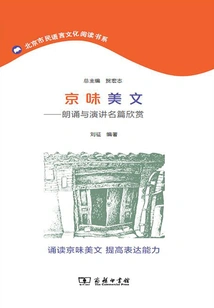
京味美文:朗诵与演讲名篇欣赏
Liu Zheng
This little book is a "little gift for learning recitation and speech" dedicated to readers. After introducing the general knowledge of recitation and speech, the editor quotes 28 famous articles with a strong Beijing flavor to provide specific guidance on content appreciation and technical skills. This will be helpful to every friend who studies, works, works, and struggles in Beijing, whether it is from the perspective of experiencing cultural influence and gaining spiritual nourishment, or from the perspective of improving language expression and building communication confidence.
This little book is a "little gift for learning recitation and speech" dedicated to readers. After introducing the general knowledge of recitation and speech, the editor quotes 28 famous articles with a strong Beijing flavor to provide specific guidance on content appreciation and technical skills. This will be helpful to every friend who studies, works, works, and struggles in Beijing, whether it is from the perspective of experiencing cultural influence and gaining spiritual nourishment, or from the perspective of improving language expression and building communication confidence.
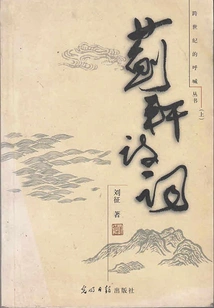
Jixuan Poems
Literature蓟轩诗词
Liu Zheng
The previous collection "Poetry on Painting a Tiger Residence" was completed in September 1996. This collection includes my poems and lyrics from the six and a half years from October 1996 to May 2003, with some deletions and selections, and there are about 500 poems in existence. During this period, I moved to Beijing near Jimen Bridge, and my new residence was named "Jixuan", so I named this collection "Jixuan Poems". The learned brother Zhongshi told me that according to "Shuowen", Ji was the residence of the ancient emperor Yao after his death. It turned out that he had moved into the old sage's hometown.
The previous collection "Poetry on Painting a Tiger Residence" was completed in September 1996. This collection includes my poems and lyrics from the six and a half years from October 1996 to May 2003, with some deletions and selections, and there are about 500 poems in existence. During this period, I moved to Beijing near Jimen Bridge, and my new residence was named "Jixuan", so I named this collection "Jixuan Poems". The learned brother Zhongshi told me that according to "Shuowen", Ji was the residence of the ancient emperor Yao after his death. It turned out that he had moved into the old sage's hometown.
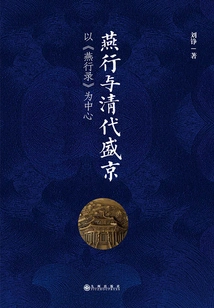
燕行与清代盛京:以《燕行录》为中心
Liu Zheng
This book uses "Yan Xing Lu", the diary of a North Korean envoy who went to pay tribute to the Qing Dynasty, as the basic historical research material. It also refers to other documents and uses the experiences of the North Korean envoys to conduct a detailed study of the urban appearance, social life, religious beliefs and Manchu folk customs of the Shengjing area in the Qing Dynasty. Observe Shengjing society from a foreign perspective and examine "self" through the "other" in order to achieve the purpose of learning from the mirror.
This book uses "Yan Xing Lu", the diary of a North Korean envoy who went to pay tribute to the Qing Dynasty, as the basic historical research material. It also refers to other documents and uses the experiences of the North Korean envoys to conduct a detailed study of the urban appearance, social life, religious beliefs and Manchu folk customs of the Shengjing area in the Qing Dynasty. Observe Shengjing society from a foreign perspective and examine "self" through the "other" in order to achieve the purpose of learning from the mirror.