Library
Browse and search books
5 novels found
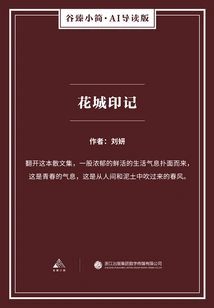
花城印记(谷臻小简·AI导读版)
Liu Yan
Opening this collection of essays, a strong and fresh breath of life hits your face. This is the breath of youth, this is the spring breeze blowing from the human world and the soil. The author lives in the flower city, where she is exposed to the sun and the moon. From her life, she can see that the shadows and fragrance of flowers are still hidden in the city and deep in the streets. The text includes both cultural prose with a strong sense of history and friendly and lively life sketches. It can be seen that the author is a modern woman who knows how to observe life carefully and enjoy life. She can dig out the beauty that reaches the soul from the mediocrity in ordinary people's eyes. She dares to try life with different tastes and shows the richness and color of life.
Opening this collection of essays, a strong and fresh breath of life hits your face. This is the breath of youth, this is the spring breeze blowing from the human world and the soil. The author lives in the flower city, where she is exposed to the sun and the moon. From her life, she can see that the shadows and fragrance of flowers are still hidden in the city and deep in the streets. The text includes both cultural prose with a strong sense of history and friendly and lively life sketches. It can be seen that the author is a modern woman who knows how to observe life carefully and enjoy life. She can dig out the beauty that reaches the soul from the mediocrity in ordinary people's eyes. She dares to try life with different tastes and shows the richness and color of life.
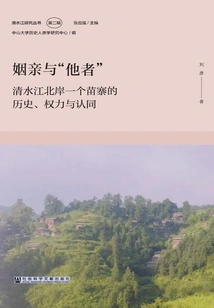
姻亲与“他者”:清水江北岸一个苗寨的历史、权力与认同
Liu Yan
On the bank of Qingshui River, there is a village called "Miaobei". Since the Ming and Qing Dynasties, its role as a transportation place for "imperial wood" has been recorded piecemeal in official history. Perhaps people know more about her than just the "Imperial Wood", but also about the historical process of constant transformation between the house clan and the in-laws into "others", which is linked to major historical events such as "surname change", "surname breaking and marriage", and "conventional marriage", as well as the mythical and emotional stories with the charm of rivers and lakes that are bred in this historical structure. Regarding all this, she is willing to use beautiful contract words and performances to present it to those who want to understand her mind.
On the bank of Qingshui River, there is a village called "Miaobei". Since the Ming and Qing Dynasties, its role as a transportation place for "imperial wood" has been recorded piecemeal in official history. Perhaps people know more about her than just the "Imperial Wood", but also about the historical process of constant transformation between the house clan and the in-laws into "others", which is linked to major historical events such as "surname change", "surname breaking and marriage", and "conventional marriage", as well as the mythical and emotional stories with the charm of rivers and lakes that are bred in this historical structure. Regarding all this, she is willing to use beautiful contract words and performances to present it to those who want to understand her mind.
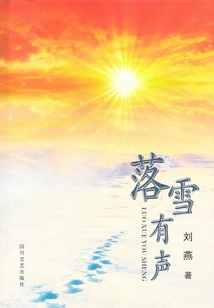
Falling Snow Has a Sound
Literature落雪有声
Liu Yan
Liu Yan's poems are rich in emotion, colorful and imaginative, and they control the language to flow smoothly. What is slightly lacking is that the language is not concise, the presentation is not restrained, and it is too realistic but not ethereal. Excellent poems always contain fiction within reality, reality within fiction, a blend of reality and reality, simplicity and implicitness, exhaustive words but infinite meaning. With Liu Yan's intelligence, as long as she pays attention to the novelty of penetration, novelty of conception, novelty of imagery and exquisiteness of language, her poems will enhance their artistic appeal.
Liu Yan's poems are rich in emotion, colorful and imaginative, and they control the language to flow smoothly. What is slightly lacking is that the language is not concise, the presentation is not restrained, and it is too realistic but not ethereal. Excellent poems always contain fiction within reality, reality within fiction, a blend of reality and reality, simplicity and implicitness, exhaustive words but infinite meaning. With Liu Yan's intelligence, as long as she pays attention to the novelty of penetration, novelty of conception, novelty of imagery and exquisiteness of language, her poems will enhance their artistic appeal.
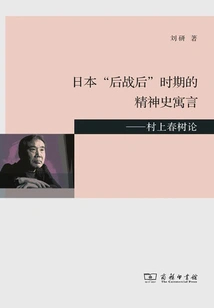
日本“后战后”时期的精神史寓言:村上春树论
Liu Yan
This book is placed in the historical context of Japan's "post-war" and takes the field of identity as the starting point to show how the famous contemporary Japanese writer Haruki Murakami paid attention to and thought about various major issues of the times. It also shows how the writer weaves the issues of the times into the text, especially how he writes about the war memory issue that has always suppressed the Japanese soul and the natural disasters and man-made disasters that have occurred in recent years, and analyzes their internal motivations. The biggest difference between this book and other monographs on Murakami studies is that it does not stop at the interpretation of literary paradigms, but combines Murakami with the times, focusing on analyzing the relationship between Murakami's works, postwar Japanese ideological and cultural space, and the emotional memory of a generation. This book is based on textual analysis, but goes beyond textual analysis, treating Murakami not only as a literary phenomenon, but also as a contemporary phenomenon.
This book is placed in the historical context of Japan's "post-war" and takes the field of identity as the starting point to show how the famous contemporary Japanese writer Haruki Murakami paid attention to and thought about various major issues of the times. It also shows how the writer weaves the issues of the times into the text, especially how he writes about the war memory issue that has always suppressed the Japanese soul and the natural disasters and man-made disasters that have occurred in recent years, and analyzes their internal motivations. The biggest difference between this book and other monographs on Murakami studies is that it does not stop at the interpretation of literary paradigms, but combines Murakami with the times, focusing on analyzing the relationship between Murakami's works, postwar Japanese ideological and cultural space, and the emotional memory of a generation. This book is based on textual analysis, but goes beyond textual analysis, treating Murakami not only as a literary phenomenon, but also as a contemporary phenomenon.
以毒为药:古代中国的医疗、文化与政治
Liu Yan
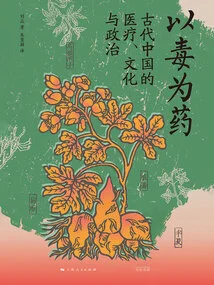
This book studies how doctors, religious figures, court officials and lay scholar-bureaucrats used poisonous drugs to treat stubborn diseases and strengthen the body during the formative period of Chinese medicine from the 3rd to 9th centuries. By focusing on how the concept of "poison" in Chinese led healers to adopt various methods to transform dangerous poisons into panaceas, the author clearly reveals the important position of poisons in traditional Chinese medicine and medieval society. This book tells the story of medical disputes and political events involving poisons from the late Han Dynasty to the early Tang Dynasty, demonstrating that "poison" was crucial to how people perceived their bodies and body politics at that time. The author also examines the vast array of toxic minerals, plants, and animal products in classical Chinese medicine, including the highly toxic "King of Medicines" Aconite and the once-popular Five Stone Powder, showing how powerful medicines work on the body and how this effect shaped knowledge about medicines and the diseases they treated. The book also explores ancient Chinese understandings of health and how the body interacted with toxic drugs, reminding us to pay attention to the materiality of drug flows, whose true meaning and utility are not reducible to a fixed core, but vary depending on specific technological interventions, sociopolitical conditions, and individual bodily experiences.
This book studies how doctors, religious figures, court officials and lay scholar-bureaucrats used poisonous drugs to treat stubborn diseases and strengthen the body during the formative period of Chinese medicine from the 3rd to 9th centuries. By focusing on how the concept of "poison" in Chinese led healers to adopt various methods to transform dangerous poisons into panaceas, the author clearly reveals the important position of poisons in traditional Chinese medicine and medieval society. This book tells the story of medical disputes and political events involving poisons from the late Han Dynasty to the early Tang Dynasty, demonstrating that "poison" was crucial to how people perceived their bodies and body politics at that time. The author also examines the vast array of toxic minerals, plants, and animal products in classical Chinese medicine, including the highly toxic "King of Medicines" Aconite and the once-popular Five Stone Powder, showing how powerful medicines work on the body and how this effect shaped knowledge about medicines and the diseases they treated. The book also explores ancient Chinese understandings of health and how the body interacted with toxic drugs, reminding us to pay attention to the materiality of drug flows, whose true meaning and utility are not reducible to a fixed core, but vary depending on specific technological interventions, sociopolitical conditions, and individual bodily experiences.