Library
Browse and search books
2 novels found
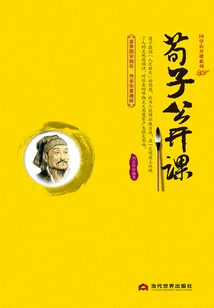
Xunzi Open Class
History荀子公开课
Liu Yaling
Chinese traditional culture is extensive and profound and is the pride of the entire Chinese nation. Thousands of years ago, traditional culture flourished with hundreds of schools of thought contending. In the pre-Qin period, the old social system was about to disintegrate, and a new social order was still being explored. There were many different opinions in the world, and many schools of thought such as Confucianism, Taoism, Mohism, and Legalism were formed, among which Confucianism was particularly prominent. However, by the Warring States Period, it was clear that Confucian thought had failed to adapt to the development of society and was in decline. At this time, Mencius and Xunzi emerged one after another. Both of them studied under Confucius and took it as their own duty to inherit the Confucian orthodoxy and promote the Confucian spirit. In addition, Dong Zhongshu in the early Han Dynasty proposed "deposing hundreds of schools of thought and respecting Confucianism alone", which established the dominance of Confucianism in feudal society for more than two thousand years.
Chinese traditional culture is extensive and profound and is the pride of the entire Chinese nation. Thousands of years ago, traditional culture flourished with hundreds of schools of thought contending. In the pre-Qin period, the old social system was about to disintegrate, and a new social order was still being explored. There were many different opinions in the world, and many schools of thought such as Confucianism, Taoism, Mohism, and Legalism were formed, among which Confucianism was particularly prominent. However, by the Warring States Period, it was clear that Confucian thought had failed to adapt to the development of society and was in decline. At this time, Mencius and Xunzi emerged one after another. Both of them studied under Confucius and took it as their own duty to inherit the Confucian orthodoxy and promote the Confucian spirit. In addition, Dong Zhongshu in the early Han Dynasty proposed "deposing hundreds of schools of thought and respecting Confucianism alone", which established the dominance of Confucianism in feudal society for more than two thousand years.
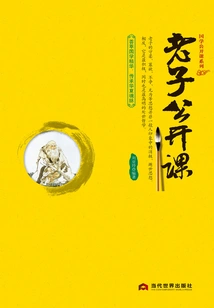
Lao Tzu's Open Class
History老子公开课
Liu Yaling
Laozi is recognized as the ancestor of hundreds of schools of thought and the founder of ancient Chinese culture. Laozi's thoughts have had a huge and far-reaching impact on the history of thought, culture, and religion in China. He is known as the "Giant of the East" and "the first philosopher of China and the world." Laozi's thoughts are mainly reflected in the book "Laozi" (also known as "Tao Te Ching"). "Laozi" is a great work that has been studied by scholars of all ages for more than two thousand years. Although it has only 5,000 words, its content covers many fields such as philosophy, literature, aesthetics, sociology, ethics, and military science. It is like a subtle encyclopedia; more importantly, it has a complete system and constructs a simple, natural, and grand framework. It is known as the "King of All Scriptures."
Laozi is recognized as the ancestor of hundreds of schools of thought and the founder of ancient Chinese culture. Laozi's thoughts have had a huge and far-reaching impact on the history of thought, culture, and religion in China. He is known as the "Giant of the East" and "the first philosopher of China and the world." Laozi's thoughts are mainly reflected in the book "Laozi" (also known as "Tao Te Ching"). "Laozi" is a great work that has been studied by scholars of all ages for more than two thousand years. Although it has only 5,000 words, its content covers many fields such as philosophy, literature, aesthetics, sociology, ethics, and military science. It is like a subtle encyclopedia; more importantly, it has a complete system and constructs a simple, natural, and grand framework. It is known as the "King of All Scriptures."